Introduction
Sunlight is a natural part of everyday life, but it also contains ultraviolet radiation, commonly called UV radiation. Although we cannot see or feel UV rays directly, repeated exposure can affect the skin in ways that become more noticeable over time.
A short period outdoors may not seem significant, yet the amount of UV exposure can add up across ordinary activities such as walking, travelling, working outside, or spending time near windows. Protecting the skin is therefore not only about avoiding sunburn. It is also about reducing repeated exposure that can contribute to long-term skin changes.
What Is UV Radiation?
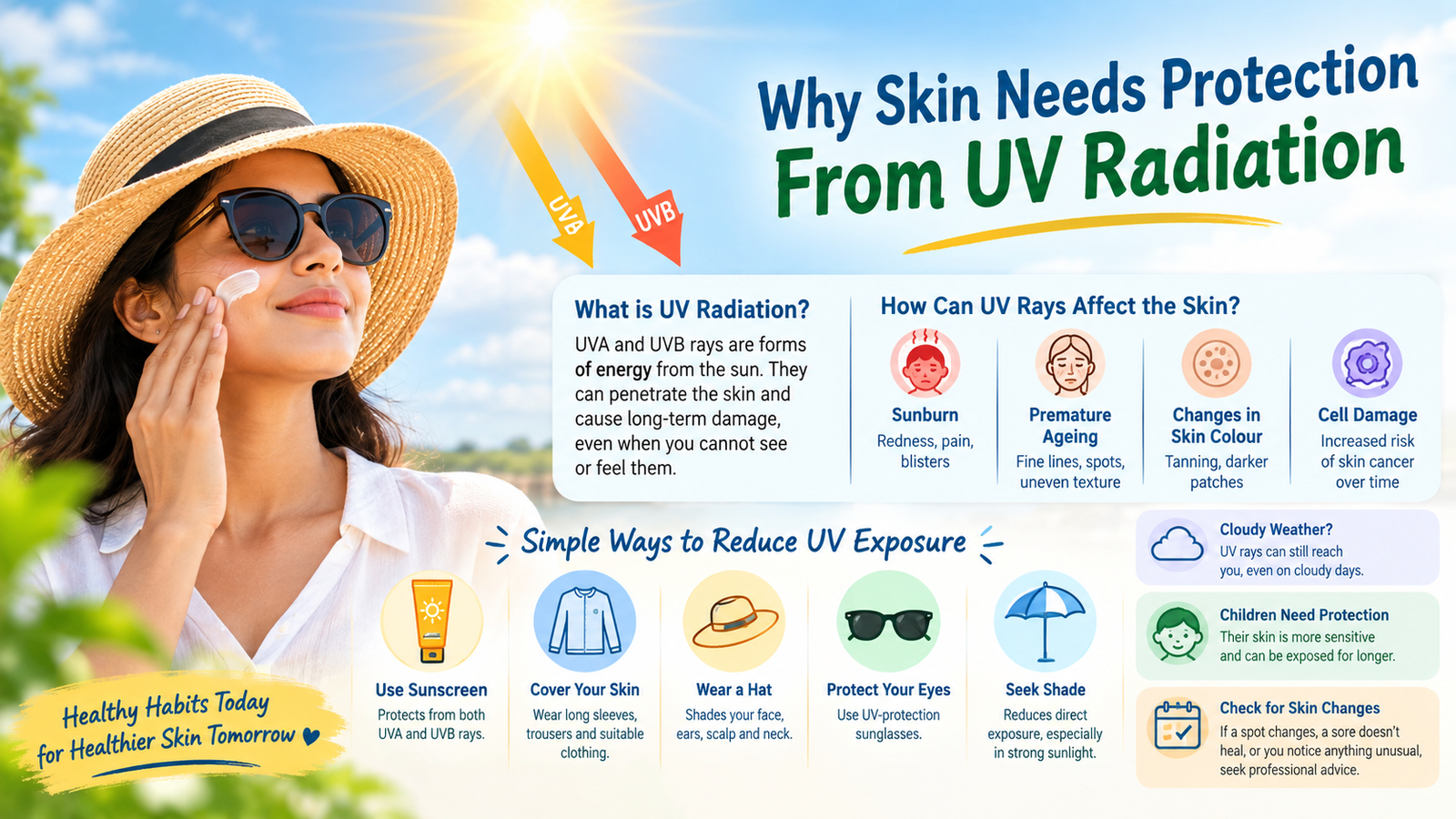
Ultraviolet radiation is a form of energy produced by the sun. The two types most commonly discussed in relation to everyday skin exposure are UVA and UVB.
UVA rays can penetrate deeper into the skin and are associated with changes such as premature skin ageing. UVB rays are strongly associated with sunburn and can also contribute to skin damage.
The intensity of exposure can vary according to factors such as the time of day, season, location, altitude, cloud conditions, and surroundings.
How Can UV Rays Affect the Skin?
Sunburn
Too much UV exposure can cause sunburn. The skin may become red, warm, painful, or tender. In stronger cases, swelling and blisters can occur.
Sunburn is more than a temporary change in appearance. It indicates that the skin has been injured by excessive ultraviolet exposure.
Premature Skin Ageing
Repeated exposure to UV radiation can gradually affect the structures that help keep skin firm and resilient. Over time, this may contribute to fine lines, uneven texture, spots, and other visible signs of ageing.
Protecting the skin from unnecessary UV exposure can help reduce the cumulative effects associated with sunlight.
Changes in Skin Colour
UV exposure can stimulate increased production of melanin, the pigment responsible for much of the skin’s colour. This can lead to tanning or darker areas appearing after time in the sun.
Repeated exposure may also contribute to uneven pigmentation in some people.
Damage to Skin Cells
UV radiation can cause changes within skin cells. The body has systems that repair some forms of cellular damage, but repeated or excessive exposure can increase the amount of damage that needs to be managed.
Over many years, accumulated UV-related cellular damage can increase the risk of certain skin cancers.
Why Everyday Exposure Matters
You do not need to spend an entire day at the beach to encounter UV radiation. Exposure can occur during ordinary outdoor activities.
For example, someone may receive UV exposure while walking to work, waiting for transportation, exercising outdoors, gardening, or running errands.
Because these exposures can occur repeatedly, protection is useful even when you are not planning a long outdoor activity.
Ways to Reduce UV Exposure
Use Sunscreen
A broad-spectrum sunscreen can help protect the skin from both UVA and UVB radiation. Apply it to exposed areas according to the product instructions.
Sunscreen can wear away or become less effective after activities such as swimming, heavy sweating, or prolonged outdoor exposure, so reapplication may be necessary.
Cover Exposed Skin
Clothing provides another layer between the skin and sunlight. Long sleeves, trousers, and other covering garments can reduce the amount of UV radiation reaching exposed areas.
The level of protection varies depending on the fabric, colour, weave, and how much skin it covers.
Wear a Hat
A hat can provide additional shade for areas such as the face, ears, scalp, and neck. A wider brim generally provides more coverage than a small cap.
Protect Your Eyes
UV protection is also relevant to the eyes and the surrounding skin. Sunglasses that provide appropriate UV protection can help reduce exposure to ultraviolet radiation reaching the eyes.
Seek Shade When Possible
Shade can reduce direct exposure, particularly during periods when sunlight is strong. Trees, covered areas, umbrellas, and other shaded spaces can be useful when spending time outdoors.
Shade does not completely eliminate UV exposure because some radiation can still reach you indirectly.
Does Cloudy Weather Remove the Need for Protection?
Clouds can change the amount of UV radiation reaching the ground, but cloudy weather does not automatically mean that UV exposure is absent.
This is why relying only on how hot or bright the day feels can be misleading.
Children Also Need Sun Protection
Protecting children’s skin is important because they can spend considerable time outdoors during school activities, sports, holidays, and play.
Simple habits such as wearing suitable clothing, using sunscreen when appropriate, seeking shade, and wearing protective hats can become part of their regular outdoor routine.
What About Tanning?
A tan may be considered desirable by some people, but the darkening of the skin is a response to UV exposure. It should not be treated as evidence that the skin has become protected from further UV-related damage.
Deliberate tanning through excessive sun exposure increases ultraviolet exposure and can contribute to skin damage over time.
When Should You Pay Attention to Skin Changes?
Most changes after sun exposure are temporary, but unusual or persistent changes should not be ignored.
Speak with a healthcare professional or dermatologist if you notice a skin spot that changes in size, shape, or colour, a sore that does not heal, unusual bleeding, or another skin change that concerns you.
Professional evaluation is especially useful when a change is new or continues to develop.
Building Sun-Safe Habits
UV protection does not have to mean avoiding outdoor activities completely. Instead, several small measures can be combined.
Consider checking the UV conditions before spending extended periods outside, using suitable sunscreen, wearing protective clothing, choosing shade when available, and protecting the face, scalp, ears, and eyes.
Making these habits routine can reduce unnecessary exposure without preventing normal outdoor activities.
Conclusion
The skin acts as a protective covering for the body, but repeated ultraviolet exposure can gradually affect it. Sunburn, pigmentation changes, premature skin ageing, cellular damage, and an increased risk of skin cancer are among the reasons UV protection matters.
Protection works best as a combination of habits rather than relying on one method alone. Sunscreen, suitable clothing, hats, sunglasses, and shade can all help limit UV exposure.
Taking care of your skin today can help reduce the effects of repeated sun exposure over the years while still allowing you to enjoy time outdoors.
Verification code : UV6R8KM42PX