Introduction
Your skin does much more than give your body its outer appearance. It acts as a protective covering that constantly deals with weather, dust, friction, water, skincare products, and other environmental factors.
One of the most important parts of this protective system is the skin barrier. When it is functioning properly, the skin can hold onto water while limiting the effects of outside irritants. When the barrier becomes disturbed, the skin may begin to feel uncomfortable, dry, rough, or unusually reactive.
Learning how the skin barrier works can help you make better everyday skincare choices.
What Exactly Is the Skin Barrier?
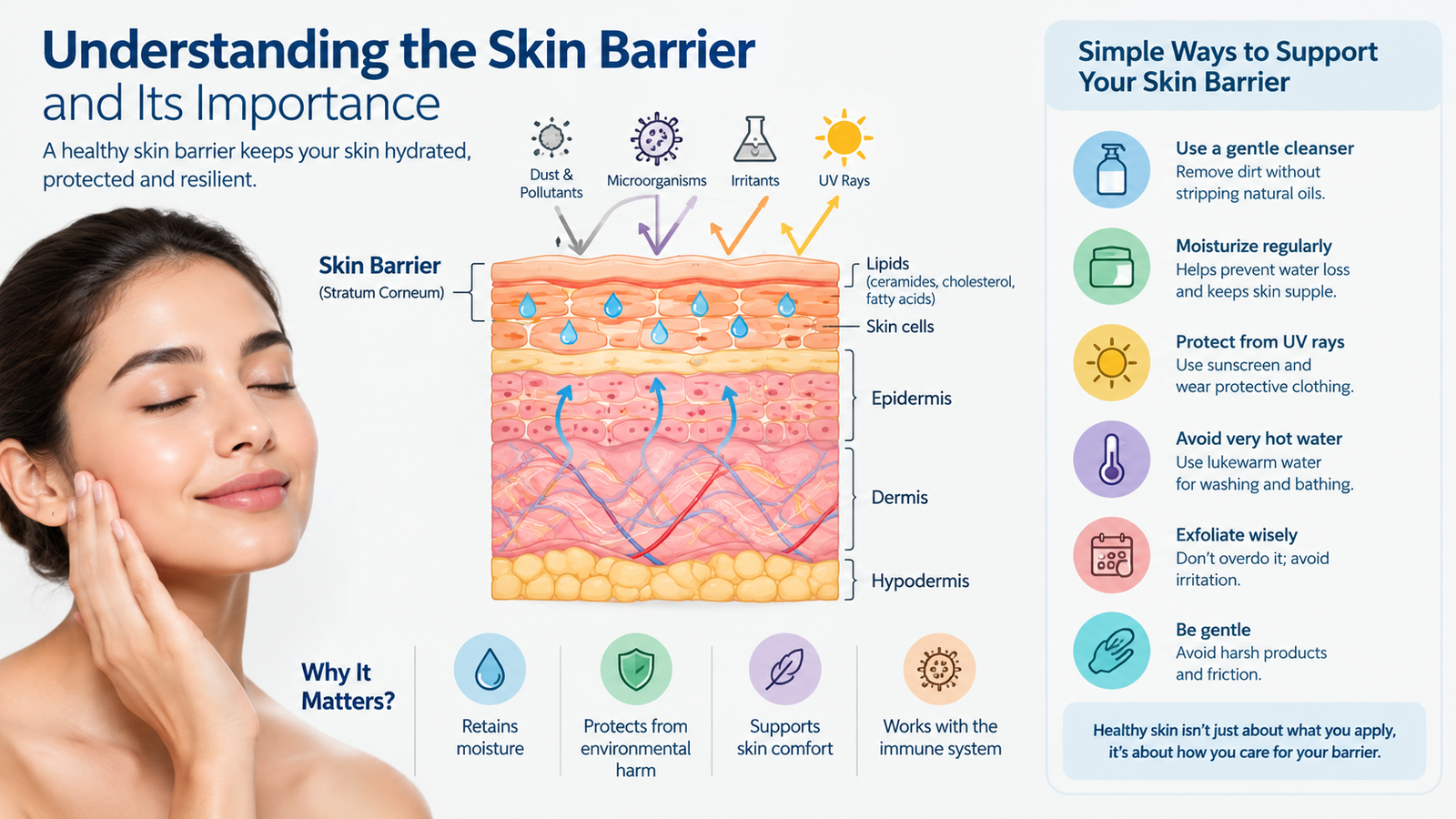
The term skin barrier generally refers to the outermost protective portion of the skin, particularly the stratum corneum.
This layer contains mature skin cells surrounded by naturally occurring fats called lipids. Important lipids include ceramides, cholesterol, and fatty acids. Together, these components help create a protective arrangement that reduces unnecessary water loss and makes it harder for many unwanted substances to penetrate the skin.
A useful way to picture the barrier is as a carefully arranged protective surface. The skin cells provide much of the structure, while the surrounding lipids help fill the spaces between them.
Why Does the Skin Barrier Matter?
1. It Helps Control Water Loss
Water naturally moves out of the skin. A functioning outer barrier helps slow this process, allowing the skin to remain more comfortable and hydrated.
When this protective function is reduced, moisture can escape more easily, leaving the skin feeling dry or tight.
2. It Helps Defend Against External Irritants
Everyday life exposes the skin to numerous substances. Dust, pollution, microorganisms, chemicals, and certain cosmetic ingredients can come into contact with the skin.
The outer barrier provides an important line of defense against these environmental challenges.
3. It Contributes to Skin Comfort
Healthy skin generally tolerates ordinary environmental conditions and skincare routines better. When the barrier is disrupted, products that were previously comfortable may cause stinging or irritation.
4. It Supports the Skin’s Natural Defense System
The skin is also involved in the body’s broader defense mechanisms. The outer barrier and other skin functions work together to help respond to potential threats from the surrounding environment.
What Can Disturb the Skin Barrier?
The barrier can be affected by several everyday habits and environmental conditions.
Frequent Washing: Repeated cleansing, particularly with harsh products, may remove some of the substances that help maintain the skin’s protective surface.
Very Hot Water: Long exposure to hot water can leave some people’s skin feeling dry and uncomfortable.
Excessive Exfoliation: Scrubbing or using exfoliating products too frequently can create unnecessary irritation.
Dry Surroundings: Cold weather, low humidity, indoor heating, and air conditioning may contribute to increased dryness.
Strong Skincare Products: Some active ingredients or heavily fragranced products may irritate sensitive skin, especially when used too often.
Friction: Repeated rubbing from towels, clothing, or other surfaces can place additional stress on the skin.
Signs That Your Skin Barrier May Be Weakened
A disturbed barrier does not look exactly the same in everyone. Possible signs include:
- Skin that repeatedly feels dry
- Rough or flaky areas
- A tight feeling after washing
- Increased sensitivity
- Burning or stinging after applying products
- Temporary redness
- Greater discomfort when exposed to ordinary skincare products
- Skin that seems to lose moisture quickly
These signs can also occur with various skin conditions, so they should not automatically be assumed to mean that the skin barrier is the only problem.
How Can You Take Care of the Skin Barrier?
Choose Gentle Cleansing
Use a cleanser that does not leave your skin feeling extremely tight or uncomfortable after washing. Avoid unnecessarily frequent cleansing when it is not needed.
Moisturize Consistently
A suitable moisturizer can help reduce water loss and improve the feel of dry skin. Applying it after cleansing can be particularly useful because it helps maintain moisture on the skin’s surface.
Avoid Excessive Exfoliation
Exfoliation is not automatically harmful, but doing it too frequently can increase irritation. Give your skin enough time between exfoliating treatments.
Keep Water Comfortably Warm
Instead of using very hot water, choose a comfortably warm temperature when bathing or washing your face.
Protect Your Skin From Sun Exposure
Ultraviolet radiation can affect the skin over time. Sun-protective habits, including appropriate sunscreen, protective clothing, and shade, can help reduce unnecessary exposure.
Reduce Unnecessary Rubbing
Pat the skin gently with a towel rather than repeatedly rubbing it. Be mindful of clothing or other materials that constantly scrape against sensitive areas.
Can the Skin Barrier Improve?
In many everyday situations, the skin can gradually return to a more comfortable state when the source of irritation is reduced and basic supportive care is maintained.
This may involve simplifying a complicated skincare routine, avoiding unnecessary exfoliation, using gentle cleansing methods, and regularly moisturizing.
Recovery is not necessarily immediate. The amount of time needed can vary depending on what caused the irritation and the person’s individual skin condition.
Do You Need to Stop Every Skincare Product?
Not necessarily.
Removing every product at once may not be required. Instead, it can be helpful to identify products that appear to cause burning, excessive dryness, or irritation and avoid unnecessary additions to the routine.
A simple routine is often easier to manage than repeatedly introducing multiple new products at the same time.
When Should You Consult a Dermatologist?
Persistent redness, severe irritation, cracking, swelling, painful skin, recurring rashes, or symptoms that do not improve deserve professional attention.
A dermatologist can determine whether the problem is related to ordinary dryness, irritation, an allergic reaction, or another skin condition requiring specific treatment.
Simple Habits for Everyday Skin Care
Supporting the skin barrier does not always require a complicated routine. Small habits can make a difference:
- Cleanse without excessive rubbing.
- Avoid unnecessarily hot water.
- Moisturize when the skin feels dry.
- Introduce new skincare products gradually.
- Avoid overusing exfoliating treatments.
- Protect exposed skin from excessive sunlight.
- Pay attention to products that repeatedly cause discomfort.
- Give irritated skin time to settle instead of constantly adding new treatments.
Conclusion
The skin barrier is an important part of the body’s outer defense system. It helps limit moisture loss, contributes to protection from environmental exposure, and supports comfortable skin.
Harsh cleansing, excessive exfoliation, hot water, dry conditions, friction, and irritating products can place additional stress on this protective layer. A simpler approach involving gentle cleansing, regular moisturization, sensible sun protection, and reduced irritation can help support the skin’s natural function.
If persistent or severe skin problems develop, professional medical advice is appropriate rather than relying only on general skincare measures.
Verification Code
SK7M4QP82LX