Introduction
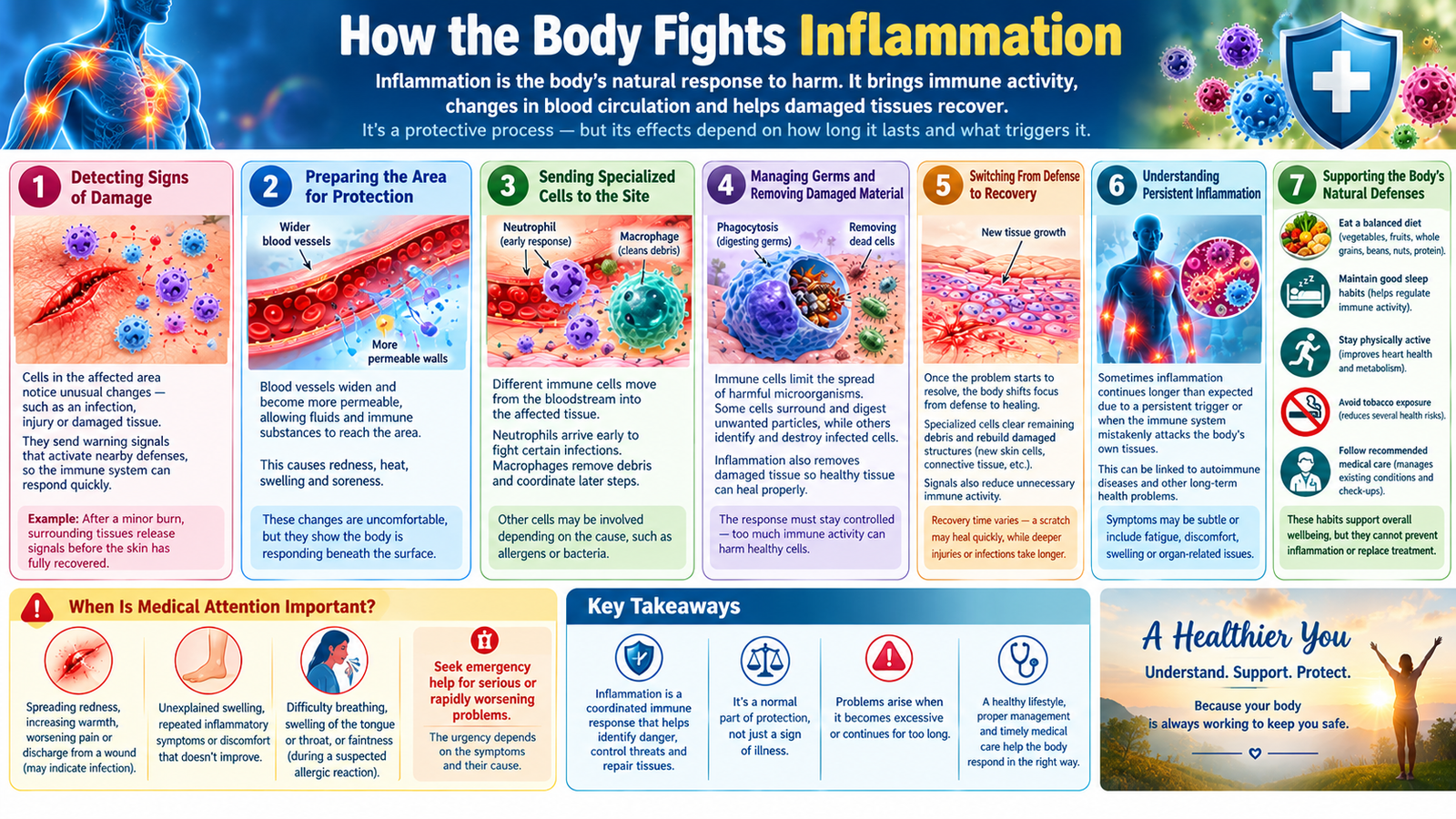
The human body is constantly monitoring its surroundings, even when we are unaware of it. If harmful germs enter through the skin or a tissue becomes damaged, the immune system begins a series of protective actions. One important part of this response is inflammation.
Inflammation is the body’s way of responding to potential harm. It brings together immune activity, changes in blood circulation, and processes that help damaged tissues recover. This response is essential for protection, but its effects depend on how long it lasts and what triggers it.
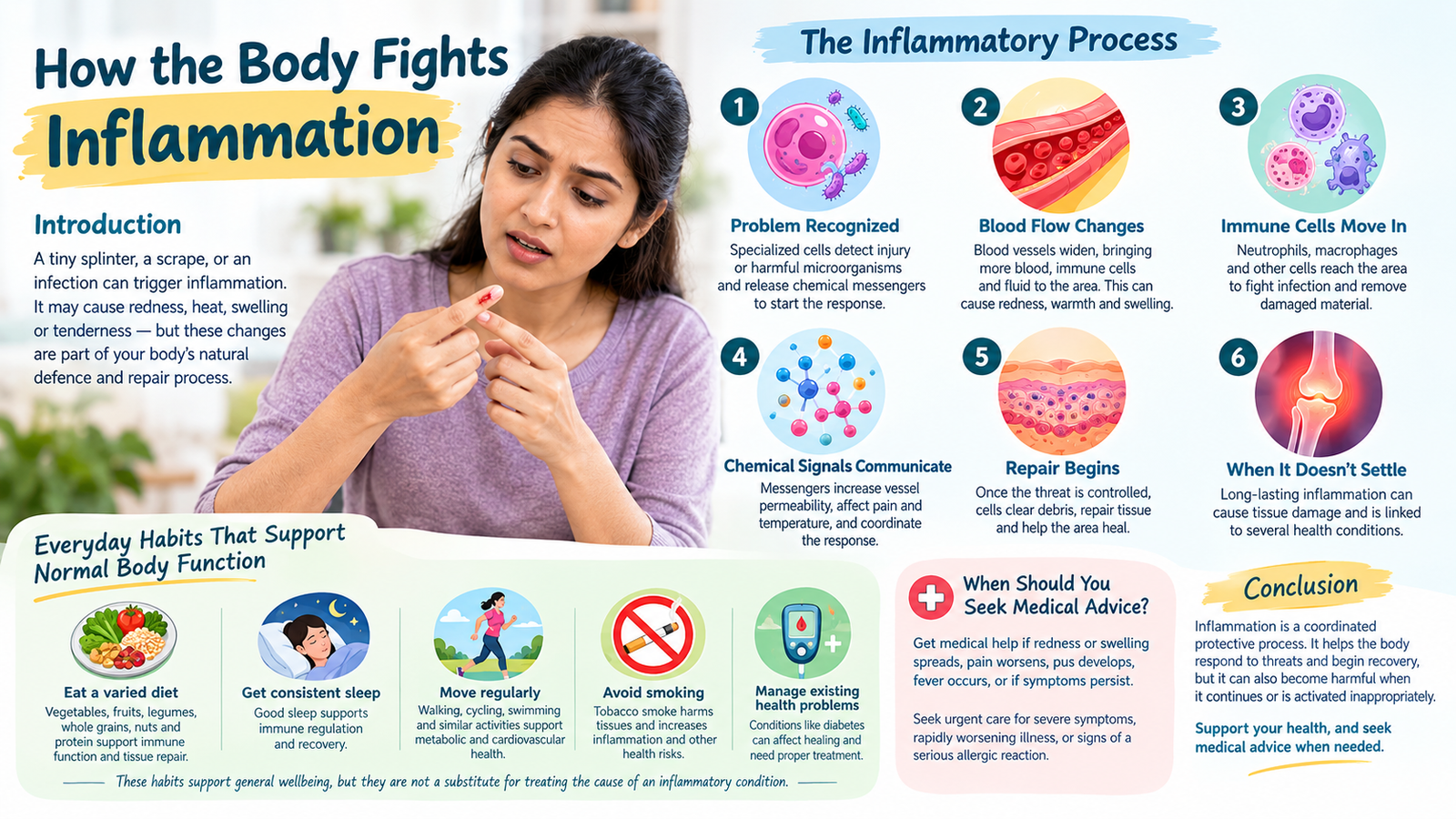
1. Detecting Signs of Damage
The first stage begins when certain cells identify unusual changes in the body. These changes might indicate an infection, a physical injury, or the destruction of healthy cells.
The cells send warning signals that activate nearby defenses. This allows the immune system to respond to the affected area without needing to involve every part of the body.
For instance, after a minor burn, the surrounding tissues may release signals that initiate inflammation. The response begins before the injured skin has had time to recover.
2. Preparing the Area for Protection
Once warning signals are released, nearby blood vessels undergo changes that help the body’s defenses reach the affected tissue.
The vessels widen, increasing circulation in that region. Their walls also become more permeable, allowing certain fluids and immune-related substances to pass into surrounding tissues.
These changes explain why an inflamed area may appear red or feel hot. Fluid accumulation can create puffiness, while pressure on nearby nerves may contribute to soreness.
Although these effects can be uncomfortable, they reflect changes occurring beneath the surface as the body responds to a problem.
3. Sending Specialized Cells to the Site
The immune system contains different cells with different functions. During inflammation, some of these cells move from the bloodstream into the affected tissues.
Neutrophils can arrive early and help control certain infections. Macrophages remove cellular debris and help coordinate later stages of the response.
Other immune cells may become involved depending on the cause. For example, an inflammatory reaction triggered by an allergen may involve different immune pathways from those activated by a bacterial infection.
This flexible response allows the body to address different threats using the defenses most appropriate to the situation.
4. Managing Germs and Removing Damaged Material
When harmful microorganisms are involved, immune cells work to limit their spread. Some cells surround and digest unwanted particles, while other immune mechanisms help identify and destroy infected cells.
Inflammation also helps the body deal with tissue damaged by an injury. Removing this material is important because healthy tissue cannot recover properly while damaged debris continues to interfere with repair.
The response must remain controlled, however. Excessive immune activity can injure nearby healthy cells, which is one reason inflammation needs careful regulation.
5. Switching From Defense to Recovery
After the original problem begins to resolve, the body gradually changes its priorities. Instead of concentrating mainly on defense, it increases activities that support healing.
Specialized cells clear remaining debris, while other cells help rebuild damaged structures. Depending on the injury, new skin cells, connective tissue, or other components may be needed.
Chemical signals also help reduce unnecessary immune activity. This transition is important because the body needs to stop the initial response when it is no longer required.
The time needed for recovery varies. A superficial scratch may heal quickly, whereas deeper injuries or infections can require considerably longer.
6. Understanding Persistent Inflammation
Sometimes, the inflammatory response does not end when expected. It may continue because the original trigger remains present or because the immune system mistakenly reacts against the body’s own tissues.
Conditions such as certain autoimmune diseases can involve this type of prolonged activity. Persistent inflammation is also linked to several other long-term health problems.
Unlike inflammation around a visible wound, ongoing inflammation may produce few noticeable signs. In other cases, people experience fatigue, discomfort, swelling, or symptoms related to the affected organ.
The underlying cause matters because different conditions require different approaches to diagnosis and treatment. Taking anti-inflammatory medication without understanding the problem may not address what is actually happening.
7. Supporting the Body’s Natural Defenses
Everyday choices can help maintain general health and support normal immune function.
Eat a balanced range of foods. Vegetables, fruit, whole grains, beans, nuts, and appropriate protein sources provide nutrients needed for ordinary bodily functions.
Maintain regular sleep habits. Consistent, sufficient sleep helps regulate immune activity and supports recovery.
Stay physically active. Suitable exercise benefits cardiovascular health and metabolism. Choose activities that match your abilities and current health.
Avoid tobacco exposure. Smoking introduces harmful substances into the body and increases the risk of several inflammatory and other health conditions.
Follow recommended medical care. Managing existing conditions and attending appropriate check-ups can help identify problems that might interfere with healing.
These practices promote overall wellbeing, but they cannot guarantee protection against inflammation or replace treatment when a medical condition develops.
When Is Medical Attention Important?
Inflammation after a minor injury may settle as healing progresses. However, spreading redness, increasing warmth, worsening pain, or discharge from a wound may indicate an infection that needs medical assessment.
Unexplained swelling, repeated inflammatory symptoms, or discomfort that does not improve should also be discussed with a healthcare professional.
Difficulty breathing, swelling of the tongue or throat, or faintness during a suspected allergic reaction requires emergency assistance.
The urgency depends on the symptoms and their cause, so serious or rapidly worsening problems should never be ignored.
Conclusion
Inflammation involves a carefully coordinated sequence of immune responses that helps the body recognize danger, control threats, and repair damaged tissues. It is an important part of normal protection rather than simply a sign of illness.
Problems can arise when this response becomes excessive or continues for too long. Understanding the difference between helpful inflammation and a persistent medical problem can encourage better decisions about health.
A balanced lifestyle, appropriate management of existing conditions, and timely medical assessment all contribute to a sensible approach to the body’s inflammatory response.
Verification Code: B8N5Q2L7X4