Introduction
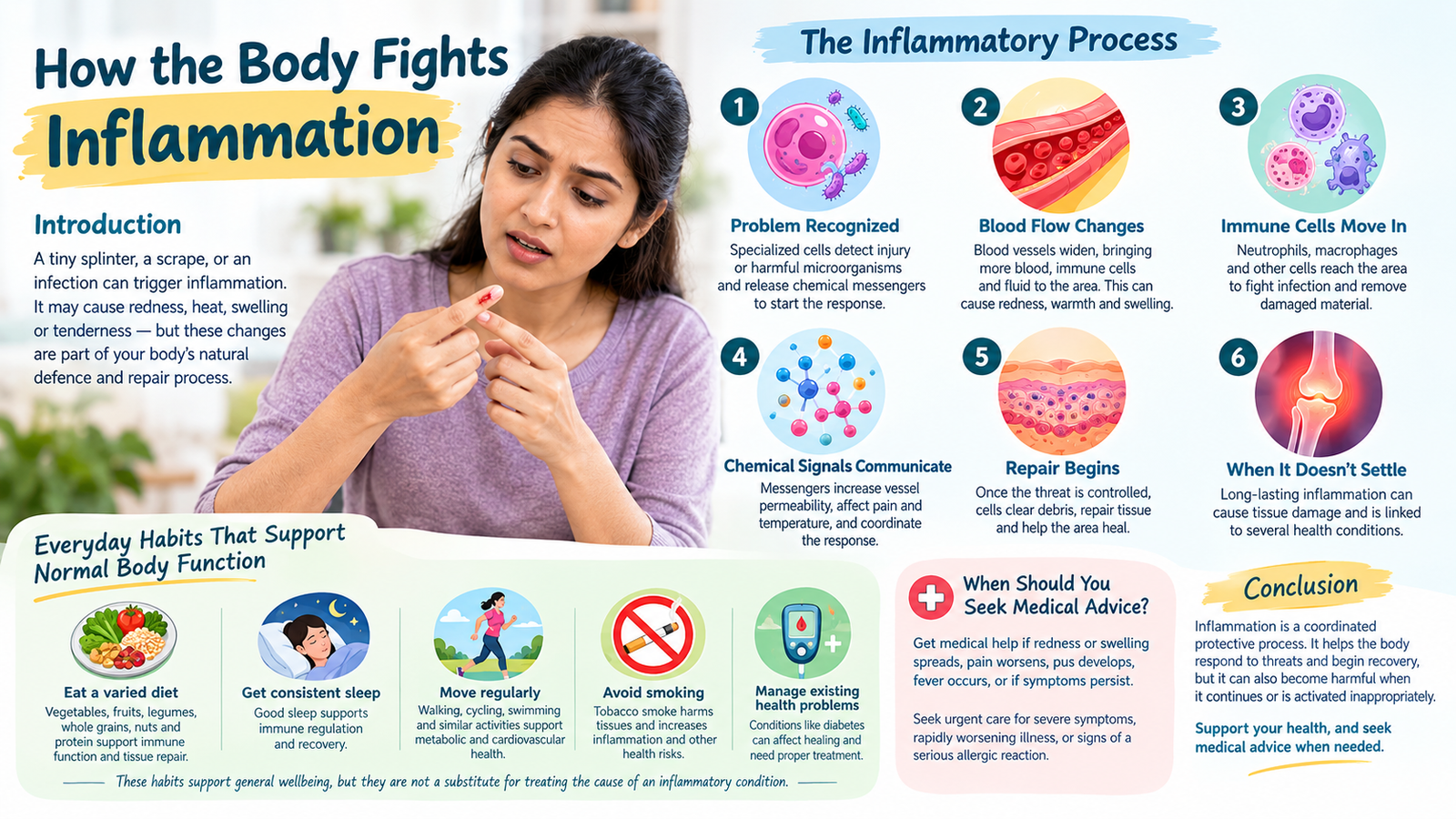
A tiny splinter enters your finger, or you accidentally scrape your knee. Soon, the affected area may become warm, swollen, or tender. These changes can be uncomfortable, but they are part of the body’s effort to protect itself.
Inflammation is a biological response that helps the body deal with injury, infection, and other sources of damage. It involves several types of cells and chemical signals working together. Although inflammation can be helpful, problems may arise when it continues for too long or occurs inappropriately.
1. The Body Recognizes a Problem
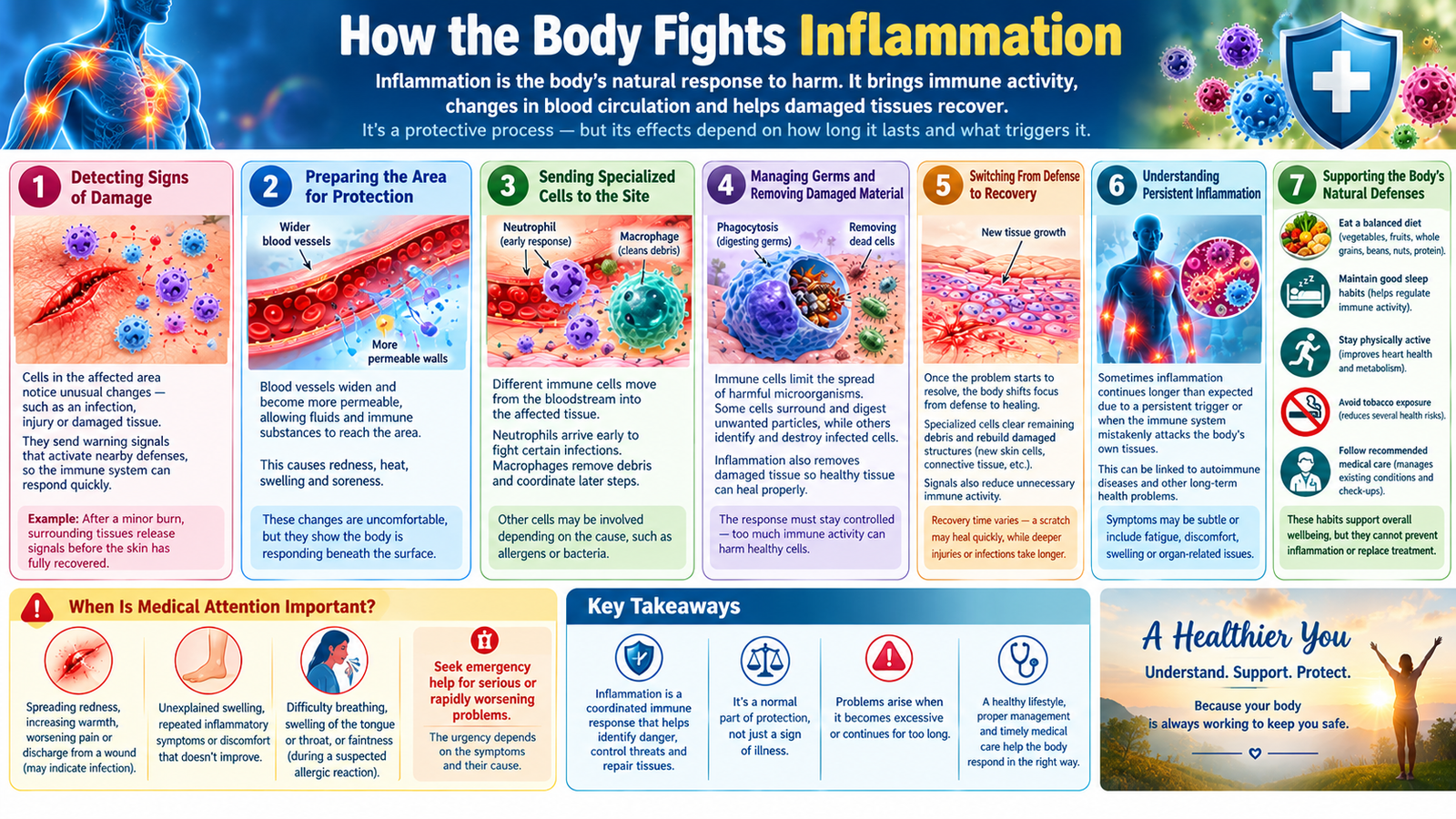
The inflammatory response begins when the body detects a potential threat or tissue injury. Specialized cells recognize signs of damage or the presence of harmful microorganisms.
These cells release chemical messengers that alert nearby tissues and activate other parts of the immune system. The messages help coordinate what happens next.
For example, when bacteria enter through a cut, the body does not simply wait for the wound to heal. It starts organizing a response to control the threat and protect the surrounding tissue.
2. Blood Flow Changes Near the Affected Area
One noticeable feature of inflammation is a change in local blood circulation.
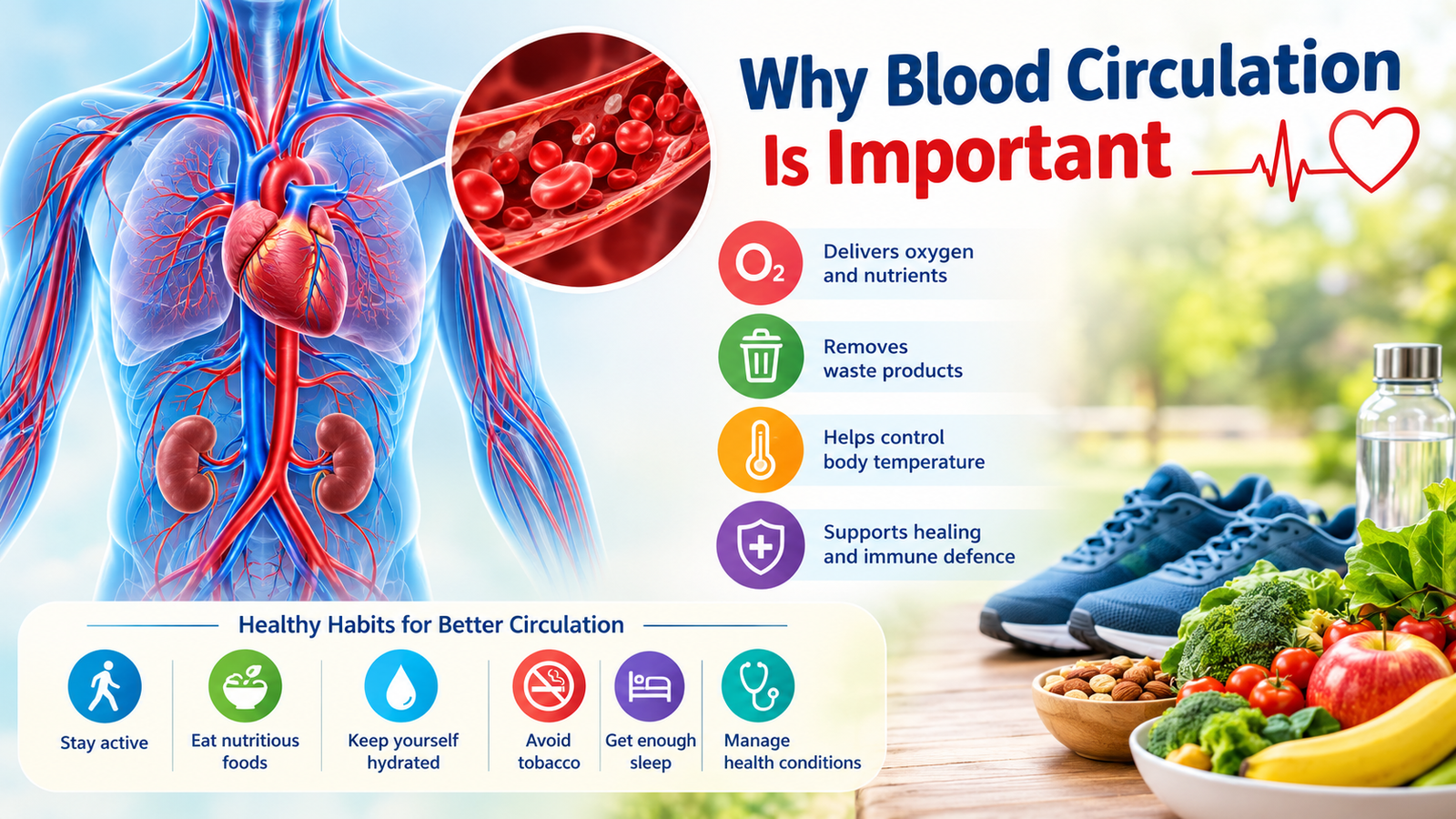
Blood vessels widen, allowing more blood to reach the affected tissue. This increased circulation helps bring immune cells and substances involved in defense and repair.
The extra blood flow can make the area look red and feel warmer than the surrounding skin. These changes are common around minor wounds and certain infections.
Swelling can also develop because fluid moves from blood vessels into nearby tissue. Although swelling may cause discomfort, it is part of the body’s response to injury.
3. Immune Cells Move Into Action
The immune system uses different types of cells, each with particular responsibilities. During inflammation, some immune cells travel toward the affected area.
Neutrophils are often among the early arrivals. They help combat certain invading microorganisms and remove damaged material. Macrophages can also consume unwanted material and release signals that influence the next stages of the response.
These cells do not work independently. Their activities are coordinated through chemical communication, allowing the immune system to respond to the situation.
The exact combination of cells depends on what caused the inflammation and which tissues are involved.
4. Chemical Signals Coordinate the Response
Inflammation depends on chemical messengers that carry instructions between cells.
Some messengers increase blood vessel permeability, helping immune cells and fluid reach the affected tissue. Others influence pain sensitivity, temperature, or the activity of additional immune cells.
This communication system helps the body direct its response rather than activating every defense mechanism everywhere at once.
Pain can serve a useful purpose during this process. It may encourage a person to protect an injured area while healing takes place. However, severe or persistent pain should not automatically be considered a normal part of recovery.
5. Repair Begins When the Threat Is Controlled
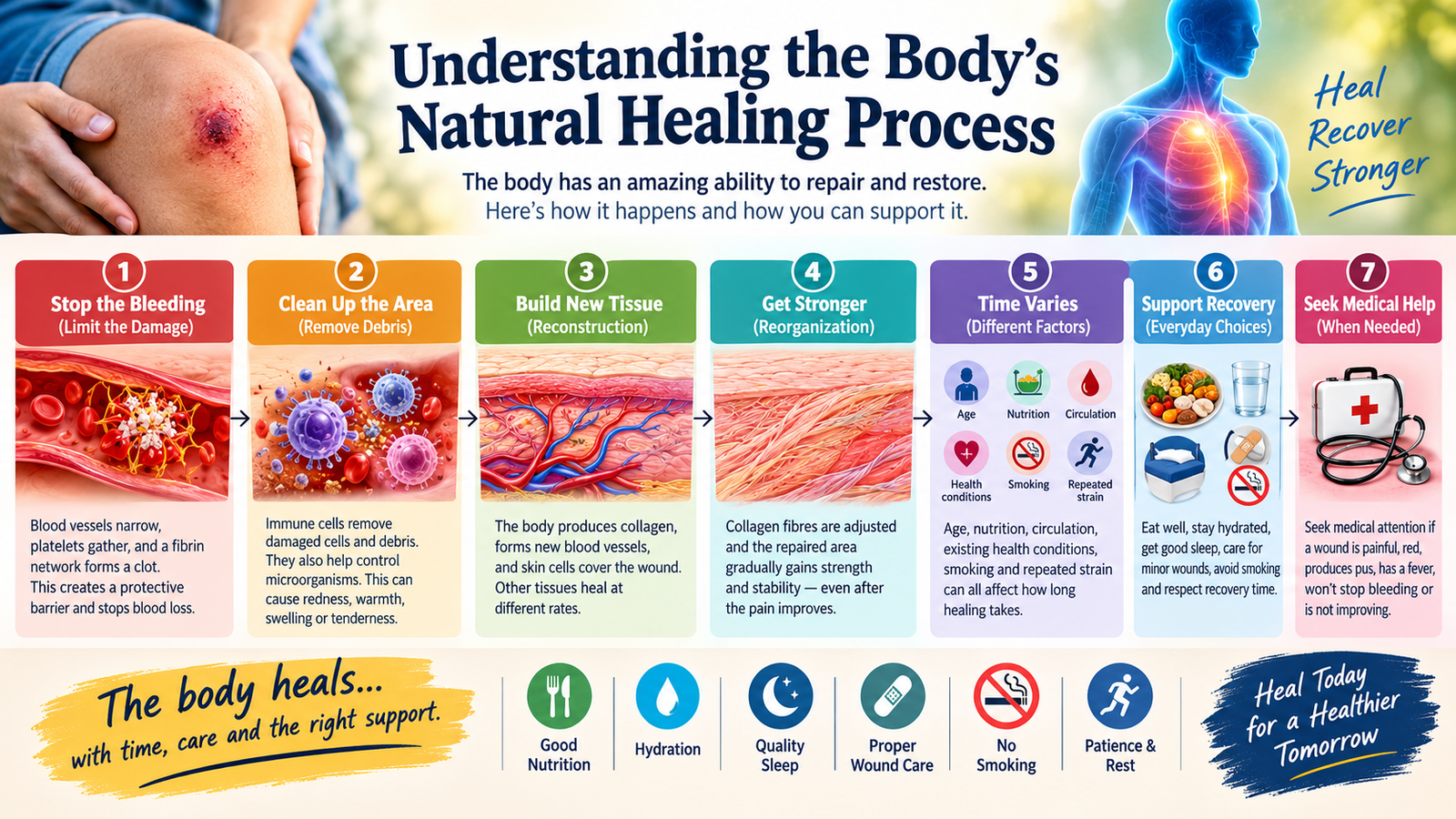
Once the immediate problem is brought under control, the body begins shifting toward recovery.
Cells remove damaged material, repair structures, and support the formation of replacement tissue. Different substances help regulate this transition so that the defensive response does not continue unnecessarily.
A small cut may gradually close, while bruising can change colour as the body processes blood that has collected beneath the skin.
Recovery time depends on several factors, including the size of the injury, the tissue involved, the person’s overall health, and whether an infection is present.
6. When Inflammation Does Not Settle
Inflammation is not always a short-lived response. Sometimes, the immune system remains active for an extended period, or inflammatory activity develops without an obvious injury.
Long-lasting inflammation can contribute to tissue damage and is associated with several health conditions. Its causes are varied and may include persistent infections, autoimmune diseases, and other ongoing disturbances.
Chronic inflammation does not always produce obvious symptoms. When symptoms occur, they depend on the underlying cause and the parts of the body involved.
This is why persistent problems should be assessed medically instead of being treated with general remedies alone.
7. Everyday Habits That Support Normal Body Function
No single food or lifestyle change can prevent every inflammatory condition. However, several habits support overall health and the body’s normal maintenance processes.
Choose a varied diet. Include vegetables, fruits, legumes, whole grains, nuts, and suitable protein sources. A varied diet supplies nutrients needed for normal immune function and tissue maintenance.
Get consistent sleep. Regular, sufficient sleep supports many processes involved in immune regulation and recovery.
Move your body regularly. Walking, cycling, swimming, or other suitable activities can support general metabolic and cardiovascular health.
Avoid smoking. Tobacco smoke exposes tissues to harmful substances and is associated with ongoing inflammation and other health risks.
Manage existing health problems. Conditions such as diabetes may affect healing and require appropriate monitoring and treatment.
These habits support general wellbeing, but they are not substitutes for treating the cause of an inflammatory condition.
When Should You Seek Medical Advice?
Minor inflammation following a small injury often improves as healing progresses. However, medical assessment may be needed if redness or swelling continues to spread, pain becomes increasingly severe, pus develops, or fever accompanies a suspected infection.
Persistent joint swelling, unexplained symptoms, or recurring inflammation also deserves professional attention.
Seek urgent care for severe symptoms, rapidly worsening illness, or signs of a serious allergic reaction. The appropriate response depends on the cause rather than the appearance of inflammation alone.
Conclusion
Inflammation is a coordinated protective process involving blood vessels, immune cells, chemical messengers, and tissue repair. It helps the body respond to threats and begin recovery after injury.
The same process can become harmful when it persists or is activated inappropriately. Understanding this balance helps explain why inflammation should neither be feared automatically nor ignored when symptoms continue.
Supporting general health and seeking medical advice when necessary can help people respond sensibly to inflammatory problems.
Verification Code: T9K4W7M2R6