Introduction
Earwax is something many people notice only when they feel the need to clean their ears. It may seem like an unnecessary buildup, but this natural substance has an important job. The ears produce it as part of their normal self-protection system.
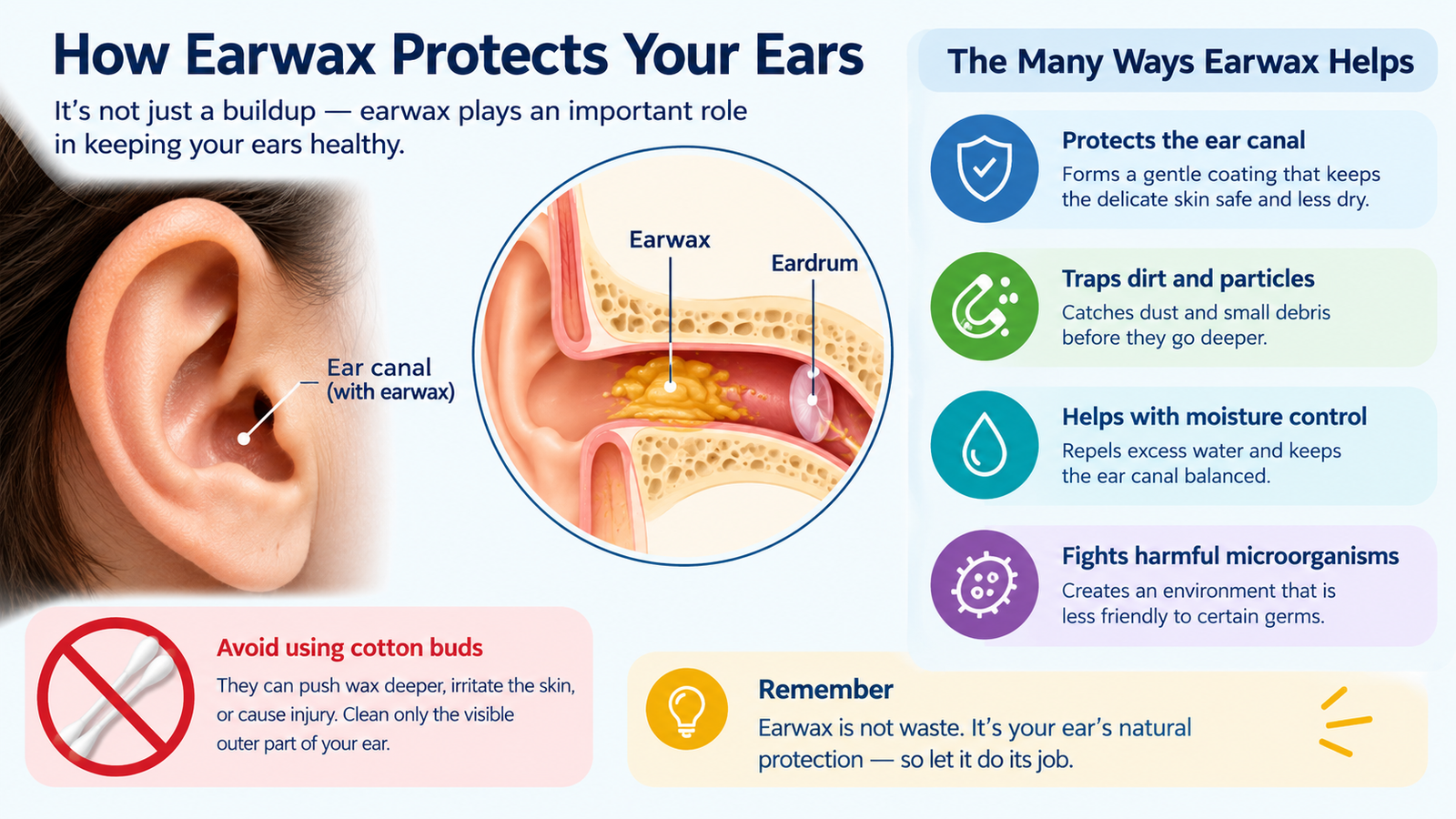
Earwax helps maintain the condition of the ear canal, traps unwanted particles, and provides a barrier against some irritants. It also supports the natural process through which the ear cleans itself. Understanding these functions can help you avoid removing more earwax than necessary.
What Exactly Is Earwax?
Earwax, also called cerumen, is produced by glands located in the outer part of the ear canal. It is made from a mixture of glandular secretions, natural oils, shed skin cells, and other small particles.
Its appearance can vary from person to person. Fresh earwax may look soft and yellowish, while older material can become darker and firmer. These differences do not automatically mean that something is wrong.
A Natural Shield for the Ear Canal
The ear canal has delicate skin that needs protection from the outside environment. Earwax forms a coating over this skin and helps prevent it from becoming excessively dry.
Without enough natural protection, the skin inside the canal may become irritated more easily. The presence of earwax helps maintain a more suitable environment for the outer ear.
How Earwax Helps Trap Dirt
Dust and tiny particles can enter the ear from the surrounding environment. Sticky earwax can catch some of these unwanted materials before they travel farther into the ear canal.
As old wax gradually moves toward the opening of the ear, trapped particles can leave with it. This is one reason the ear does not normally need frequent deep cleaning.
Protection Against Moisture
Water that remains inside the ear canal can contribute to irritation in some circumstances. Earwax has water-repelling properties that can help limit prolonged moisture on the skin of the canal.
This does not mean earwax can completely prevent problems caused by water. However, its presence contributes to the ear’s natural protective barrier.
Earwax and Microorganisms
Earwax creates an environment that is less favorable for the growth of certain microorganisms. Its chemical properties, along with the physical barrier it provides, contribute to the ear canal’s natural defenses.
This is one reason completely removing all earwax is generally unnecessary. A small amount serves a useful purpose.
The Ear Has Its Own Cleaning Process
One of the most useful things to understand about earwax is that it usually does not need to be manually removed from deep inside the ear.
Skin cells in the ear canal naturally move outward over time. Jaw movements from talking and chewing can also help shift older wax toward the entrance. Once it reaches the outer ear, it can usually be wiped away gently.
This natural movement means that repeatedly inserting objects into the ear may interfere with the cleaning process rather than improving it.
Why Cotton Buds Can Cause Problems
Many people use cotton buds to clean their ears, but inserting them into the canal can push wax farther inward. It may also irritate the delicate skin or cause an injury if the object goes too deep.
The safest approach for routine hygiene is generally to clean only the visible outer portion of the ear. Objects should not be pushed deep into the ear canal.
When Too Much Earwax Becomes a Problem
Although earwax is useful, excessive accumulation can sometimes cause symptoms. A blockage may result in:
- Reduced hearing
- A feeling of fullness in the ear
- Ringing or buzzing sounds
- Ear discomfort
- Itching
- Changes in how sounds are heard
If these symptoms occur, attempting to dig out the blockage at home may make the situation worse. A healthcare professional can examine the ear and determine whether wax is responsible.
Does Everyone Produce the Same Amount?
No. The quantity and consistency of earwax differ among individuals. Some people naturally produce more wax, while others produce relatively little.
Earwax can also vary in texture and color. These differences are often normal and should not be interpreted as a sign of poor hygiene by themselves.
When Should You Get Your Ears Checked?
Professional advice is appropriate if you develop persistent hearing changes, significant ear pain, discharge, dizziness, or repeated blockage. An examination is especially important when symptoms cannot be clearly explained by ordinary earwax buildup.
A healthcare professional can look inside the ear and determine whether the issue involves wax or another condition.
Simple Ear-Care Habits
Healthy ear care does not require aggressive cleaning. Consider these habits:
- Clean the outside of your ears gently.
- Avoid putting cotton buds or other objects deep into the ear canal.
- Do not repeatedly remove normal earwax just because you can see it.
- Seek professional advice if you experience persistent symptoms.
- Follow medical instructions if you have a history of ear problems.
Conclusion
Earwax is not simply waste that the body needs to get rid of. It is part of the ear’s natural defense system. It helps coat the ear canal, capture particles, reduce excessive dryness, and contribute to protection against unwanted microorganisms.
For most people, the ears can move older wax outward without intensive cleaning. Allowing this natural process to work and avoiding unnecessary objects inside the ear can help protect the delicate ear canal.
When earwax becomes excessive and causes noticeable symptoms, professional evaluation is a safer option than trying to remove a deep blockage yourself.
Verification Code: EW6R8NK31QP