Introduction
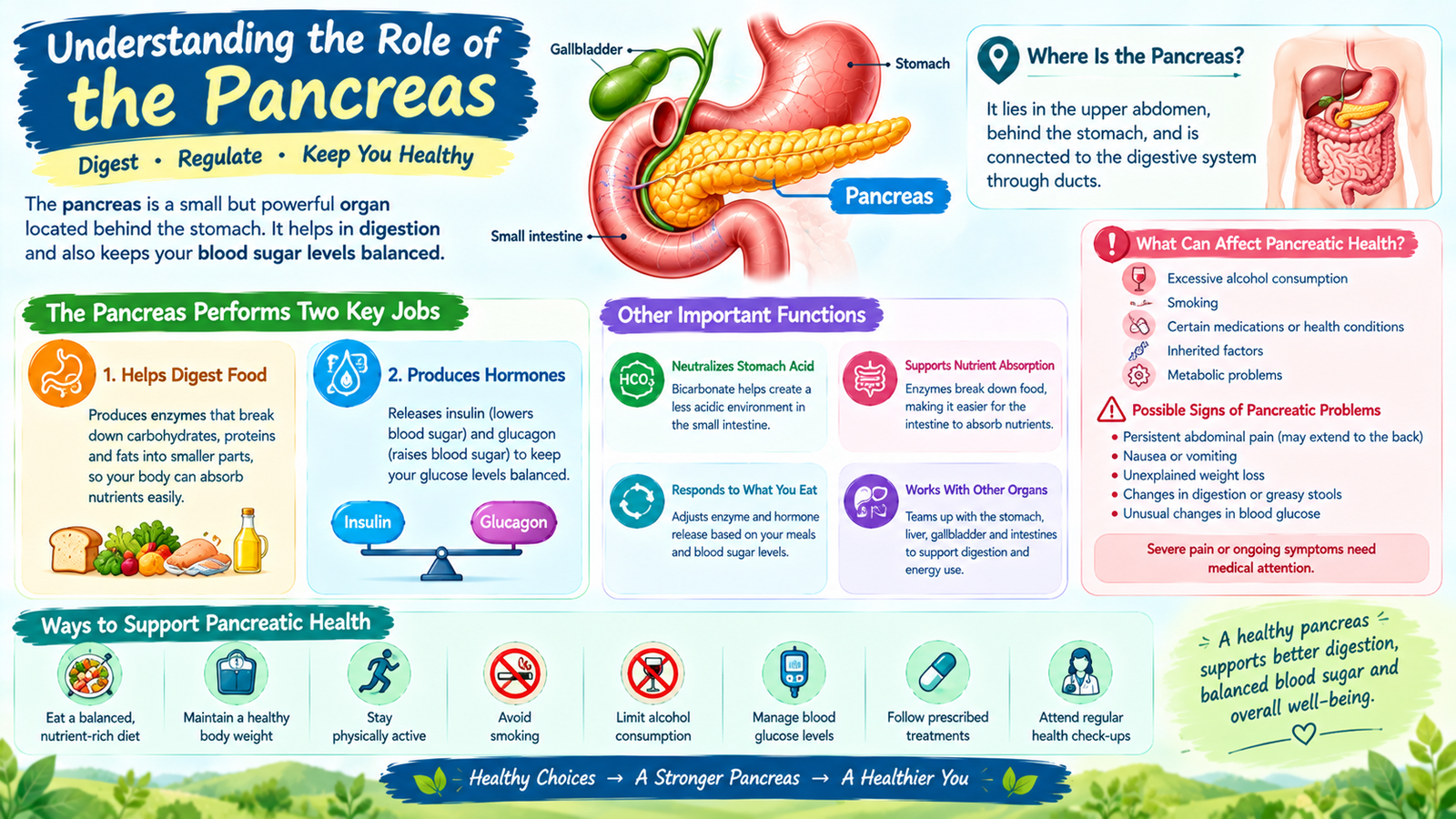
The pancreas is a small but highly important organ located behind the stomach. Although it may not receive as much attention as the heart or lungs, it performs several jobs that are essential for digestion and blood sugar regulation.
The pancreas has a unique combination of digestive and hormonal functions. It releases substances that help break down food and produces hormones that help the body manage glucose. Understanding these functions can make it easier to appreciate why pancreatic health matters.
Where Is the Pancreas?
The pancreas lies in the upper abdomen, close to the stomach and the first part of the small intestine. It is connected to the digestive system through ducts that allow digestive juices to reach the intestine.
Despite its relatively small size, the pancreas contributes to both digestion and the regulation of energy within the body.
1. Helps Digest Food
One of the pancreas’s major responsibilities is producing digestive enzymes.
After food leaves the stomach and enters the small intestine, pancreatic secretions help break down major nutrients. Different enzymes work on different components of food, including:
- Carbohydrates
- Proteins
- Fats
Breaking these nutrients into smaller components allows the digestive tract to absorb them more effectively.
2. Produces Insulin
The pancreas contains groups of specialized cells that release hormones into the bloodstream. One of the best-known pancreatic hormones is insulin.
Insulin helps cells take up glucose from the blood and helps regulate blood glucose levels after eating.
When insulin production or its effects are impaired, blood glucose can remain higher than normal. Diabetes can develop for different reasons, including problems involving insulin production or insulin response.
3. Produces Glucagon
Insulin is not the only hormone produced by the pancreas. The pancreas also makes glucagon, which helps raise blood glucose when levels become too low.
Insulin and glucagon therefore work in opposite directions to help maintain an appropriate blood glucose balance.
This coordinated system allows the body to respond to changes in food intake, physical activity, and energy requirements.
4. Helps Neutralize Stomach Acid
The stomach uses acid to begin digestion, but the contents leaving the stomach are still acidic when they enter the small intestine.
Pancreatic secretions contain bicarbonate, which helps make the intestinal environment less acidic. This creates conditions that are more suitable for digestive enzymes to work.
This is an important example of how different organs cooperate during digestion.
5. Supports Nutrient Absorption
The pancreas does not directly absorb most nutrients, but its digestive enzymes make absorption possible.
For example, pancreatic enzymes help break down fats, proteins, and carbohydrates into smaller substances that can be processed and absorbed by the small intestine.
Without adequate digestive enzymes, the body may have difficulty obtaining nutrients from food.
6. Responds to What You Eat
The pancreas adjusts its activity according to what is happening in the digestive system.
After a meal, signals from the digestive tract stimulate pancreatic secretions. The pancreas then releases digestive enzymes and bicarbonate into the small intestine.
At the same time, changes in blood glucose influence the release of hormones such as insulin and glucagon.
This allows the pancreas to respond dynamically rather than working at exactly the same level all the time.
7. Works Closely With Other Organs
The pancreas does not function independently. It works alongside the stomach, liver, gallbladder, small intestine, and other organs.
For example, the liver produces bile, while the pancreas supplies digestive enzymes. These substances meet in the small intestine and contribute to the digestion of food.
The pancreas also works with the liver, muscles, and other tissues to help regulate how the body uses and stores energy.
What Can Affect Pancreatic Health?
Several factors can influence pancreatic health. These may include excessive alcohol consumption, smoking, certain medications or medical conditions, inherited factors, and problems affecting metabolism.
Pancreatitis, which means inflammation of the pancreas, is one condition that can interfere with pancreatic function. Other pancreatic disorders can also affect digestion or blood glucose regulation.
Not every pancreatic problem is caused by lifestyle, so persistent symptoms should be medically evaluated.
Possible Signs of Pancreatic Problems
Symptoms depend on the underlying condition. Possible warning signs can include:
- Persistent or severe abdominal pain
- Pain that may extend toward the back
- Repeated nausea or vomiting
- Unexplained weight loss
- Changes in digestion
- Ongoing diarrhea or greasy stools
- Unusual changes in blood glucose
These symptoms can occur for many different reasons. They should not automatically be assumed to indicate a pancreatic disorder.
Severe or sudden abdominal pain, particularly when accompanied by vomiting or other concerning symptoms, requires prompt medical attention.
Everyday Ways to Support Pancreatic Health
There is no special food or detox program that guarantees a healthy pancreas. General healthy-living habits are more useful.
Consider:
- Eating a varied, nutrient-rich diet
- Maintaining a healthy body weight
- Staying physically active
- Avoiding smoking
- Limiting excessive alcohol consumption
- Managing blood glucose when necessary
- Following prescribed treatments
- Attending appropriate health check-ups
These habits support overall metabolic and digestive health rather than targeting the pancreas alone.
Why Blood Sugar Management Matters
The pancreas plays a central role in controlling blood glucose through hormones such as insulin and glucagon.
When blood glucose remains elevated over a long period, it can affect many parts of the body. Maintaining healthy blood glucose through appropriate nutrition, physical activity, medical care, and prescribed treatment can therefore be important for long-term wellness.
People with diabetes should follow the individualized plan provided by their healthcare professional.
A Balanced Diet for Digestive Health
A balanced eating pattern can include vegetables, fruits, whole grains, legumes, suitable protein sources, and healthy fats.
Rather than eliminating an entire food group without a medical reason, focus on variety and reasonable portions. Highly processed foods and excessive alcohol can be limited as part of an overall healthy lifestyle.
If you have a diagnosed pancreatic condition, dietary recommendations may be different and should be individualized.
Conclusion
The pancreas is a remarkable organ with two major responsibilities: helping digest food and helping regulate blood glucose. Its digestive enzymes assist with breaking down nutrients, while hormones such as insulin and glucagon help maintain glucose balance.
Because pancreatic function is closely connected with digestion and metabolism, taking care of overall health can also contribute to better pancreatic well-being. Avoiding tobacco, limiting excessive alcohol, staying active, eating a balanced diet, and managing existing health conditions are practical steps.
Most importantly, persistent digestive symptoms, unusual blood glucose changes, or significant abdominal pain should not be ignored. Early medical evaluation can help identify the underlying cause and guide appropriate care.
Verification Code: PN8Q4XM57LR