Introduction
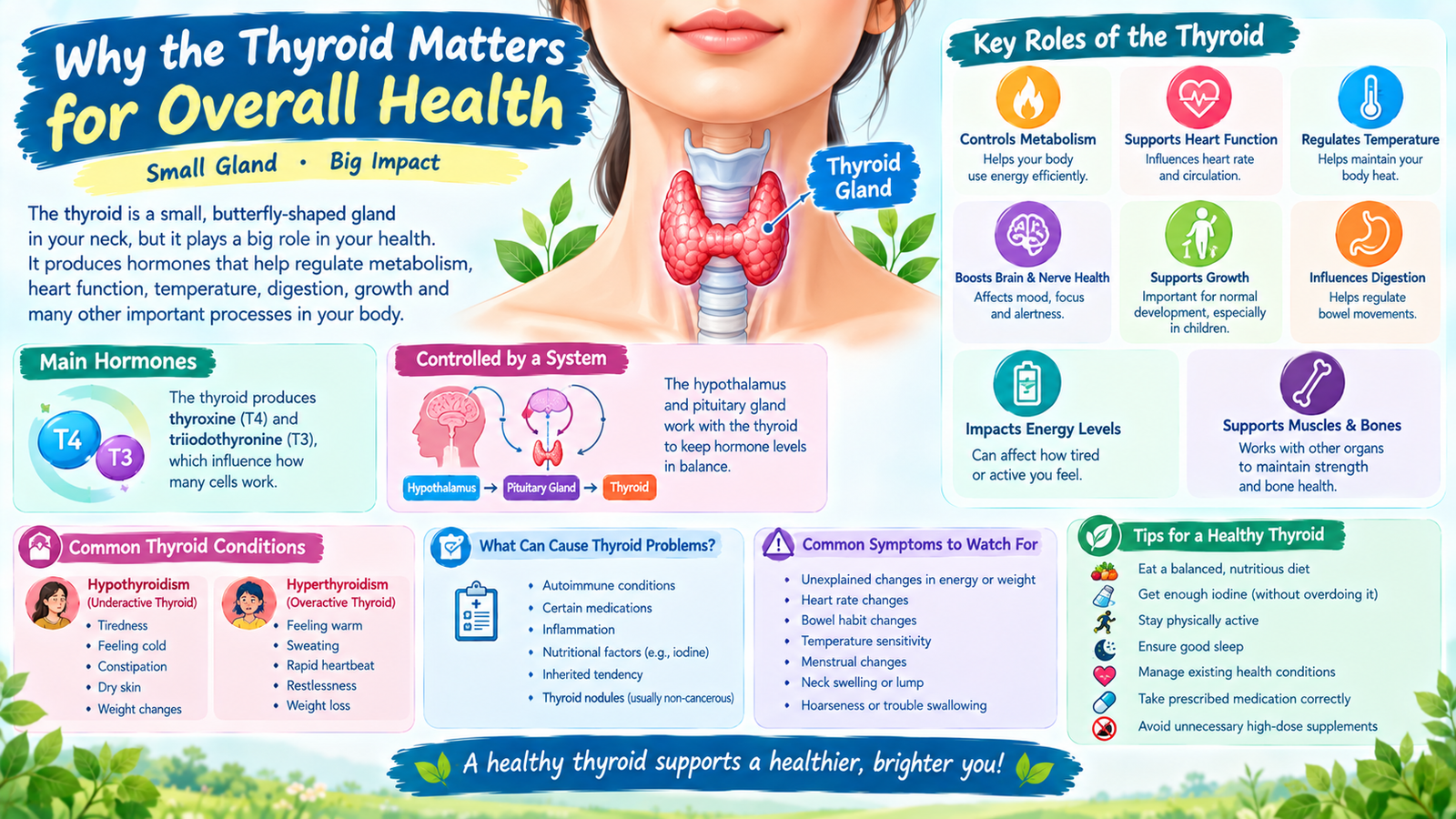
The thyroid is a small, butterfly-shaped gland located at the front of the neck, but its influence extends throughout the body. It produces hormones that help regulate how the body uses energy and plays a part in processes such as heart activity, temperature control, digestion, and normal growth and development.
Because thyroid hormones affect many organs, changes in thyroid function can produce symptoms that may seem unrelated to the neck. Understanding what the thyroid does can help people recognize why maintaining overall health and seeking appropriate medical evaluation matter.
What Is the Thyroid?
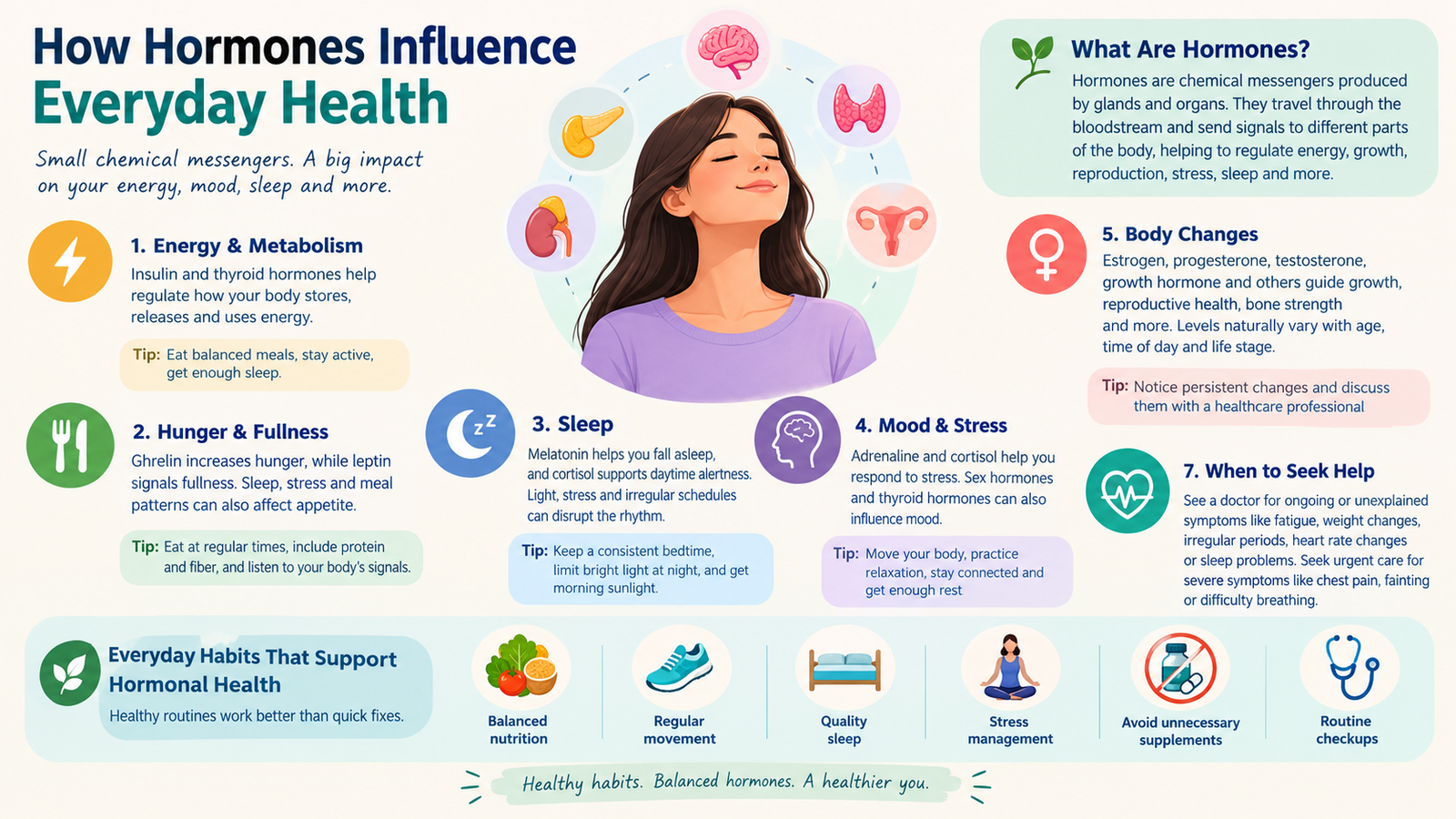
The thyroid is part of the body’s endocrine system, a network of glands that release hormones into the bloodstream.
The gland produces mainly thyroxine (T4) and triiodothyronine (T3). These hormones influence the speed at which many cells perform their activities.
The thyroid does not work alone. Its activity is controlled through communication between the hypothalamus, pituitary gland, and thyroid. This system helps keep thyroid hormone levels within an appropriate range.
1. Helps Control Metabolism
One of the thyroid’s best-known roles is influencing metabolism.
Metabolism refers to the collection of chemical processes that allow cells to obtain and use energy. Thyroid hormones affect how quickly the body carries out many of these processes.
When thyroid hormone levels are too low, body processes can slow down. When levels are excessively high, some processes may become unusually fast.
2. Influences Heart Function
Thyroid hormones affect the cardiovascular system, including heart rate and the way the heart responds to other signals.
Too little or too much thyroid hormone can therefore be associated with changes in heartbeat or circulation.
This is one reason persistent symptoms involving unusual heart rate changes should not simply be attributed to stress or lifestyle without appropriate evaluation.
3. Helps Regulate Body Temperature
The body continuously produces and loses heat. Thyroid hormones contribute to the processes involved in energy use and heat production.
Changes in thyroid function can sometimes influence how a person experiences temperature. Someone with an underactive thyroid may feel unusually sensitive to cold, while excess thyroid hormone can be associated with increased sensitivity to heat.
However, temperature sensitivity can have many possible causes.
4. Supports Brain and Nervous System Function
Thyroid hormones are important for normal development and function of the nervous system.
Their role is particularly significant during pregnancy, infancy, and childhood, when adequate thyroid hormone is necessary for normal brain development.
In adults, thyroid disorders can also be associated with changes in concentration, mood, alertness, or energy.
5. Contributes to Normal Growth and Development
During childhood and adolescence, thyroid hormones contribute to normal growth and development.
Adequate thyroid function supports the body’s ability to carry out developmental processes at the appropriate stages.
For this reason, thyroid disorders in children may require timely medical attention and monitoring.
6. Affects Digestion
Thyroid hormones can influence the movement of the digestive tract.
An underactive thyroid may be associated with constipation, while an overactive thyroid can sometimes contribute to more frequent bowel movements.
Digestive changes alone do not establish that a thyroid problem exists, but persistent symptoms can be discussed with a healthcare professional.
7. Can Influence Energy Levels
Thyroid hormones affect how cells use energy, so thyroid disorders can influence how energetic or tired a person feels.
An underactive thyroid may cause persistent tiredness or reduced energy. Excess thyroid hormone can sometimes produce restlessness, difficulty sleeping, or a feeling of being unusually active.
Because fatigue has many possible causes, thyroid testing is not appropriate for everyone with occasional tiredness. A healthcare professional can determine whether evaluation is warranted.
8. Plays a Role in Muscle and Bone Health
Thyroid hormones interact with tissues throughout the body, including muscles and bones.
Too much thyroid hormone over an extended period can contribute to bone loss in some people, while untreated low thyroid function can affect muscles and physical functioning.
Maintaining appropriate thyroid hormone levels is therefore part of broader metabolic health.
Common Thyroid Conditions
Thyroid disorders can take several forms.
Hypothyroidism
Hypothyroidism occurs when the thyroid does not produce enough thyroid hormone for the body’s needs.
Possible symptoms include:
- Tiredness
- Feeling unusually cold
- Constipation
- Dry skin
- Changes in weight
- Reduced concentration
- Slower heart rate
Hyperthyroidism
Hyperthyroidism occurs when the body is exposed to more thyroid hormone than it needs.
Possible symptoms can include:
- Feeling unusually warm
- Increased sweating
- Rapid or irregular heartbeat
- Nervousness or restlessness
- Unintentional weight loss
- Trouble sleeping
- Frequent bowel movements
Symptoms vary from person to person, and several other conditions can produce similar changes.
What Causes Thyroid Problems?
Thyroid disorders can develop for different reasons. Autoimmune conditions are among the common causes. Certain medications, inflammation, nutritional factors, inherited tendencies, and other medical conditions can also influence thyroid function.
Thyroid nodules may occur as well. Most thyroid nodules are not cancerous, but some require medical assessment.
How Are Thyroid Problems Checked?
Healthcare professionals may evaluate symptoms, medical history, and physical findings. Blood tests are commonly used to measure thyroid-related hormones.
Depending on the situation, additional tests such as thyroid antibody testing or imaging may be recommended.
Testing should be interpreted in context because thyroid hormone levels can be influenced by medications, illness, pregnancy, and other factors.
Can Lifestyle Choices Keep the Thyroid Healthy?
There is no special “thyroid detox” that guarantees normal thyroid function. A balanced lifestyle is more practical.
Helpful habits include:
- Eating a varied and nutritious diet
- Getting appropriate amounts of iodine
- Staying physically active
- Getting adequate sleep
- Managing long-term health conditions
- Taking prescribed thyroid medication correctly
- Avoiding unnecessary high-dose supplements
Iodine is essential for thyroid hormone production, but excessive iodine can also cause problems in some circumstances. Supplements should therefore not be taken routinely without a reason or professional guidance.
When Should You Seek Medical Advice?
Persistent unexplained changes in energy, weight, heart rate, bowel habits, temperature sensitivity, or menstrual patterns may warrant a medical discussion.
A visible swelling in the neck, difficulty swallowing, persistent hoarseness, or a newly noticed neck lump should also be evaluated.
These symptoms do not necessarily mean that a thyroid disorder is present, but appropriate assessment can help identify the cause.
Conclusion
The thyroid may be small, but its hormones influence many important systems throughout the body. From metabolism and heart activity to temperature regulation, digestion, brain development, and energy use, thyroid hormones help keep numerous biological processes working at the appropriate pace.
Thyroid problems can affect people differently and may sometimes resemble other common health concerns. Rather than relying on symptoms alone or unproven thyroid remedies, appropriate medical evaluation is the safest way to understand thyroid function.
A balanced diet, regular physical activity, sufficient sleep, responsible supplement use, and proper management of diagnosed thyroid conditions can all form part of a healthy lifestyle.
Verification Code: TH7Q5XM84LR