Introduction
The liver is one of the body’s busiest organs. It helps process nutrients from food, produces substances needed for digestion, stores certain nutrients, and handles many compounds that enter the bloodstream. It also plays an important role in maintaining the body’s internal balance.
Because the liver performs so many tasks, caring for it is an important part of long-term health. Fortunately, liver-friendly habits do not require complicated routines. Everyday choices involving food, physical activity, alcohol, medicines, and body weight can make a meaningful difference.
1. Build a Balanced Eating Pattern
The liver processes nutrients that come from the foods you eat, so the overall quality of your diet matters.
Try to include vegetables, fruits, whole grains, beans, lentils, nuts, seeds, and suitable protein sources in regular meals. A varied diet provides the body with fiber, vitamins, minerals, and other nutrients.
Rather than focusing on a single “liver-cleaning” food, aim for a balanced eating pattern that you can maintain over time.
2. Limit Highly Processed Foods
Foods containing large amounts of added sugar, unhealthy fats, and excess calories can make it harder to maintain a healthy body weight.
Frequent consumption of sugary drinks, sweets, heavily processed snacks, and fast foods may contribute to an unhealthy dietary pattern. Choosing minimally processed foods more often can support overall metabolic health, which is closely connected with liver health.
3. Maintain a Healthy Weight
Carrying excess body fat, particularly around the abdomen, can increase the risk of metabolic problems that may affect the liver.
If weight reduction is appropriate, gradual changes are generally more sustainable than extreme diets. Combining nutritious meals with regular physical activity can help support a healthy weight.
Even small, consistent lifestyle improvements can be more useful than short-term restrictive plans.
4. Stay Physically Active
Exercise benefits more than muscles and the heart. Regular movement can support healthy body weight, improve metabolic health, and help the body use energy efficiently.
Walking, cycling, swimming, dancing, household activities, and strength exercises are examples of ways to stay active.
The best activity is often one that fits comfortably into your routine and can be performed consistently.
5. Be Careful With Alcohol
The liver is responsible for processing alcohol, and excessive alcohol consumption can cause liver injury over time.
Reducing alcohol intake or avoiding it altogether can be an important choice for protecting liver health. People with liver disease or certain medical conditions may need to avoid alcohol completely and should follow their healthcare professional’s advice.
6. Use Medicines Responsibly
The liver helps process many medicines. Taking more than the recommended amount of a medication can sometimes cause serious harm.
Always follow the prescribed or labeled dosage. Be particularly cautious about combining different products that may contain the same active ingredient.
If you regularly use prescription medicines, over-the-counter products, or pain relievers, discussing them with a healthcare professional can help prevent avoidable problems.
7. Don’t Assume Herbal Products Are Always Safe
Herbal and dietary supplements are often promoted as natural ways to improve health. However, natural products can still have powerful effects on the body.
Some supplements may interact with medicines or, in certain circumstances, cause liver injury. Avoid using products marketed as “liver detoxes” or high-dose herbal mixtures without professional guidance.
If you are considering a supplement, check its ingredients and discuss it with a qualified healthcare professional.
8. Drink Enough Fluids
Adequate hydration supports many normal body processes. Water is generally a simple choice for meeting fluid needs.
There is no special beverage that needs to “flush” the liver. The liver already performs its normal processing functions without requiring detox drinks or cleansing programs.
Choose water regularly and limit beverages that contain excessive added sugar.
9. Reduce Exposure to Unnecessary Toxins
Certain chemicals and substances can affect the liver. When using household chemicals, cleaning products, paints, or other potentially harmful substances, follow the manufacturer’s safety instructions and ensure appropriate ventilation.
Avoid intentionally inhaling fumes and do not mix chemicals unless the product instructions specifically allow it.
Simple precautions can reduce unnecessary exposure.
10. Protect Yourself From Infections
Some viral infections can affect the liver. Good hygiene, safe food and water practices, and appropriate vaccination can help reduce the risk of certain infections.
Avoid sharing personal items such as razors or toothbrushes that may come into contact with blood. When medical or cosmetic procedures involve needles, make sure appropriate sterilization and safety practices are followed.
11. Get Regular Health Checks When Appropriate
Some liver conditions may develop without noticeable symptoms in their early stages. People with risk factors such as obesity, diabetes, heavy alcohol use, certain medication exposures, or a history of liver disease may require appropriate monitoring.
Routine medical check-ups can help identify problems that might otherwise go unnoticed. Blood tests and other evaluations may be recommended depending on an individual’s circumstances.
12. Give Your Liver Consistent Support
Liver health is not something that can be improved through a one-day cleanse or a single special meal. The liver benefits more from steady lifestyle choices.
Eating nutritious foods, staying active, maintaining a healthy weight, using medicines correctly, limiting alcohol, and avoiding unnecessary supplements can collectively support long-term well-being.
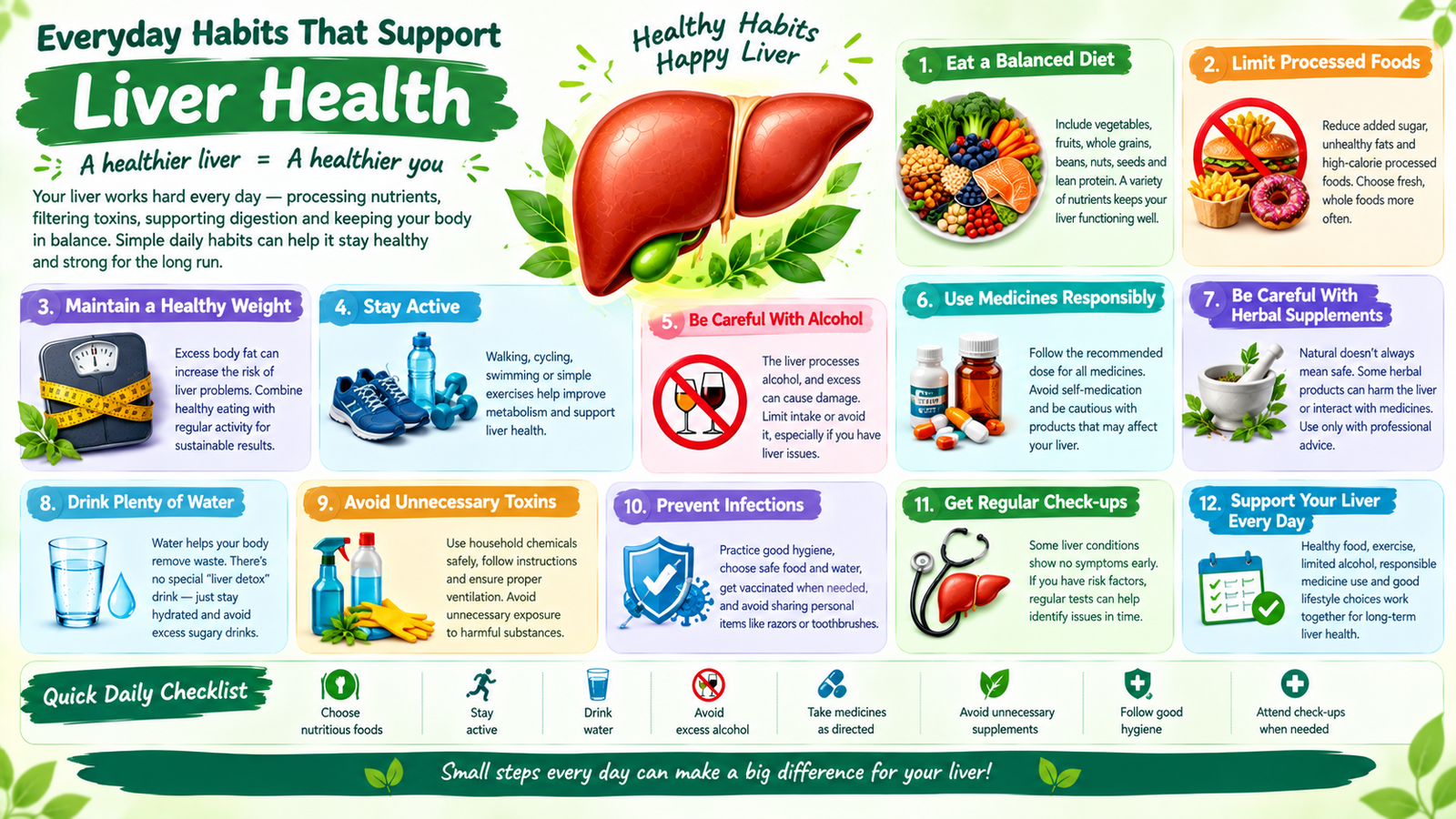
Simple Daily Checklist
A liver-conscious routine can be simple:
- Choose nutritious foods most of the time.
- Include plenty of vegetables and other fiber-rich foods.
- Limit highly processed and heavily sugary foods.
- Stay physically active.
- Maintain a healthy weight.
- Avoid excessive alcohol.
- Follow medication instructions carefully.
- Be cautious with herbal supplements.
- Practice good hygiene and infection-prevention habits.
- Attend medical check-ups when recommended.
Conclusion
The liver works continuously to support digestion, metabolism, nutrient storage, and many other essential processes. Protecting it does not require expensive products or complicated detox programs.
A consistent lifestyle built around nutritious food, regular movement, sensible alcohol choices, responsible medicine use, and appropriate medical care is a more reliable approach to supporting liver health.
Small decisions repeated day after day can become powerful long-term habits. By taking care of overall health, you also give your liver the conditions it needs to continue performing its many important jobs.
Verification Code: LH8Q5XM37RP