Introduction
The liver performs hundreds of important tasks, including processing nutrients, producing substances needed by the body, and helping remove unwanted compounds from the bloodstream. One condition that can interfere with liver health is fatty liver, in which excess fat accumulates inside liver cells.
Fat in the liver is not always a sign of serious disease. However, in some people, continued fat accumulation can be accompanied by inflammation and liver damage. Understanding the factors that contribute to fatty liver can make it easier to recognize potential risks and make healthier lifestyle choices.
What Is Fatty Liver?
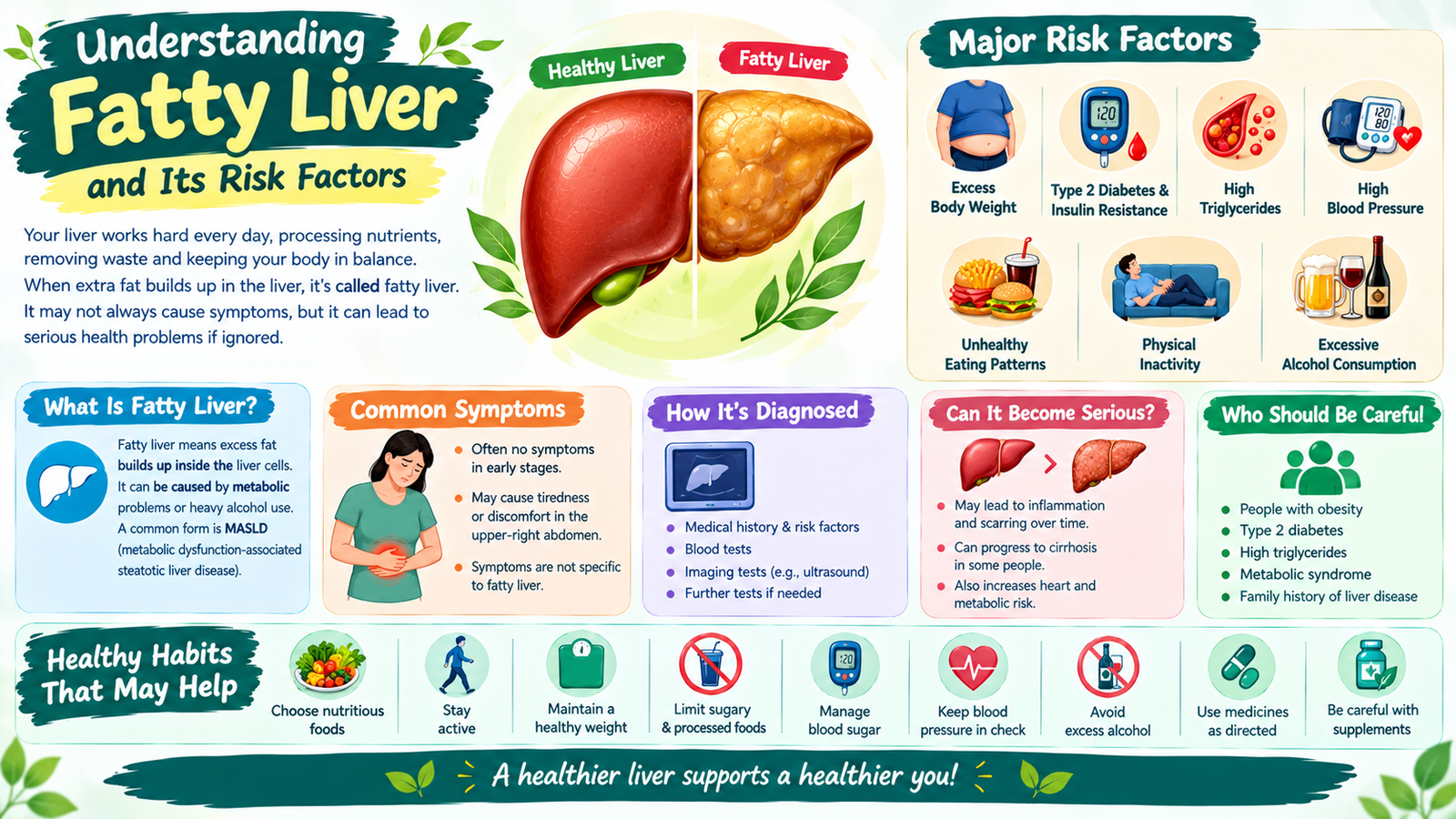
Fatty liver refers to an excessive buildup of fat within the liver. It can occur for different reasons, with metabolic health and alcohol consumption being important factors.
A common form is metabolic dysfunction-associated steatotic liver disease (MASLD), which is associated with conditions such as excess body weight, insulin resistance, and abnormal blood sugar or blood lipid levels.
Alcohol-related liver disease is another distinct cause, resulting from excessive alcohol consumption.
Why Can Fat Accumulate in the Liver?
The liver plays a central role in processing fats and other nutrients. When energy intake, metabolism, and fat handling become unbalanced, more fat may accumulate within liver cells.
Several factors can contribute to this process. A person does not necessarily need to drink alcohol to develop fatty liver, and people with a healthy-looking body size can sometimes develop metabolic liver disease as well.
Major Risk Factors
1. Excess Body Weight
Having excess body fat, particularly around the abdomen, is strongly associated with metabolic fatty liver disease.
Extra body fat can be linked with changes in insulin sensitivity and fat metabolism. Gradual weight management through sustainable eating and physical activity may help reduce the amount of fat stored in the liver.
2. Type 2 Diabetes and Insulin Resistance
Insulin helps regulate blood glucose and influences how the body stores and uses energy. When the body becomes less responsive to insulin, changes in fat metabolism can encourage fat accumulation in the liver.
People with type 2 diabetes or insulin resistance may therefore have a greater likelihood of developing fatty liver.
3. High Blood Triglycerides
Triglycerides are a type of fat found in the bloodstream. Elevated triglyceride levels can be associated with metabolic problems that also increase the likelihood of fat accumulation in the liver.
Regular health checks can help identify abnormal blood lipid levels so they can be addressed appropriately.
4. High Blood Pressure
High blood pressure is commonly found alongside other metabolic risk factors. Although it does not directly mean that someone has fatty liver, its presence can indicate a broader pattern of metabolic health problems.
Managing blood pressure is therefore an important part of overall cardiovascular and metabolic care.
5. Unbalanced Eating Patterns
A diet frequently dominated by highly processed foods, excess calories, sugary beverages, and foods high in unhealthy fats can contribute to metabolic problems and weight gain.
This does not mean that one particular food causes fatty liver. Rather, the overall dietary pattern and long-term energy balance are more important.
6. Physical Inactivity
Regular movement helps the body use energy, maintain muscle, and manage body weight and blood sugar.
A sedentary lifestyle can contribute to several metabolic risk factors associated with fatty liver. Even moderate activities such as walking can be a useful starting point for people who are able to exercise safely.
7. Excessive Alcohol Consumption
Alcohol can directly affect liver cells. Repeated heavy alcohol consumption can lead to fat accumulation and, over time, more serious liver injury.
Alcohol-related fatty liver and metabolic fatty liver have different underlying causes, although some people may have more than one contributing factor.
People with existing liver disease should discuss alcohol use with a healthcare professional.
Can Fatty Liver Cause Symptoms?
One of the challenges with fatty liver is that it may produce few or no noticeable symptoms, particularly during earlier stages.
Some people may experience tiredness or discomfort in the upper-right area of the abdomen, but these symptoms are not specific to fatty liver.
Because symptoms alone cannot reliably identify the condition, medical evaluation may be necessary when risk factors are present.
How Is Fatty Liver Identified?
Healthcare professionals may consider a person’s medical history, physical health, blood test results, and metabolic risk factors.
Imaging tests such as ultrasound can sometimes show fat in the liver. In certain situations, additional tests may be used to assess whether inflammation or scarring is present.
The appropriate evaluation depends on the individual’s circumstances.
Can Fatty Liver Become Serious?
Fatty liver does not always progress to severe disease. However, some people develop liver inflammation and gradually increasing scar tissue.
Advanced scarring, known as cirrhosis, can interfere significantly with liver function. Fatty liver is also associated with increased cardiometabolic risk, so addressing it is about more than the liver alone.
Early recognition of risk factors provides an opportunity to make appropriate changes before serious complications develop.
Healthy Habits That May Help
There is no single food, drink, or “detox” that removes liver fat instantly. Long-term habits are more meaningful.
Helpful steps can include:
- Maintaining a healthy body weight
- Becoming physically active
- Choosing more vegetables, fruits, whole grains, and legumes
- Limiting sugary drinks and highly processed foods
- Managing blood glucose
- Monitoring cholesterol and triglyceride levels
- Keeping blood pressure under control
- Avoiding excessive alcohol
- Taking medicines as directed
- Discussing supplements with a healthcare professional
For people who are overweight and have fatty liver, even gradual weight loss may improve liver health. Weight-loss targets should be individualized rather than based on extreme diets.
Who Should Pay Particular Attention?
People with obesity, type 2 diabetes, high triglycerides, metabolic syndrome, or a strong family history of liver disease may have a higher risk.
Regular medical care can be especially valuable for people with several of these factors. A healthcare professional can determine whether liver-related testing is appropriate.
Conclusion
Fatty liver describes an accumulation of excess fat within liver cells and can develop for several different reasons. Metabolic conditions, excess body weight, physical inactivity, dietary patterns, and alcohol consumption can all influence a person’s risk.
The condition may remain unnoticed because obvious symptoms are not always present. That makes awareness of risk factors particularly important.
Rather than relying on quick detox programs or a single “liver-friendly” food, focus on sustainable habits that improve overall metabolic health. Regular movement, nutritious eating, responsible alcohol choices, healthy weight management, and appropriate medical monitoring can all form part of a long-term approach to liver care.
Verification Code: FL7Q4XM82RP