Introduction
Your body depends on a delicate balance of water and minerals to keep many everyday functions working properly. Among the most important minerals are electrolytes—substances that carry an electrical charge when dissolved in body fluids.
Electrolytes help regulate fluid levels, support muscle movement, assist nerve communication, and contribute to several other essential processes. The body obtains these minerals mainly through food and beverages, while some are lost through sweat, urine, and other bodily fluids.
Understanding electrolytes can help you make better choices about hydration, especially during exercise, hot weather, or periods when your body loses more fluids than usual.
What Are Electrolytes?
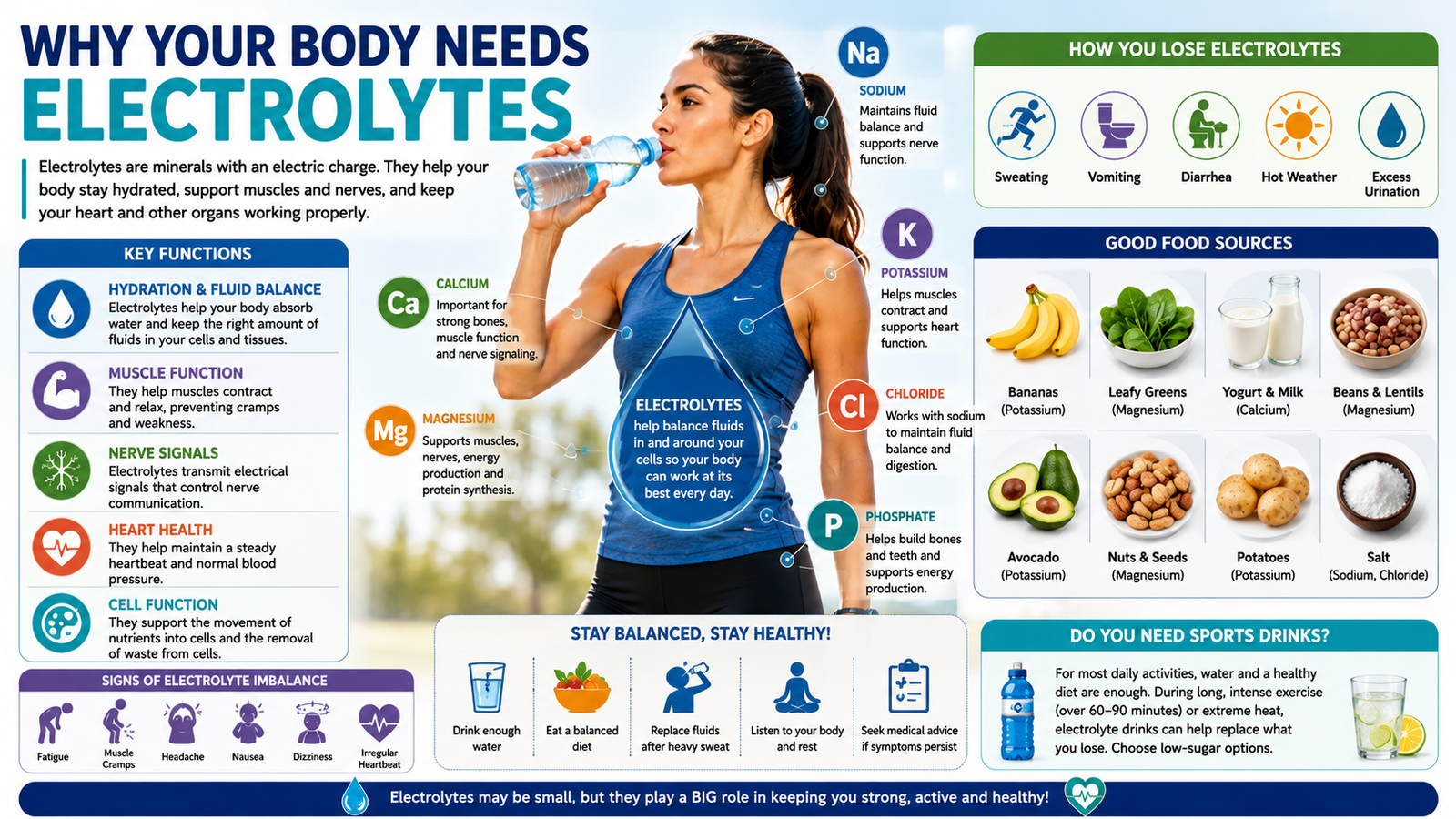
Electrolytes are minerals that become electrically charged in fluids. The major electrolytes include sodium, potassium, calcium, magnesium, chloride, phosphate, and bicarbonate.
Each has different responsibilities, but they work together to maintain normal body function. The kidneys and other body systems continually help control electrolyte levels so that they do not become excessively high or low.
Why Does Your Body Need Them?
1. They Help Maintain Fluid Balance
Sodium and other electrolytes help control how water is distributed throughout the body. Maintaining the right balance between water and electrolytes is important for cells, tissues, and organs.
Drinking water is essential, but hydration involves more than simply consuming fluids. Electrolyte balance also matters, particularly when substantial fluid losses occur.
2. They Support Muscle Function
Muscles need electrical signals to contract and relax. Electrolytes such as sodium, potassium, calcium, and magnesium participate in the processes that allow muscles to function normally.
During prolonged physical activity, significant sweating can result in the loss of both water and electrolytes. Replacing fluids and, when appropriate, electrolytes can help support normal hydration.
3. They Help Nerves Communicate
The nervous system relies on electrical signals to send messages throughout the body. Electrolytes help create the conditions required for these signals to travel between nerve cells and other tissues.
This communication allows the brain, muscles, and organs to coordinate numerous activities.
4. They Support Heart Function
The heart is a muscle that depends on electrical activity to maintain its rhythm. Electrolytes, particularly potassium, calcium, and magnesium, are involved in normal cardiac electrical activity.
Because significant electrolyte disturbances can affect the heart, severe or persistent symptoms associated with dehydration or electrolyte imbalance should receive appropriate medical attention.
5. They Contribute to Normal Cell Function
Every cell in the body operates within a carefully controlled chemical environment. Electrolytes help regulate electrical charges, fluid movement, and other processes occurring across cell membranes.
Keeping these minerals within healthy ranges is therefore important for normal cellular activity.
How Do You Get Electrolytes?
Most healthy people can obtain the electrolytes they need through a varied diet. Different foods provide different minerals.
For example:
- Potassium: bananas, potatoes, beans, leafy vegetables, and several fruits.
- Calcium: milk, yogurt, cheese, fortified alternatives, and some leafy vegetables.
- Magnesium: nuts, seeds, legumes, whole grains, and leafy greens.
- Sodium and chloride: commonly found in salt and many foods.
A balanced diet is generally a practical way to obtain electrolytes.
When Can Electrolyte Loss Increase?
The body can lose electrolytes through sweat, urine, vomiting, and diarrhea. Heavy sweating during prolonged exercise or exposure to high temperatures can increase fluid and mineral losses.
People who participate in endurance activities or experience significant fluid loss may have different hydration needs from someone following a normal daily routine.
Do You Always Need an Electrolyte Drink?
Not necessarily. For many everyday activities, ordinary water and a balanced diet are sufficient.
Electrolyte-containing beverages may be useful in certain situations involving substantial fluid loss, such as prolonged vigorous exercise or some illnesses. However, many commercial drinks contain added sugar, so the nutritional information should be considered before choosing one.
People with kidney, heart, or other medical conditions may have specific fluid or electrolyte requirements and should follow advice from their healthcare professional.
Signs of Possible Electrolyte Imbalance
Electrolyte disturbances can produce different symptoms depending on which mineral is affected and how significantly levels have changed.
Possible signs include:
- Unusual weakness or fatigue
- Muscle cramps or spasms
- Nausea
- Headache
- Dizziness
- Confusion
- Changes in heartbeat
These symptoms can have many possible causes and do not automatically indicate an electrolyte problem. Severe symptoms, persistent vomiting or diarrhea, confusion, fainting, or significant heart-related symptoms require prompt medical evaluation.
Healthy Ways to Support Electrolyte Balance
You can support normal electrolyte levels by following a few basic habits:
- Drink fluids regularly according to your needs.
- Eat a varied diet containing fruits and vegetables.
- Include nutritious sources of minerals and protein.
- Replace fluids after substantial sweating.
- Avoid relying heavily on highly processed foods.
- Pay attention to hydration during hot weather and prolonged activity.
- Follow professional medical advice if you have a condition affecting fluid or mineral balance.
Conclusion
Electrolytes may be tiny minerals, but they have major responsibilities throughout the body. They help manage fluid balance, support muscles and nerves, contribute to normal heart activity, and assist essential cellular processes.
For most people, a varied diet and sensible fluid intake provide what is needed for everyday electrolyte balance. During situations involving heavy sweating or significant fluid loss, additional attention may be necessary.
Rather than focusing only on how much water you drink, remember that healthy hydration also depends on maintaining the body’s overall fluid and mineral balance.
Verification Code: EL8Q4XM73RP