Introduction
Magnesium is a mineral that the body needs to carry out many essential processes. Although it is required in relatively small amounts, it contributes to the normal functioning of muscles, nerves, bones, and cells.
The body cannot produce enough magnesium on its own, so it must come from food and, when appropriate, supplements. A varied diet is usually the best way to obtain this important mineral.
Understanding the role of magnesium can help people make better everyday food choices and recognize why a balanced diet matters.
What Is Magnesium?
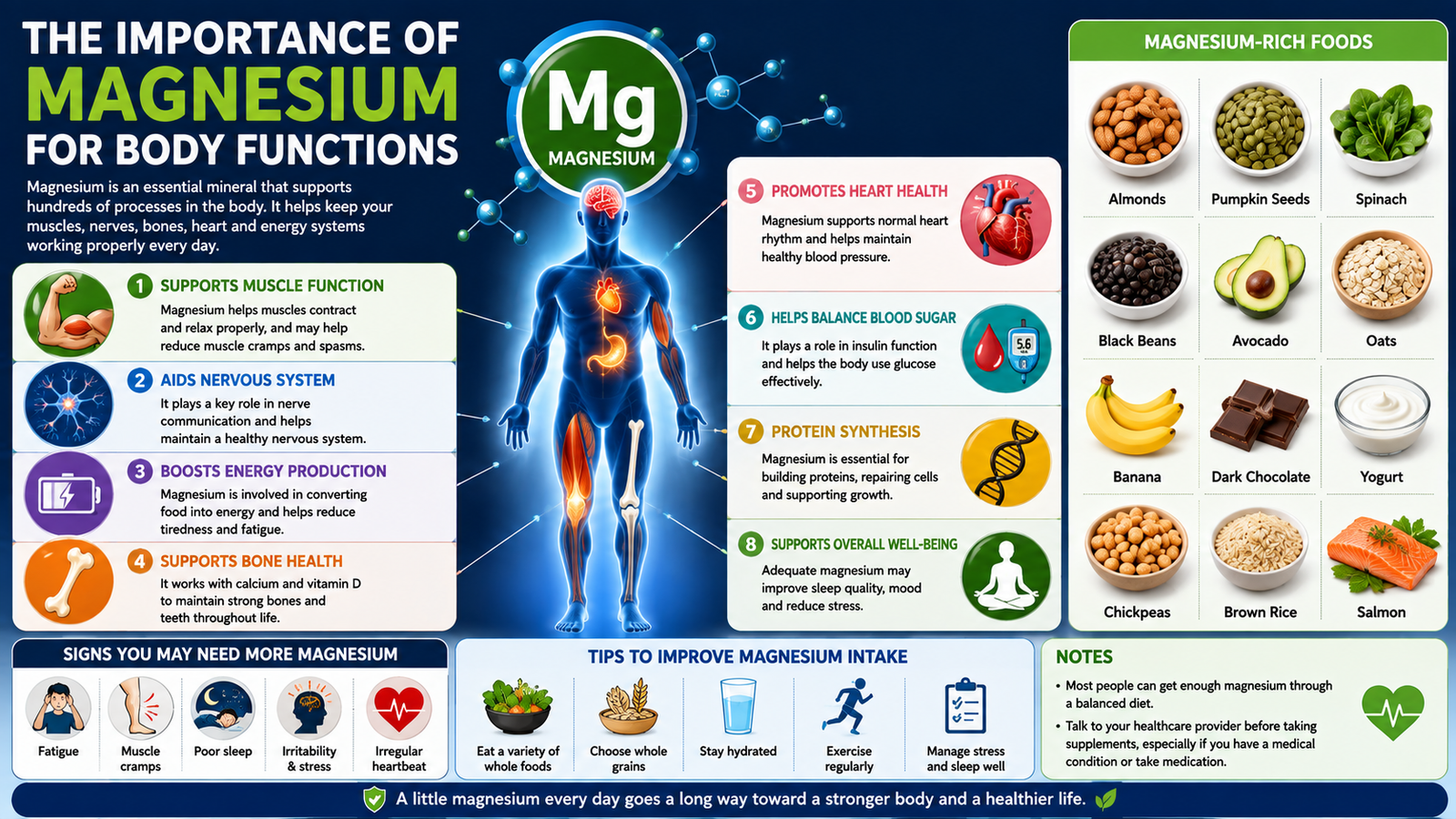
Magnesium is an essential mineral involved in hundreds of biochemical reactions in the body. It works alongside other nutrients to help cells produce energy, maintain normal muscle activity, and support nerve signaling.
The amount of magnesium a person needs can vary according to age, sex, and life stage. Individual nutritional needs should be discussed with a qualified healthcare professional when necessary.
1. Supports Muscle Function
Magnesium plays a role in normal muscle contraction and relaxation. Muscles require a carefully controlled balance of minerals to function properly, and magnesium is part of that system.
Regularly consuming magnesium-rich foods can therefore contribute to normal muscle function. Persistent or severe muscle problems, however, should not automatically be attributed to magnesium deficiency.
2. Helps the Nervous System
The nervous system depends on electrical and chemical signals to communicate throughout the body. Magnesium participates in several processes involved in normal nerve function.
Maintaining adequate magnesium intake as part of a balanced diet helps support the body’s normal neurological processes.
3. Contributes to Energy Production
Everyday activities require energy at the cellular level. Magnesium is involved in reactions related to the production and use of energy.
This does not mean that consuming extra magnesium will automatically increase energy. Instead, adequate magnesium helps the body’s normal energy-producing systems work properly.
4. Supports Healthy Bones
Bones contain a significant amount of the body’s magnesium. The mineral works together with nutrients such as calcium and vitamin D in maintaining normal bone health.
A diet that provides a variety of minerals and vitamins, combined with regular physical activity, can support strong bones throughout life.
5. Plays a Role in Heart Function
Magnesium contributes to normal muscle and nerve activity, including processes involved in the cardiovascular system.
A nutritious diet containing adequate magnesium is part of an overall approach to maintaining heart health. People with cardiovascular concerns should follow individualized medical advice rather than relying on a single nutrient.
6. Helps Maintain Normal Blood Glucose Metabolism
Magnesium participates in processes involved in how the body handles glucose. Adequate intake is therefore relevant to normal metabolic function.
However, magnesium should not be considered a replacement for medical treatment or a balanced lifestyle when managing blood sugar problems.
7. Contributes to Protein Formation
Protein is needed for muscles, tissues, enzymes, and many other structures in the body. Magnesium participates in biological processes involved in protein synthesis.
Adequate magnesium intake, along with sufficient dietary protein and other nutrients, helps support normal growth and tissue maintenance.
Foods That Provide Magnesium
Many everyday foods contain magnesium, making it possible to obtain the mineral through a varied diet.
Good sources include:
- Almonds and other nuts
- Pumpkin and other seeds
- Beans and lentils
- Whole grains
- Spinach and other leafy greens
- Avocado
- Some fish
- Dark chocolate with a high cocoa content
Including different food groups rather than depending on one particular food can make it easier to maintain a balanced nutrient intake.
Who May Need to Pay Extra Attention?
Most healthy people can obtain sufficient magnesium from food. However, certain health conditions, medications, or dietary patterns can affect magnesium levels or absorption.
People experiencing ongoing digestive problems, those taking certain medications, or individuals with conditions affecting kidney function should discuss magnesium needs with a healthcare professional.
It is not advisable to begin high-dose magnesium supplements simply because symptoms such as tiredness or muscle cramps occur, since these problems can have many possible causes.
Magnesium From Food vs. Supplements
Food is generally the preferred source of magnesium for healthy individuals. Supplements may sometimes be recommended when dietary intake is inadequate or when a healthcare professional identifies a specific need.
Taking excessive amounts of supplemental magnesium can cause side effects, particularly digestive problems such as diarrhea. People with certain medical conditions may also need to be especially careful with supplementation.
Always check with a healthcare professional before taking high-dose supplements regularly.
Simple Ways to Increase Magnesium Intake
Improving magnesium intake does not require major dietary changes. Try adding a handful of nuts or seeds to a meal, choosing whole grains more often, including beans or lentils in dishes, and eating a variety of green vegetables.
Replacing highly processed snack choices with nutrient-rich foods can also increase the overall quality of the diet.
Conclusion
Magnesium is a small but essential part of a healthy diet. It supports numerous body processes, including muscle and nerve function, energy metabolism, bone maintenance, protein synthesis, and normal cardiovascular and metabolic functions.
For most people, eating a varied diet containing nuts, seeds, legumes, whole grains, leafy vegetables, and other nutritious foods is a practical way to obtain magnesium.
Rather than focusing on one nutrient alone, aim for overall dietary variety. A balanced eating pattern provides magnesium alongside the many other vitamins, minerals, proteins, fats, and carbohydrates the body needs to function well.
Verification Code: MG7Q5XM84LR