Introduction
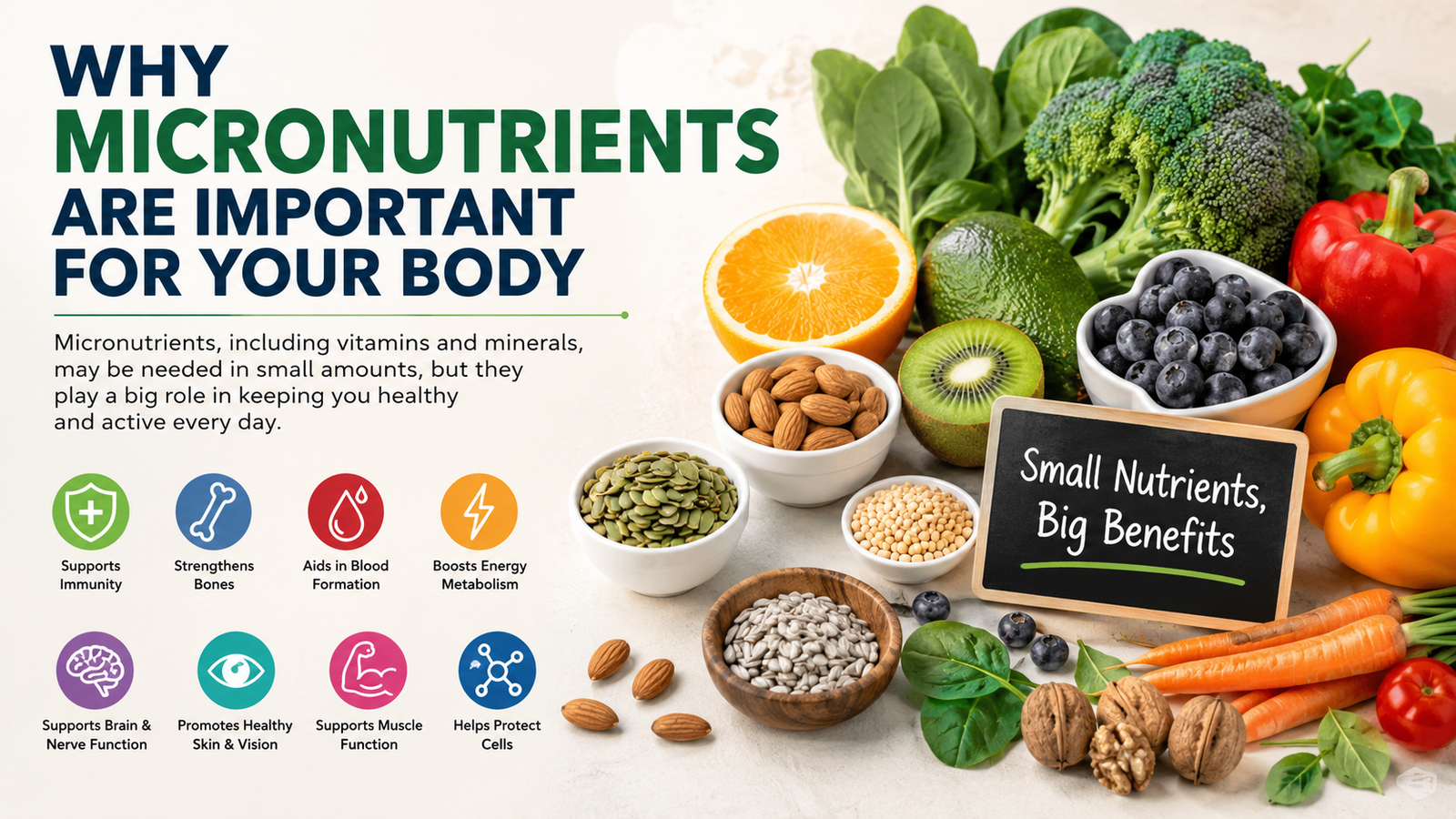
Your body performs thousands of tasks every day, from producing energy and repairing tissues to maintaining healthy bones and defending against infections. These activities depend on many nutrients that come from food. Among them are vitamins and minerals, commonly called micronutrients.
The body needs these nutrients in relatively small quantities, but their contribution is far greater than their required amount might suggest. Since different foods contain different micronutrients, eating a varied diet is an important part of meeting the body’s nutritional needs.
Understanding Micronutrients
Micronutrients are mainly divided into two groups: vitamins and minerals.
Vitamins are organic substances that help regulate different processes in the body. Minerals are naturally occurring elements required for functions such as building tissues, transmitting nerve signals, and maintaining fluid balance.
Examples include vitamin A, vitamin C, vitamin D, vitamin B12, calcium, iron, magnesium, zinc, iodine, and potassium. Each has its own role, and they work together rather than functioning in isolation.
1. They Help the Body Use Food Properly
Eating food provides the body with carbohydrates, proteins, and fats, but these nutrients still need to be processed and utilized. Several micronutrients assist enzymes and other systems involved in metabolism.
For example, many B vitamins participate in reactions that help release energy from the foods we eat. This makes adequate micronutrient intake an important part of normal metabolism.
2. They Contribute to a Healthy Immune Response
The immune system depends on proper nutrition. Vitamins and minerals such as vitamin C, vitamin A, vitamin D, zinc, and selenium participate in various immune-related processes.
Rather than depending on a single “immune boosting” food, it is more useful to regularly eat a mixture of vegetables, fruits, pulses, whole grains, nuts, seeds, and other nutritious foods.
3. They Matter for Bone Development and Maintenance
Bones are living tissues that continually change throughout life. Calcium is a major structural component of bone, while vitamin D helps the body handle calcium effectively.
Other nutrients, including magnesium and vitamin K, also have roles related to normal bone health. Maintaining a varied diet can help provide several nutrients involved in keeping the skeletal system healthy.
4. They Assist Oxygen Transport
Iron has a particularly important job in the blood because it forms part of hemoglobin. Hemoglobin allows red blood cells to transport oxygen from the lungs to different parts of the body.
Folate and vitamin B12 are also involved in normal blood cell production. Foods such as legumes, leafy greens, eggs, seafood, meat, and fortified products can contribute these nutrients.
5. They Support Nerve and Brain Function
Communication between the brain, nerves, and the rest of the body requires several nutrients. B vitamins, iodine, magnesium, and other micronutrients participate in processes associated with normal nervous system activity.
This is another reason why eating a broad selection of foods is preferable to relying on a limited range of meals.
6. They Play a Role in Vision and Tissue Health
Vitamin A is associated with normal vision and helps maintain certain body tissues. Vitamin C is required for collagen production, which is important for skin, blood vessels, bones, and connective tissues.
Vegetables and fruits with different colors can contribute a range of vitamins and other naturally occurring compounds to the diet.
7. They Help Muscles Work Normally
Muscle movement depends on communication between nerves and muscle fibers. Minerals including calcium, magnesium, and potassium participate in processes involved in normal muscle contraction and nerve signaling.
A varied diet containing vegetables, fruits, beans, nuts, seeds, and other whole foods can help provide these minerals.
8. They Contribute to the Body’s Protective Systems
The body has natural systems that help deal with oxidative stress. Certain micronutrients, including vitamin C, vitamin E, selenium, and zinc, contribute to these protective mechanisms.
Many foods contain several nutrients at the same time, which is one reason whole and minimally processed foods can be useful components of a balanced eating pattern.
Where Can You Find Micronutrients?
There is no single food that supplies every micronutrient. Instead, different foods bring different nutritional benefits.
Consider including a combination of:
- Leafy and colorful vegetables
- Seasonal fruits
- Beans, peas, and lentils
- Whole grains
- Nuts and seeds
- Eggs
- Fish or other protein sources
- Milk, yogurt, or appropriate alternatives
- Fortified foods when needed
Changing the foods on your plate from day to day can increase dietary variety.
Are Supplements Always Necessary?
Not everyone needs a micronutrient supplement. Some people may require supplements because of a confirmed deficiency, dietary restriction, life stage, medical condition, or other individual circumstance.
Taking large amounts without professional guidance is not a good substitute for a balanced eating pattern. Some nutrients can cause unwanted effects when consumed excessively. If a deficiency is suspected, appropriate medical advice and testing can help determine what is actually needed.
Simple Ways to Improve Micronutrient Intake
Improving micronutrient intake does not necessarily require complicated meal plans. A few practical habits can make meals more diverse:
- Add a vegetable to your main meals.
- Choose different fruits throughout the week.
- Include pulses or beans regularly.
- Add nuts or seeds where suitable.
- Prefer a variety of whole or minimally processed foods.
- Rotate protein sources instead of eating the same one every day.
- Choose fortified foods when they fit your nutritional needs.
The goal is not perfection but greater variety and nutritional balance.
Conclusion
Micronutrients may be required in tiny amounts, but they participate in an impressive number of body functions. They help with metabolism, immune activity, blood formation, bone maintenance, nerve signaling, muscle movement, vision, and cellular protection.
A colorful and varied diet is a practical foundation for obtaining these nutrients. Instead of concentrating on one vitamin or mineral, aim to include different types of nutritious foods regularly. This simple approach can make everyday meals more nourishing while supporting the body’s normal functions.
Verification Code: QN8R5MT73K
Such a useful for society