Introduction
Every time you climb stairs, read a book, or take a deep breath, billions of tiny cells inside your body help keep these activities possible. Among them are red blood cells, specialized cells that transport oxygen from the lungs to tissues throughout the body.
Although they are too small to see without a microscope, red blood cells perform an essential job. Their number, structure, and lifespan all influence how effectively oxygen reaches the places where it is needed. Learning about these cells can help you understand fatigue, anemia, and the importance of maintaining healthy blood.
1. What Makes Red Blood Cells Different?
Red blood cells, also called erythrocytes, have a distinctive shape. In humans, they resemble flattened discs with a thinner center and thicker edges. This structure provides a large surface area for gas exchange while allowing the cells to bend as they travel through narrow blood vessels.
Unlike most other mature human cells, red blood cells do not contain a nucleus. This leaves more room for hemoglobin, the protein responsible for carrying oxygen.
Their flexible structure is equally important. Some capillaries are extremely narrow, so red blood cells must change shape temporarily to pass through them without blocking the flow of blood.
2. How Red Blood Cells Carry Oxygen
Breathing brings oxygen into the lungs, where it passes into the bloodstream through tiny air sacs called alveoli.
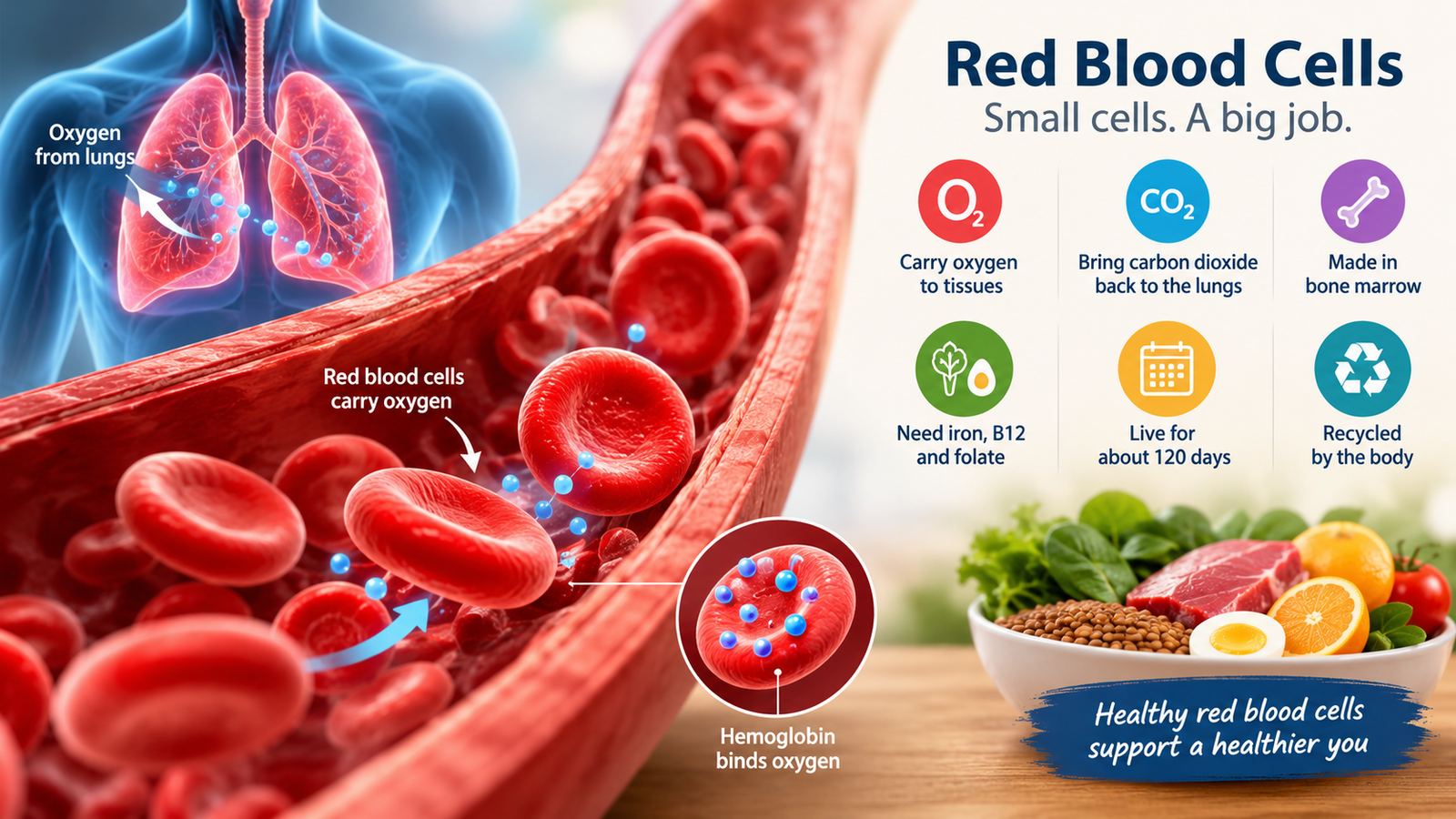
Hemoglobin inside red blood cells binds to oxygen in the lungs. The blood then travels through the heart and into the body’s circulation, delivering oxygen to muscles, the brain, and other organs.
When blood reaches tissues that need oxygen, hemoglobin releases some of its oxygen supply. Cells use this oxygen to produce energy from nutrients.
Red blood cells also carry a portion of the carbon dioxide produced by tissues back toward the lungs. Other carbon dioxide travels dissolved in the blood or as bicarbonate. The lungs remove it when you breathe out.
This exchange helps connect breathing with the body’s energy requirements.
3. Where Red Blood Cells Come From
Most red blood cells are produced in the bone marrow, the soft tissue inside certain bones.
Their production is regulated partly by a hormone called erythropoietin, which is made mainly by the kidneys. When the kidneys detect that oxygen delivery is inadequate, they can increase erythropoietin production, signaling the bone marrow to make more red blood cells.
Producing healthy cells also requires suitable amounts of nutrients, including iron, vitamin B12, and folate. Each supports blood formation in a different way.
A shortage of these nutrients can interfere with red blood cell production or development. However, not every case of anemia is caused by a nutritional deficiency.
4. How Long Do Red Blood Cells Live?
A typical red blood cell circulates for approximately 120 days. As it ages, it becomes less flexible and is removed mainly by the spleen and other parts of the body’s recycling system.
The body recovers useful materials from old cells. Iron can be reused to produce hemoglobin in new red blood cells, while other components are processed and eliminated through different pathways.
This ongoing replacement is necessary because red blood cells experience repeated physical stress as they travel through blood vessels.
When cell production cannot keep pace with cell loss or destruction, the total number of healthy red blood cells may fall.
5. What Happens When Red Blood Cells Are Too Low?
Anemia occurs when the blood has insufficient healthy red blood cells or an inadequate amount of hemoglobin to carry oxygen effectively.
A person with anemia may feel unusually tired, weak, dizzy, or short of breath during activity. Some people also notice pale skin, headaches, or a faster heartbeat.
Possible causes include iron deficiency, vitamin deficiencies, blood loss, inherited blood disorders, chronic illnesses, and problems affecting the bone marrow.
Symptoms alone cannot identify the cause. A complete blood count (CBC) is commonly used to assess hemoglobin and other blood measurements. Depending on the findings, a healthcare professional may recommend additional tests.
Treatment depends on the underlying cause. Taking iron supplements without confirming a need may be inappropriate and can be harmful in some circumstances.
6. Everyday Ways to Support Healthy Red Blood Cells
Healthy red blood cell production depends on adequate nutrition and the proper functioning of several organs.
Include iron-rich foods: Lentils, beans, leafy green vegetables, meat, and iron-fortified foods can contribute iron to the diet.
Combine plant-based iron with vitamin C: Foods such as guava, oranges, tomatoes, and capsicum can improve the absorption of iron from plant sources.
Get enough vitamin B12: Eggs, dairy products, fish, meat, and fortified foods provide vitamin B12. People following a fully plant-based diet may need fortified foods or professional guidance about supplementation.
Include folate sources: Leafy vegetables, legumes, and some fruits help supply folate, which is needed for normal cell formation.
Investigate persistent tiredness: Fatigue can result from many conditions, including anemia, thyroid disorders, poor sleep, and infections. Avoid assuming that diet alone will solve it.
People with known blood disorders, kidney disease, or ongoing blood loss may need individualized medical care rather than dietary changes alone.
7. When Should You Seek Medical Advice?
Arrange a medical appointment if you experience persistent fatigue, unexplained weakness, recurring dizziness, unusual paleness, or breathlessness during ordinary activities.
Heavy menstrual bleeding, blood in the stool, or other unexplained bleeding also deserves medical assessment because blood loss can contribute to anemia.
Seek urgent medical care for severe breathing difficulty, chest pain, fainting, or heavy uncontrolled bleeding.
A healthcare professional can determine whether red blood cell levels are abnormal and investigate the possible cause before recommending treatment.
Conclusion
Red blood cells are small but essential carriers that connect the lungs with every oxygen-dependent tissue in the body. Their flexible shape, hemoglobin content, continuous production, and natural recycling allow them to perform this task efficiently.
Adequate nutrition supports their development, but healthy blood depends on more than food alone. Recognizing persistent symptoms and seeking appropriate testing can help identify problems early and guide effective treatment.
Verification Code: R8K5M2X9Q4