Introduction
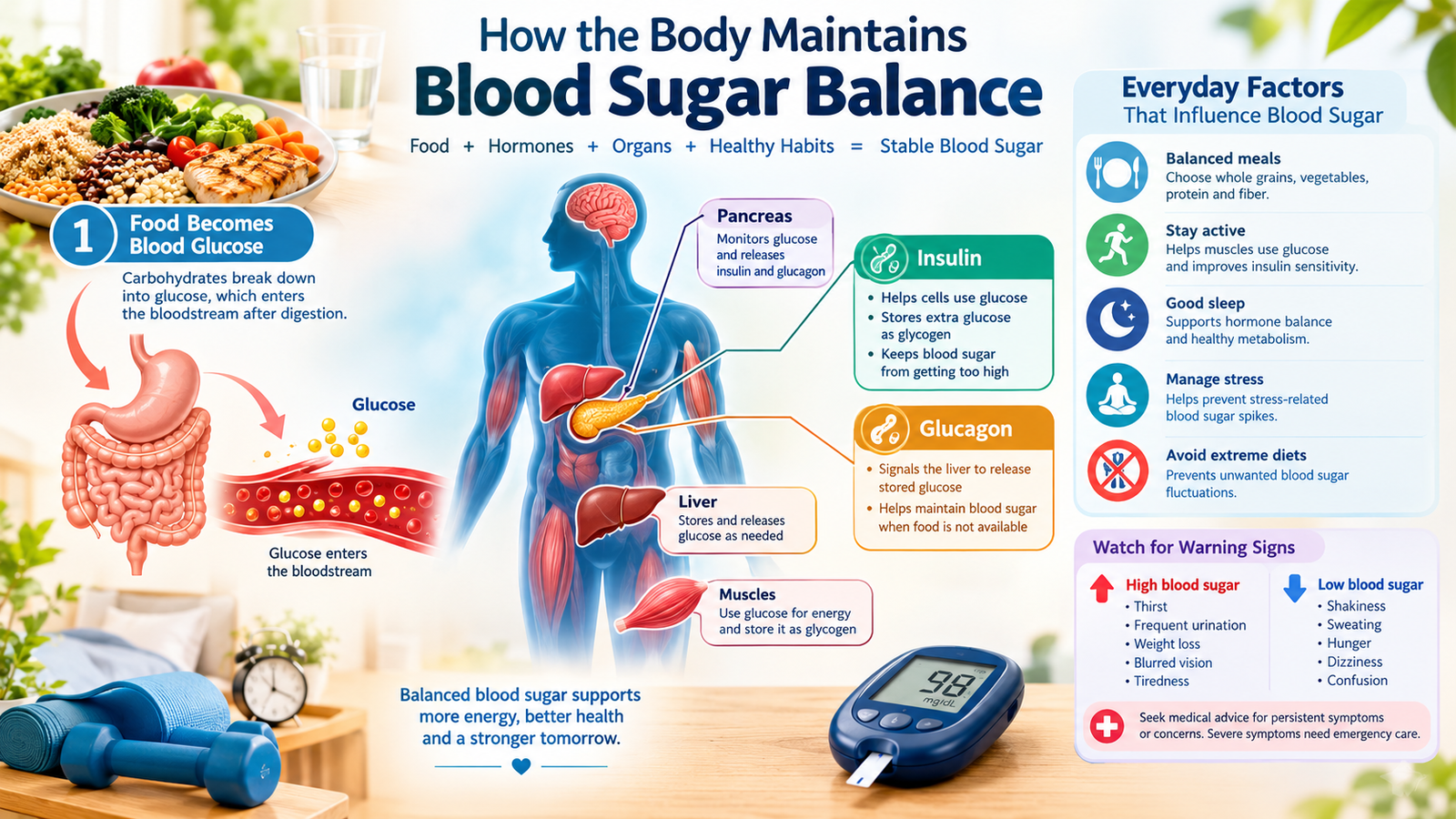
After eating a meal, your body begins a series of changes that help turn food into usable energy. Some of the carbohydrates you consume are broken down into glucose, a type of sugar that travels through the bloodstream. Your muscles, brain, and other tissues rely on this fuel to perform their daily functions.
However, glucose cannot remain at any level the body happens to produce. Too little may leave cells without enough available energy, while persistently high blood sugar can damage organs over time. The body therefore uses several connected processes to keep glucose within a suitable range.
Understanding these processes explains why eating patterns, physical activity, sleep, and certain health conditions can influence blood sugar.
1. How Food Becomes Blood Glucose
Digestion begins breaking down carbohydrates found in foods such as rice, bread, fruit, potatoes, and cereals. Many carbohydrates are converted into glucose, which enters the bloodstream after absorption through the small intestine.
Not every carbohydrate affects blood sugar in exactly the same way. The amount eaten, the type of food, its fiber content, and the presence of protein and fat can influence how quickly glucose enters the blood.
For example, a meal containing whole grains, vegetables, and protein may produce a different blood sugar response from a meal dominated by rapidly digested carbohydrates.
Glucose is not harmful simply because it appears in the bloodstream. It is an essential fuel. The body’s priority is to make that fuel available without allowing blood sugar to remain excessively high or fall too low.
2. The Pancreas Acts as a Glucose Monitor
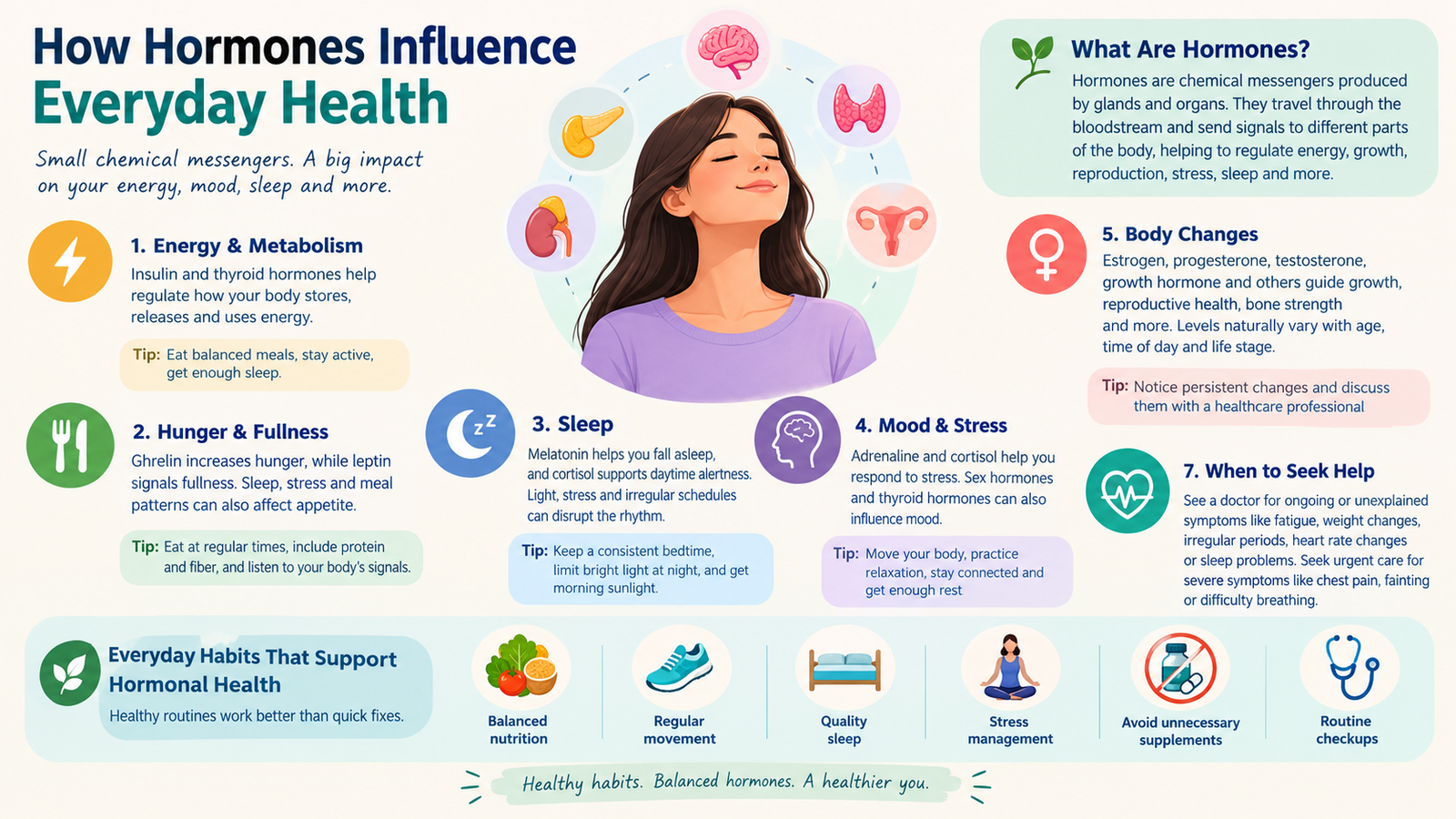
The pancreas is an organ located behind the stomach. Certain groups of cells within it respond to changes in blood glucose and release hormones that help regulate its level.
Two particularly important hormones are insulin and glucagon. They have different roles but work together to maintain a stable supply of glucose.
This system responds throughout the day, including between meals and during sleep. It adjusts according to whether the body is receiving food, using energy, or drawing on stored fuel.
3. Insulin Helps Cells Use Glucose
When blood glucose rises after eating, the pancreas normally releases insulin.
Insulin helps muscle and fat cells take up glucose from the blood. It also encourages the liver to store glucose as glycogen, a form of stored carbohydrate, and reduces the liver’s production and release of additional glucose when it is not needed.
Imagine insulin as a signal that tells the body, “Fuel is available; use some now and store some for later.”
When insulin production is insufficient or the body’s cells respond poorly to it, glucose can build up in the bloodstream. These problems are central to the development of diabetes, although the underlying causes differ between diabetes types.
4. Glucagon Prevents Blood Sugar From Falling Too Low
The body also needs a way to supply glucose when food is not arriving.
During periods between meals, the pancreas releases glucagon when appropriate. This hormone signals the liver to break down stored glycogen and release glucose into the bloodstream. It can also encourage the liver to make new glucose from other substances.
This process helps supply energy between meals and overnight.
Insulin and glucagon are not simple on-and-off switches. Their levels change in response to food intake, activity, and other signals. Together with additional hormones and organs, they help maintain the body’s energy balance.
5. How Muscles and the Liver Help Maintain Balance
The liver serves as an important storage and supply center. After a meal, it can store some glucose as glycogen. Later, it can release glucose when the body needs more fuel.
Muscles also store glucose as glycogen. During exercise, working muscles use this stored energy and can take up more glucose from the blood. Regular physical activity also helps muscles respond more effectively to insulin.
This is one reason movement can support healthy blood sugar regulation. The body is not relying on hormones alone; it is coordinating hormonal signals with the energy demands of different tissues.
6. Everyday Factors That Influence Blood Sugar
Several daily habits can affect how the body manages glucose.
Choose balanced meals: Combine carbohydrate foods with vegetables, protein, and fiber-rich choices. Beans, lentils, whole grains, and vegetables can be useful parts of a balanced eating pattern.
Stay physically active: Walking, cycling, swimming, and other suitable activities help muscles use glucose.
Maintain a regular sleep routine: Insufficient or irregular sleep can affect insulin sensitivity and appetite regulation.
Manage ongoing stress: Stress hormones can increase blood glucose in some situations. Relaxation practices and regular activity may help support overall health.
Avoid extreme dietary changes: Skipping meals or following restrictive diets may be unsuitable for some people, especially those using glucose-lowering medicines.
These habits support general metabolic health, but individual needs differ. People with diabetes may require a personalized meal plan, medication, and glucose monitoring.
7. When Should You Seek Medical Advice?
High blood sugar does not always cause obvious symptoms at first. Possible warning signs include unusual thirst, frequent urination, unexplained weight loss, blurred vision, and persistent tiredness.
Low blood sugar can cause shakiness, sweating, hunger, dizziness, or confusion. It is particularly important for people using insulin or certain diabetes medicines to understand how to recognize and treat low glucose.
Seek medical advice if you notice persistent symptoms or have concerns about your blood sugar. A healthcare professional may recommend tests such as fasting blood glucose or HbA1c, which provides information about average blood glucose over approximately the previous two to three months.
Severe confusion, seizures, unconsciousness, or difficulty breathing require emergency medical care.
Conclusion
Blood sugar balance depends on a coordinated partnership between the pancreas, liver, muscles, and other body systems. Insulin helps the body use and store glucose, while glucagon helps maintain the supply when food is unavailable.
Food choices, movement, sleep, and stress management can influence how effectively these processes work. Although glucose regulation usually happens automatically, understanding it can help you make informed decisions about your health.
If symptoms suggest a possible blood sugar problem, proper testing and professional guidance are more reliable than guessing from symptoms alone.
Verification Code: G6N8P3W5K2