Introduction
A meal does not become safe simply because it has been cooked properly. What happens after cooking matters too. A pot of rice left on the kitchen counter for hours, milk kept outside the refrigerator, or vegetables stored in a damp corner can create conditions that allow food to spoil or harmful microorganisms to grow.
Safe food storage is a daily habit that protects household meals from avoidable contamination. A few thoughtful decisions about temperature, containers, and storage time can help families reduce food waste and lower the risk of foodborne illness.
Your Kitchen Has Different Storage Zones
Not every food item belongs in the same place. Dry groceries, refrigerated products, and frozen foods need different conditions to remain suitable for use.
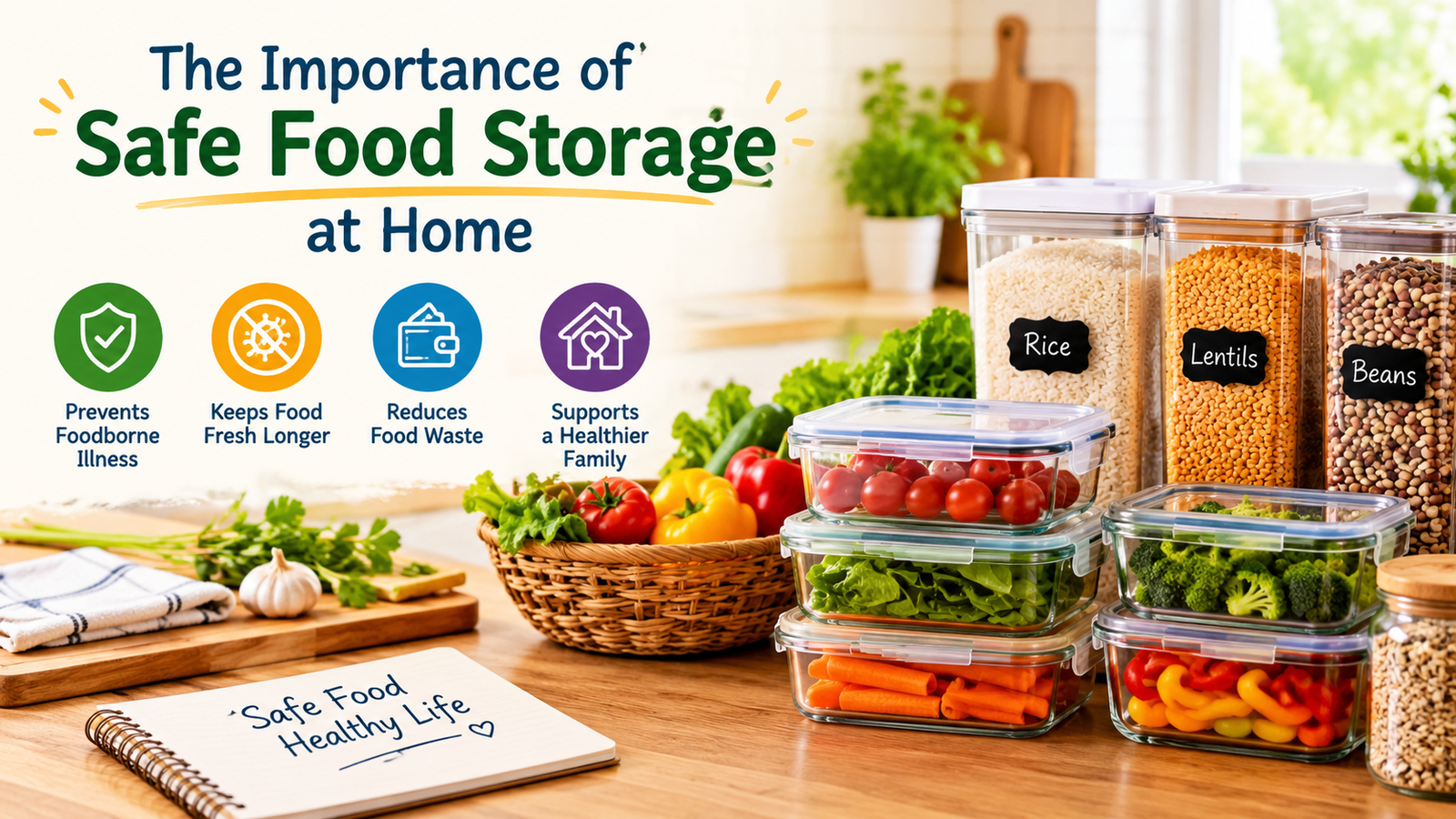
Rice, flour, lentils, and unopened dry ingredients generally keep well in clean, dry cupboards. Moisture can encourage mould growth, while poorly sealed packages may attract insects.
Milk, cooked dishes, and other perishable foods need refrigeration. Keep the refrigerator at 4°C (40°F) or below and the freezer at approximately −18°C (0°F). A refrigerator thermometer can help you check whether the appliance is maintaining a suitable temperature.
Some fruits and vegetables also benefit from refrigeration, while others may be kept at room temperature until ripe. Follow the storage instructions on the product when available.
Why Time Matters After Cooking
A freshly prepared meal can become unsafe if it stays at room temperature for too long. Bacteria can multiply under favourable conditions, even when the food still looks and smells normal.
Refrigerate perishable leftovers within two hours of cooking or serving. If the surrounding temperature is above 32°C (90°F), put them away within one hour. In hot weather, this shorter time limit is especially important.
Divide a large quantity of curry, soup, or rice into smaller, shallow containers before refrigerating it. Smaller portions cool more quickly than a deep, tightly packed pot.
Avoid leaving cooked food on the counter until it reaches room temperature completely. Prompt refrigeration is safer.
Containers Can Make a Difference
The container used for storage affects how well food is protected from moisture, spills, and contamination.
Choose clean, food-safe containers with secure lids. Transfer opened packaged foods into suitable sealed containers when necessary, and label leftovers with the date they were prepared.
Raw meat, poultry, and seafood should be kept in covered containers on the lowest refrigerator shelf. This helps prevent their juices from dripping onto ready-to-eat foods such as fruit, salads, or cooked meals.
Never reuse a container that held raw animal products for cooked food without washing it thoroughly first.
Keep Your Refrigerator Organised
An overcrowded refrigerator can make it difficult for cool air to circulate. It can also hide older items behind newly purchased groceries.
Try placing recently purchased products behind older ones so that food approaching its storage limit is used first. Check leftovers regularly and discard anything that has been stored too long or whose safety is uncertain.
Do not rely on smell, appearance, or taste alone to decide whether refrigerated food is safe. Harmful bacteria may be present without obvious warning signs. Never taste suspicious food to check it.
Freezing Preserves Food, but It Does Not Fix Everything
Freezing can keep food safe for long periods when the freezer maintains the correct temperature. However, it does not reliably destroy all harmful microorganisms.
Package food in suitable freezer-safe containers or bags, remove excess air where practical, and mark the freezing date. This makes it easier to manage older supplies and maintain food quality.
Thaw frozen food in the refrigerator, in cold water using a safe method, or in the microwave when it will be cooked immediately. Leaving frozen meat on the kitchen counter to thaw is not a safe approach.
Make Food Storage Part of Your Routine
A few small habits can prevent common mistakes:
- Wash your hands before handling ready-to-eat food.
- Clean refrigerator shelves and remove spills promptly.
- Keep raw and cooked foods separate.
- Store groceries soon after returning from shopping.
- Follow package instructions and use-by dates.
- Divide large batches into smaller portions before cooling.
- Reheat leftovers thoroughly before serving.
When a refrigerator loses power, keep its door closed as much as possible. Food safety then depends on how long the appliance stays warm and the temperature the food reaches. When in doubt about a perishable item, discard it rather than risk illness.
Conclusion
Safe food storage is not only about keeping meals fresh for longer. It also involves controlling temperature, preventing cross-contamination, and knowing when food should be discarded.
By organising the kitchen carefully and storing each item under suitable conditions, households can protect their meals, reduce unnecessary waste, and make everyday food preparation safer.
Verification Code: F7Q3M8V2K6