Introduction
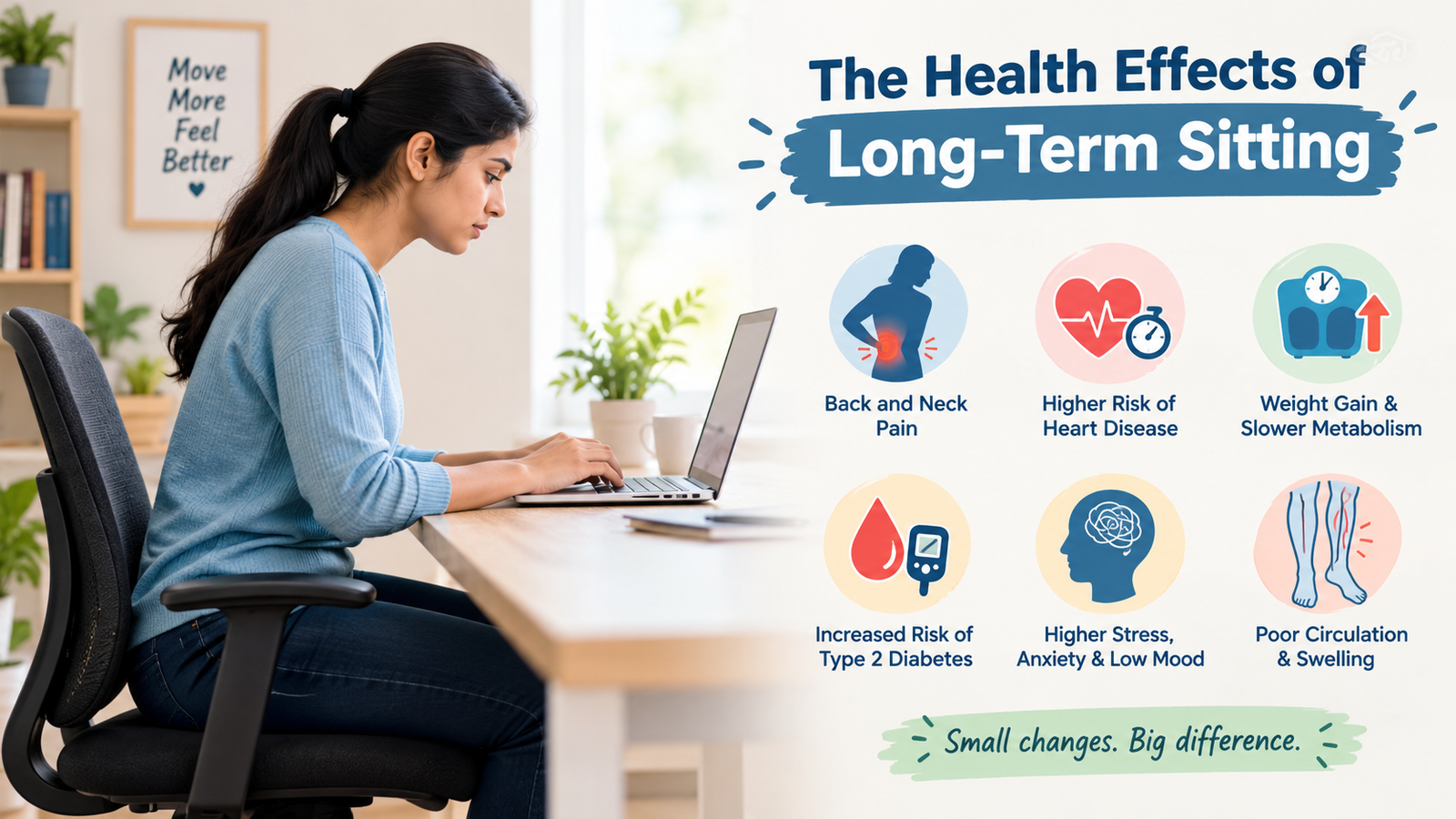
Many daily activities require us to remain seated for extended periods. Office work, online classes, driving, watching television, and using mobile phones can keep the body in almost the same position for hours. Sitting itself is not harmful in every situation, but spending much of the day sitting with little movement may affect health over time.
The body is designed to move regularly. Muscles help maintain posture, joints benefit from movement, and physical activity supports several systems that keep us healthy. Understanding the possible effects of prolonged sitting can help people make small changes to their daily routines.
1. How Long Periods of Sitting Affect Muscles and Joints
Remaining in one position for too long can leave the neck, shoulders, hips, and lower back feeling stiff or uncomfortable. Poorly adjusted chairs and screens placed at unsuitable heights may add to this strain.
When the head leans forward towards a screen or the shoulders remain rounded, certain muscles must work harder to maintain the position. Over time, repeated poor posture may contribute to discomfort, especially when combined with limited movement.
Taking regular movement breaks, adjusting the workstation, and changing sitting positions can help reduce unnecessary strain. There is no single perfect posture that must be maintained all day; changing positions is also important.
2. Effects on Blood Sugar and Metabolism
Muscles use energy throughout the day, including when they contract during walking or other movement. Long periods of sitting reduce the amount of energy used compared with many active tasks.
Extended sedentary time may also affect how the body manages blood glucose and fats. When sitting occupies a large part of the day, particularly alongside little exercise, the risk of metabolic problems may increase.
Standing up occasionally, walking briefly, or performing simple movements between tasks can interrupt long periods of inactivity. These short breaks are useful additions to regular exercise, not replacements for it.
3. Sitting and Heart Health
The cardiovascular system benefits from regular physical activity, which helps the heart and blood vessels function efficiently. Spending much of the day sitting, especially without enough exercise, is associated with a higher risk of cardiovascular disease.
Long periods of inactivity can also reduce opportunities to improve stamina and maintain healthy circulation. However, the effect of sitting varies according to a person’s overall activity level, health conditions, and daily habits.
Walking, cycling, swimming, or choosing another activity suited to your abilities can support heart health. Even when structured exercise is part of your routine, reducing uninterrupted sitting may offer additional benefits.
4. Possible Effects on Weight and Energy Levels
Sitting usually requires less energy than activities such as walking, climbing stairs, or household work. If food intake regularly exceeds the energy the body uses, weight gain may occur over time.
Some people also notice that they feel sluggish after sitting for several hours. Although inactivity can contribute to this feeling, tiredness may have other causes, including inadequate sleep, stress, or certain medical conditions.
Adding movement throughout the day can help increase energy expenditure and make daily routines feel less monotonous. The goal is not to avoid sitting completely, but to create a healthier balance between rest and movement.
5. Practical Ways to Sit Less During the Day
Small changes are often easier to maintain than a demanding routine. Consider these approaches:
- Take movement breaks: Stand up, stretch gently, or walk for a few minutes at regular intervals.
- Adjust your workstation: Keep your screen near eye level, support your back, and place your feet comfortably on the floor.
- Walk during suitable calls: If safe and practical, move around while listening to phone conversations.
- Add movement to everyday tasks: Walk short distances, use stairs when appropriate, or do light household activities.
- Combine sitting with standing: A sit-stand desk may help you change positions, but avoid standing motionless for excessively long periods.
- Make time for exercise: Aim for regular physical activity suited to your abilities and health. Adults are generally advised to get at least 150 minutes of moderate-intensity aerobic activity each week, alongside muscle-strengthening activities on two or more days.
If you are beginning after a long inactive period, increase activity gradually and choose movements that feel comfortable.
6. Who Should Take Extra Care?
People who work at desks, drive for long hours, study for extended periods, or spend considerable time using screens may find it difficult to move regularly. People with existing back pain, joint problems, or certain medical conditions may need individual guidance about suitable activities.
A healthcare professional or physiotherapist can help identify appropriate exercises if movement causes pain or if you are unsure how to begin safely.
7. When to Seek Medical Advice
Occasional stiffness after sitting often improves with gentle movement and changes in position. However, persistent or worsening back, neck, or joint pain deserves medical assessment.
Seek urgent medical care for sudden weakness, new loss of bladder or bowel control, or severe back pain accompanied by numbness around the groin or saddle area. These symptoms may indicate a serious problem.
Conclusion
Long-term sitting can contribute to stiffness, reduced daily movement, and health risks when it forms part of a largely inactive lifestyle. Its effects depend on several factors, including exercise habits, posture, and existing health conditions.
Breaking up sitting time, creating a comfortable workstation, and making regular movement part of everyday life can help support long-term well-being. Small, consistent changes may make a meaningful difference without requiring major changes to your schedule.
Verification Code: S7K4M9X2R6