Introduction
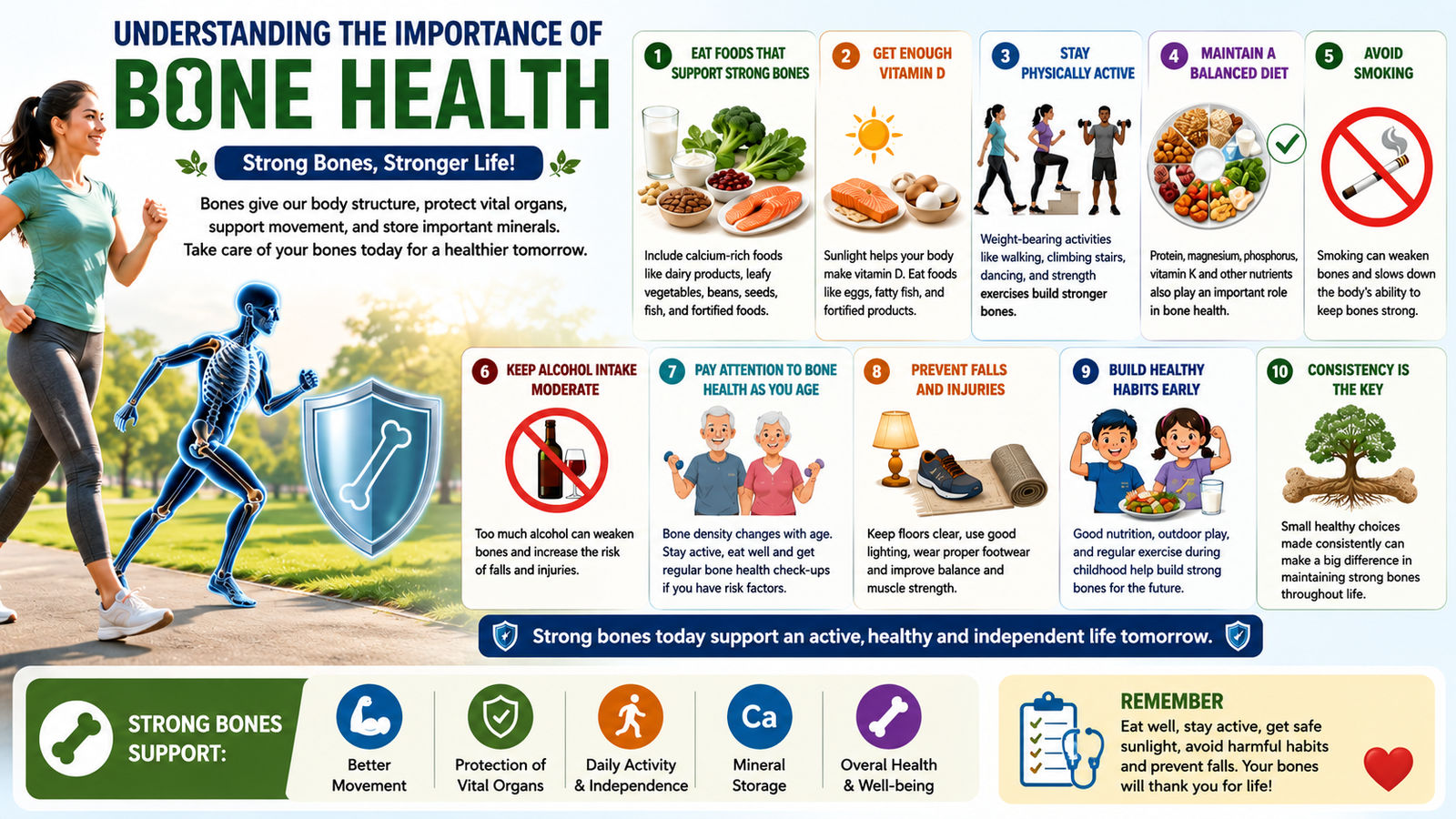
Bones are an essential part of the human body. They give us shape, protect organs such as the brain and heart, and work with muscles and joints to make movement possible. Bones are also living tissues that constantly undergo renewal. Because bone strength can change with age and lifestyle, caring for the skeletal system should begin early and continue throughout life.
1. Understand Why Bone Health Matters
Healthy bones provide a strong framework for everyday activities such as walking, running, lifting, and bending. Strong bones can also provide better support for joints and help the body remain physically independent as people grow older. Taking care of bone health is therefore an important part of maintaining overall physical well-being.
2. Include Calcium-Rich Foods
Calcium is an important mineral for maintaining normal bones and teeth. Milk, yogurt, cheese, leafy green vegetables, tofu, sesame seeds, beans, and some fortified foods can contribute calcium to the diet. Including a variety of calcium-containing foods throughout the day can help meet nutritional needs.
3. Do Not Forget Vitamin D
Vitamin D plays an important role in calcium absorption and normal bone function. Sunlight exposure can help the body produce vitamin D, while foods such as fatty fish, egg yolks, and fortified products can also provide it. People who may have low vitamin D should speak with a healthcare professional about whether testing or supplementation is appropriate.
4. Get Enough Protein
Protein contributes to the structure and maintenance of bones as well as muscles. Pulses, beans, lentils, dairy products, eggs, fish, poultry, nuts, and seeds can provide protein. Including an appropriate protein source as part of balanced meals can support overall musculoskeletal health.
5. Exercise Regularly
Physical activity encourages the body to maintain strong bones and muscles. Weight-bearing activities such as brisk walking, stair climbing, dancing, jogging, and suitable sports can be beneficial. Strength exercises can also help improve muscle fitness and support the body during movement.
6. Improve Balance and Flexibility
Bone protection is not only about making bones stronger. Better balance, coordination, and flexibility can help reduce the likelihood of falls. Activities such as appropriate stretching, balance exercises, yoga, or tai chi may be useful depending on a person’s age and physical abilities.
7. Avoid Tobacco
Smoking can interfere with healthy bone maintenance and may increase the risk of skeletal problems. Avoiding tobacco products is an important lifestyle choice for protecting both bone health and general well-being.
8. Be Sensible About Alcohol
Frequent or excessive alcohol consumption can negatively affect several aspects of health, including the factors that contribute to strong bones. Keeping alcohol intake within recommended limits, or avoiding it, can be part of a healthier lifestyle.
9. Maintain a Healthy Body Weight
Both very low and excessive body weight can be associated with health concerns affecting the musculoskeletal system. Rather than following extreme diets, focus on balanced meals, regular movement, adequate nutrition, and sustainable lifestyle habits.
10. Build Strong Bones During Childhood
The early years are an important period for skeletal development. Children and teenagers benefit from nutritious meals containing calcium and other essential nutrients, along with regular physical activity. Encouraging outdoor play, sports, walking, and other age-appropriate activities can help establish positive habits.
11. Continue Bone Care During Adulthood
Bone maintenance remains important even after growth has finished. Adults can support their skeleton by staying active, eating a nutrient-rich diet, maintaining healthy lifestyle habits, and paying attention to factors that may increase the risk of bone loss.
12. Pay Extra Attention as You Get Older
Bone density can decrease with advancing age. Older adults can benefit from maintaining appropriate exercise, consuming adequate nutrients, and taking steps to prevent falls. Anyone with concerns about bone weakness or a higher risk of fractures should discuss appropriate screening with a healthcare professional.
13. Make Your Home Safer
Preventing falls is particularly important for people at increased risk of fractures. Keep walkways free of clutter, ensure rooms and stairways have sufficient lighting, use handrails where appropriate, and choose footwear that provides good stability.
14. Be Careful With Extreme Diets
Very restrictive diets may make it difficult to obtain enough calcium, protein, vitamin D, and other nutrients. Instead of eliminating large food groups without a clear reason, choose a balanced eating pattern that provides a broad range of nutrients.
15. Know Your Risk Factors
Some people may have a greater chance of developing weak bones because of age, family history, certain medical conditions, medications, or lifestyle factors. Understanding personal risk can help individuals discuss appropriate preventive steps with a healthcare professional.
16. Consider Bone Health Assessments When Appropriate
Bone-density testing is not necessary for everyone at the same age. However, healthcare professionals may recommend an assessment for people with particular risk factors or at certain stages of life. Following professional advice can help identify changes in bone strength and guide appropriate care.
17. Give Your Body Time to Recover
Rest is an important part of an active lifestyle. Muscles and other tissues need recovery after demanding physical activity. A balanced routine that combines exercise, nutritious food, and sufficient rest can help support overall physical health.
18. Make Healthy Choices Consistently
Bone health is not determined by one meal or one workout. It develops through habits maintained over many years. Choosing nutritious foods, staying active, avoiding tobacco, limiting excessive alcohol, and taking reasonable steps to prevent falls can collectively support skeletal health.
Conclusion
Bone health deserves attention at every stage of life. Bones provide structure, protect important organs, and allow us to move through everyday activities. A balanced diet containing calcium, vitamin D, protein, and other nutrients, combined with regular weight-bearing and strengthening activities, can help maintain the body’s skeletal system.
Healthy habits should begin early and continue as circumstances change with age. By staying physically active, avoiding harmful habits, preventing falls, and seeking professional guidance when necessary, people can take practical steps toward maintaining stronger and healthier bones for the long term.
Verification Code: BNH7PR42K