Introduction
Posture refers to the way we position our body while sitting, standing, walking, or performing everyday activities. Good posture is not about keeping the body stiff or perfectly straight all day. Instead, it means maintaining a comfortable and balanced position that allows the muscles and joints to work efficiently.
Modern lifestyles often involve long periods of sitting, phone use, computer work, and limited movement. Over time, these habits can encourage poor positioning and unnecessary strain. Developing better posture habits can support comfortable movement and overall physical well-being.
What Does Good Posture Mean?
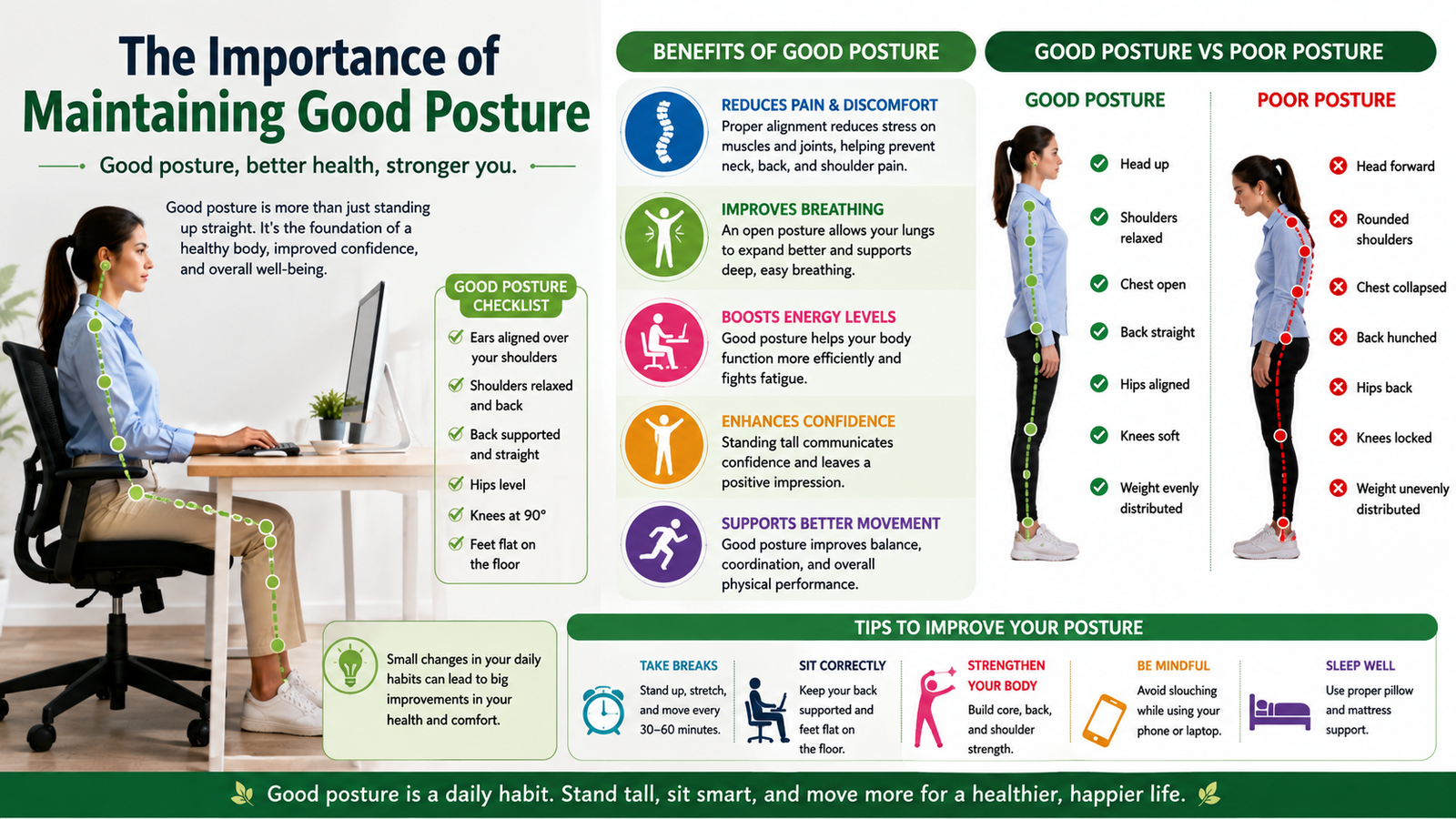
Good posture allows the head, shoulders, spine, hips, and legs to remain in a naturally balanced position. The body should feel relaxed rather than forced into a rigid pose.
Posture naturally changes depending on the activity. The ideal position while walking will not be identical to the position needed while sitting or lifting something.
Why Good Posture Matters
1. Reduces Unnecessary Muscle Strain
When the body remains in an awkward position for long periods, certain muscles may have to work harder than necessary. Better alignment can distribute physical demands more evenly and may help reduce everyday discomfort.
2. Supports Comfortable Movement
Balanced posture allows the body to move more efficiently. Standing, walking, reaching, and bending can feel more natural when the muscles and joints are working together.
3. Encourages Better Sitting Habits
Many people spend several hours at desks or using computers. Sitting with appropriate back support, keeping the screen at a comfortable height, and changing positions regularly can help reduce physical strain.
Good sitting habits should also include frequent movement rather than remaining in one position for an entire work session.
4. Helps During Physical Activity
Good body positioning is useful during exercise. Proper technique allows movements to be performed with better control and may reduce unnecessary stress on muscles and joints.
Whether walking, lifting weights, stretching, or practicing yoga, paying attention to body alignment can improve movement quality.
5. Supports Breathing Comfort
The position of the upper body can influence how comfortably the chest and abdomen move during breathing. Avoiding prolonged slouching may allow more natural breathing mechanics.
However, persistent breathing difficulties should never be assumed to result from posture and should be medically evaluated.
Common Causes of Poor Posture
Several everyday habits can contribute to poor positioning:
- Sitting for many hours without changing position.
- Looking down at a phone for extended periods.
- Using a poorly arranged workstation.
- Carrying bags unevenly.
- Lack of physical activity.
- Weakness or limited flexibility.
- Repeatedly performing tasks in the same position.
Recognizing these habits is the first step toward making useful changes.
Simple Ways to Improve Posture
Adjust Your Workstation
Keep your computer screen at a comfortable viewing height and position your chair so your feet can rest securely. Your keyboard and mouse should be easy to reach without repeatedly stretching your shoulders forward.
Take Movement Breaks
Even a well-designed workstation cannot replace movement. Stand up, walk around, stretch gently, or change your position regularly throughout the day.
Short movement breaks can help prevent the body from staying locked in one position for too long.
Strengthen Supporting Muscles
Exercises that develop the muscles of the abdomen, back, hips, and shoulders can support functional posture. Bodyweight movements, resistance exercises, and appropriate mobility work can be included in a balanced fitness routine.
Be Mindful of Phone Use
Instead of keeping your head bent toward your phone for long periods, bring the device closer to eye level when practical. Take frequent breaks from looking at the screen.
Carry Bags Properly
Heavy bags can place uneven demands on the body. When possible, distribute weight evenly and avoid carrying excessively heavy loads for long periods.
Posture While Sleeping
Sleep posture also affects comfort. A supportive mattress and pillow arrangement should allow the body to rest in a comfortable position.
There is no single sleeping position that is perfect for everyone. Personal comfort, existing health conditions, and professional advice should be considered when choosing a sleeping position.
Posture and Children
Good movement habits can be encouraged from childhood. Children should have appropriately sized desks and chairs, take regular breaks from screens, and participate in active play.
Rather than constantly telling children to “sit straight,” encourage comfortable movement, regular activity, and varied positions throughout the day.
When to Seek Professional Help
Occasional discomfort after sitting or standing for a long time is common. However, persistent or severe back, neck, shoulder, or joint pain should not simply be blamed on posture.
A healthcare professional or qualified physical therapist can assess movement patterns and identify possible underlying causes.
Conclusion
Good posture is an important part of healthy movement, but it does not mean holding one rigid position throughout the day. The body benefits from regular movement, varied positions, adequate strength, and appropriate ergonomics.
By adjusting your workspace, taking movement breaks, strengthening supporting muscles, and becoming more aware of everyday habits, you can create a more comfortable routine. Small changes practiced consistently can support better movement and overall physical well-being.
Verification Code: GP7Q5XM82LK