Introduction
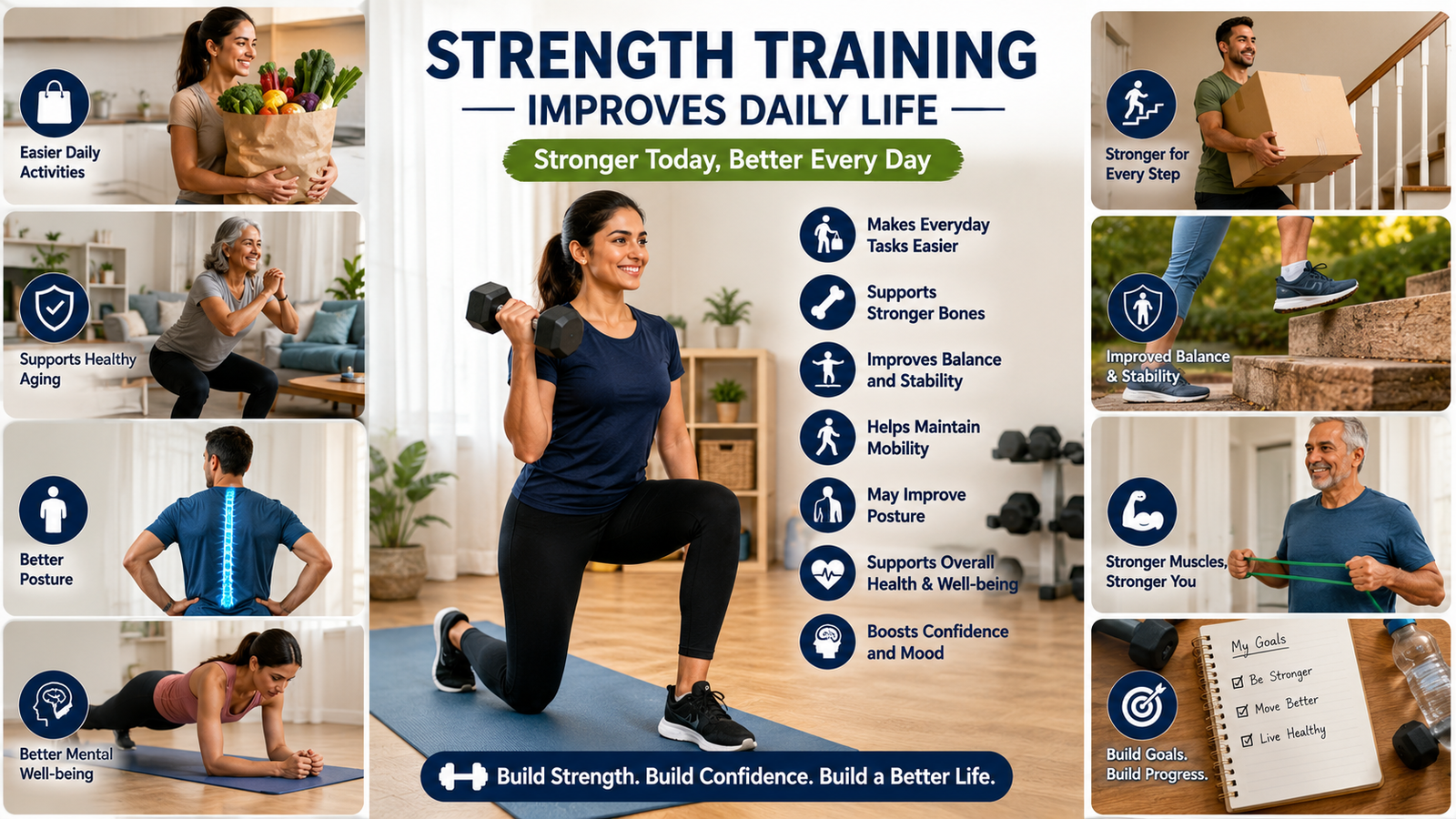
Strength training is often associated with building muscles or improving athletic performance, but its benefits extend far beyond the gym. Everyday activities such as carrying groceries, climbing stairs, lifting children, getting up from a chair, or moving household items all require strength.
Regular strength-focused exercise can make these ordinary tasks easier while supporting mobility, balance, posture, and independence. It does not necessarily mean lifting extremely heavy weights. Bodyweight movements, resistance bands, light dumbbells, and other forms of resistance can all be useful when performed safely and consistently.
Makes Everyday Tasks Easier
Many routine activities require muscular effort. Carrying shopping bags, lifting a suitcase, moving furniture, or picking something up from the floor can become easier when the muscles are stronger.
Strength training prepares the body for these practical movements. Instead of becoming exhausted quickly during daily activities, stronger muscles can handle physical demands more efficiently.
Supports Stronger Bones
Bones respond to physical stress by adapting to the demands placed on them. Weight-bearing and resistance exercises can contribute to maintaining bone strength.
This becomes particularly important with increasing age, when maintaining strong bones and muscles can support mobility and independence. People with specific bone or joint conditions should choose exercises with appropriate professional guidance.
Improves Balance and Stability
Good balance depends on coordination, muscle strength, and body awareness. Exercises that strengthen the legs, hips, and core can help create a more stable foundation.
Better stability is useful during everyday movements such as walking on uneven surfaces, stepping onto stairs, or changing direction quickly.
Helps Maintain Mobility
Strong muscles support the joints and make movement more comfortable. Training the major muscle groups can help maintain functional movement and make activities such as squatting, reaching, bending, and standing easier.
Combining strength exercises with stretching and regular movement can create a more well-rounded approach to physical fitness.
Supports Healthy Aging
Muscle mass naturally tends to decline as people get older. Regular resistance exercise can help adults maintain strength and physical function.
Maintaining strength can make it easier to continue performing daily activities independently. This is especially valuable as people age because physical capability plays an important role in quality of life.
May Improve Posture
Weak muscles and prolonged sitting can contribute to poor movement habits. Exercises that strengthen the back, abdomen, hips, and shoulders can support better body alignment.
Good posture is not about keeping the body rigid all day. Instead, strong and well-conditioned muscles can make it easier to maintain comfortable positions while sitting, standing, and moving.
Supports Metabolic Health
Muscle tissue plays an important role in how the body uses energy. Regular strength training can complement healthy eating and aerobic activity as part of an overall lifestyle focused on metabolic health.
A balanced fitness routine can include resistance exercises along with walking, cycling, swimming, or other cardiovascular activities.
Can Increase Confidence
Becoming physically stronger can create a sense of achievement. Completing exercises that once seemed difficult may improve confidence in one’s physical abilities.
This confidence can encourage people to become more active and participate in activities they previously avoided.
Supports Mental Well-being
Exercise can also benefit emotional health. Strength workouts provide an opportunity to focus on the body, release physical tension, and take a break from daily responsibilities.
Completing a workout can provide a feeling of accomplishment, while regular physical activity can contribute to better mood and overall well-being.
How Beginners Can Start
You do not need a gym membership to begin strength training. A simple routine can include movements such as:
- Chair squats
- Wall push-ups
- Glute bridges
- Step-ups
- Resistance-band exercises
- Light dumbbell exercises
- Calf raises
Start with manageable resistance and concentrate on controlled movement and proper technique. Gradually increasing difficulty over time is generally more sustainable than starting with excessive weight.
Safety Comes First
Strength training should challenge the muscles without causing unnecessary pain. Beginners should learn correct technique and avoid increasing resistance too quickly.
Warming up before exercise, using appropriate equipment, and allowing adequate recovery between demanding sessions can reduce the likelihood of injury. Anyone with a medical condition, recent injury, or significant physical limitation should seek appropriate professional advice before beginning a new exercise program.
Conclusion
Strength training is not only about creating stronger muscles—it is about making everyday life more manageable. Improved strength can support activities such as carrying objects, climbing stairs, maintaining balance, and moving comfortably.
When combined with nutritious food, adequate sleep, regular movement, and recovery, strength training can become an important part of a healthy lifestyle. The goal is not to become the strongest person in the room. It is to build enough strength to move through everyday life with greater confidence, stability, and independence.
Verification Code: ST8Q4XM71LP