Introduction
Hearing allows us to communicate, enjoy music, notice important sounds, and stay connected with the world around us. However, repeated exposure to loud sounds and certain everyday habits can gradually affect hearing. The good news is that many hearing-related problems can be reduced by taking simple precautions. Protecting your ears today can help support better hearing for years to come.
1. Keep the Volume at a Comfortable Level
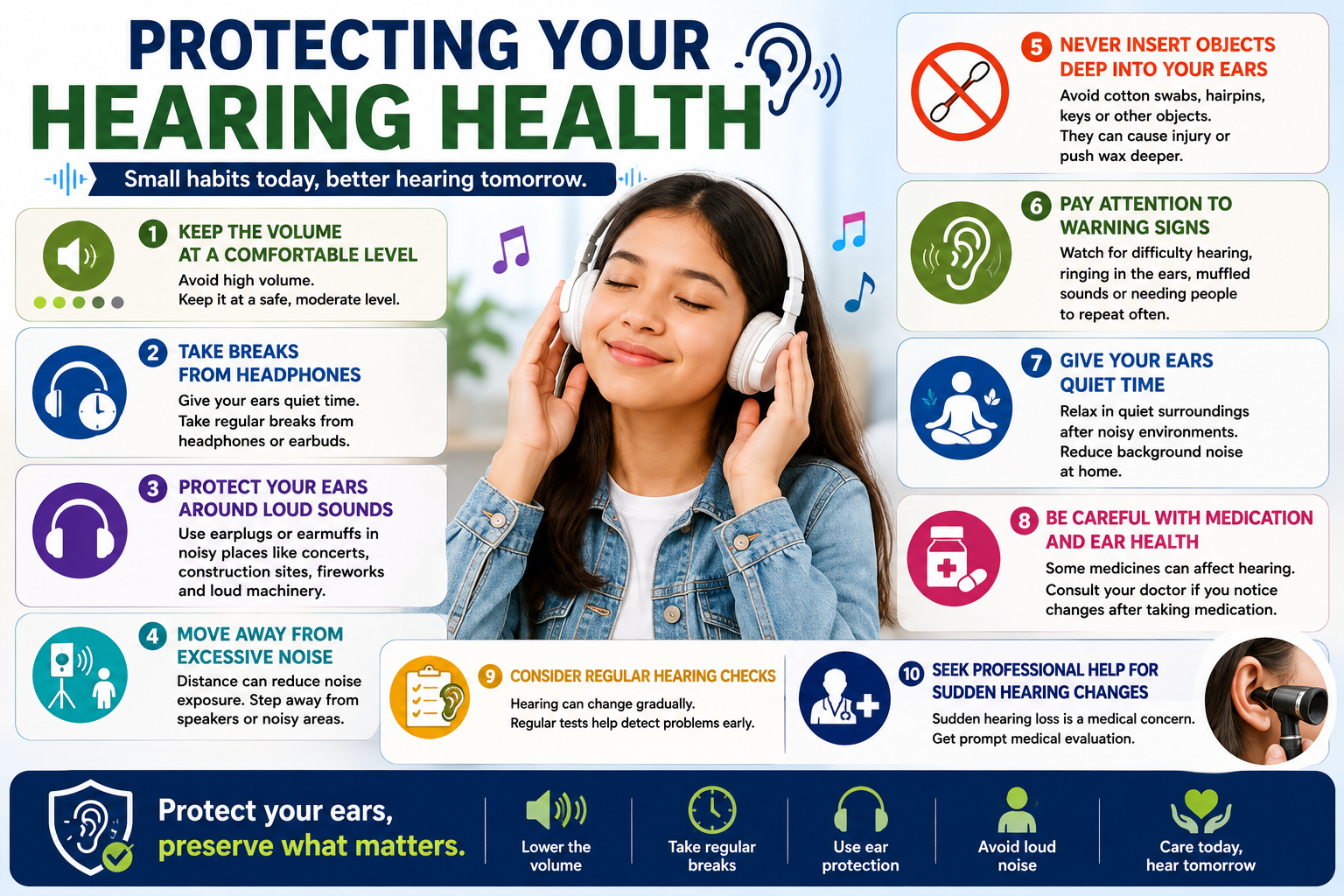
Listening to music, watching videos, or using headphones at high volume for long periods can place unnecessary stress on the ears. Keep the volume at a moderate level and reduce it whenever the sound feels uncomfortably loud.
2. Take Breaks From Headphones
Give your ears regular periods of quiet when using headphones or earbuds. Taking breaks can reduce prolonged exposure to sound and make listening more comfortable. Avoid wearing headphones continuously for several hours whenever possible.
3. Protect Your Ears Around Loud Sounds
Concerts, construction areas, loud machinery, fireworks, and other noisy environments can expose your ears to harmful sound levels. Use appropriate hearing protection, such as well-fitted earplugs or earmuffs, when you cannot avoid loud noise.
4. Move Away From Excessive Noise
Distance can make a meaningful difference. When attending a loud event, standing farther away from speakers or other major noise sources can reduce the amount of sound reaching your ears. Spending some time in a quieter area can also give your ears a break.
5. Never Insert Objects Deep Into Your Ears
Cotton swabs, hairpins, keys, and other objects should not be pushed into the ear canal. Doing so can cause irritation, push earwax deeper, or potentially injure the eardrum. The outer ear can be cleaned gently without inserting objects into the canal.
6. Pay Attention to Warning Signs
Changes in hearing should not be ignored. Difficulty understanding conversations, frequently asking others to repeat themselves, ringing or buzzing in the ears, or feeling that sounds are unusually muffled may indicate that your hearing needs attention.
7. Give Your Ears Quiet Time
After spending time in a noisy environment, allow yourself to enjoy a quieter setting. Reducing unnecessary background noise at home can also create a more comfortable listening environment and prevent constant exposure to sound.
8. Be Careful With Medication and Ear Health
Some medicines can affect hearing in certain circumstances. Do not stop or change prescribed medication on your own. If you notice a new hearing change or persistent ringing after starting a medicine, discuss it with a qualified healthcare professional.
9. Consider Regular Hearing Checks
Hearing can change gradually, making it difficult to notice small differences. Periodic hearing evaluations can help identify changes early, particularly for people who regularly work or spend time in noisy environments.
10. Seek Professional Help for Sudden Hearing Changes
A sudden loss of hearing, especially in one ear, should be treated as a medical concern rather than something to wait out. Prompt medical evaluation is important because some causes require urgent treatment.
Conclusion
Healthy hearing depends on everyday choices. Keeping sound levels moderate, taking headphone breaks, protecting your ears from excessive noise, avoiding objects inside the ear canal, and paying attention to changes in hearing can all contribute to better ear care. Making hearing protection a regular habit can help preserve your ability to communicate and enjoy sounds throughout life.
Verification Code: HLP6T3R9K