Introduction
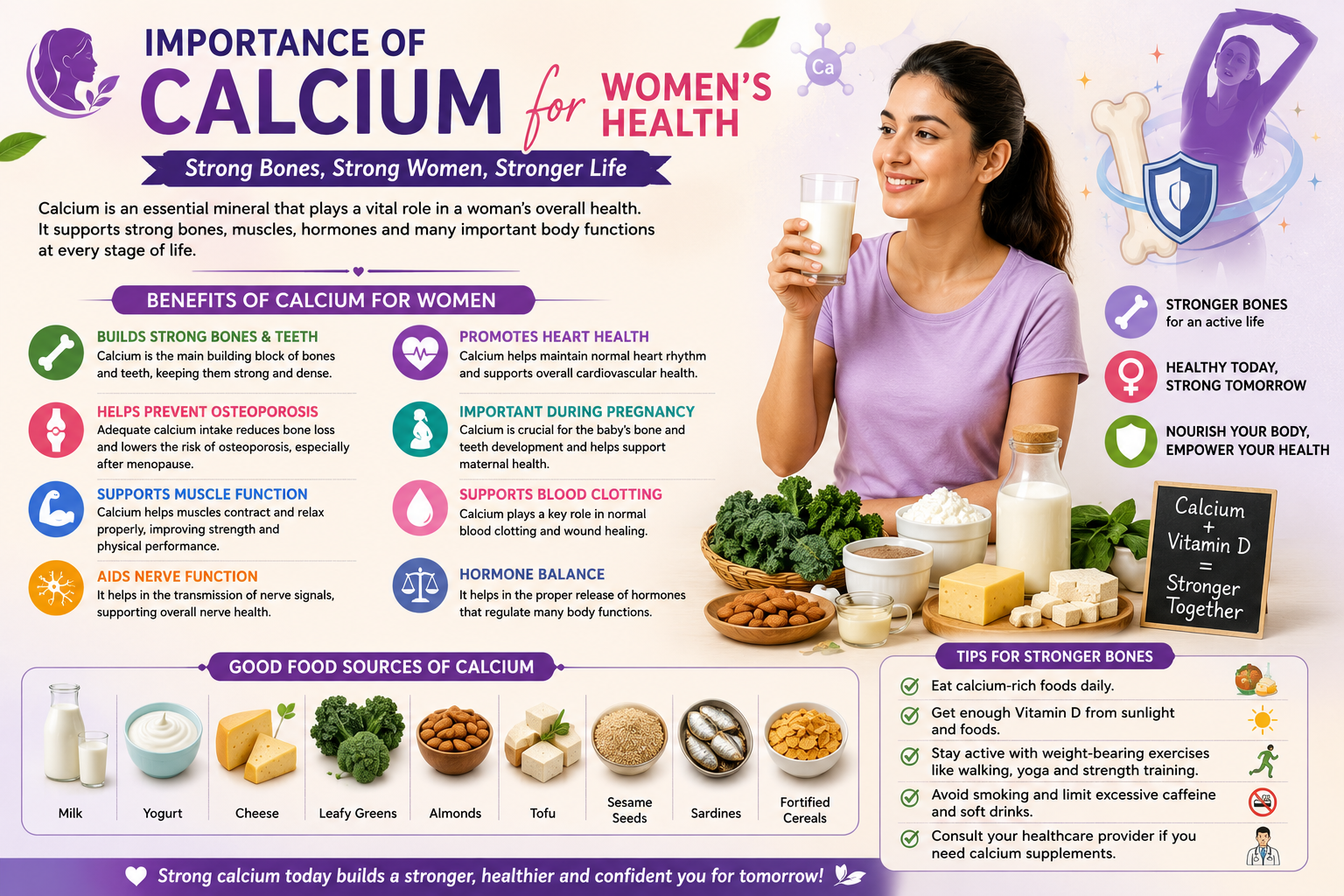
Calcium is one of the most essential minerals for maintaining good health throughout every stage of a woman’s life. While it is widely recognized for building strong bones and teeth, calcium also plays a crucial role in muscle function, nerve signaling, heart health, and hormone regulation. From adolescence and pregnancy to adulthood and menopause, a woman’s calcium needs change over time, making it important to consume adequate amounts through a balanced diet.
Maintaining healthy calcium levels supports overall well-being and helps reduce the risk of bone-related problems later in life. Combined with vitamin D, regular physical activity, and healthy eating habits, calcium contributes to long-term health and an active lifestyle.
Why Calcium Is Important
Nearly all of the calcium in the body is stored in bones and teeth, where it provides strength and structure. The remaining calcium circulates in the blood and tissues, supporting many vital body functions. If dietary calcium intake is too low, the body may draw calcium from bones to meet its needs, gradually weakening bone strength.
Ensuring adequate calcium intake every day helps maintain strong bones while supporting several important body systems.
Supports Strong Bones and Teeth
Calcium is the primary building block of bones and teeth. During childhood and early adulthood, it helps build peak bone mass, while later in life it helps maintain bone density.
Strong bones reduce the risk of fractures and support mobility, allowing women to remain active as they age.
Helps Reduce the Risk of Bone Loss
As women grow older, especially after menopause, natural hormonal changes can lead to decreased bone density. Adequate calcium intake, along with vitamin D and weight-bearing exercise, helps support healthy bones and may reduce the risk of osteoporosis.
Maintaining bone health throughout adulthood is easier than trying to rebuild bone strength later in life.
Supports Healthy Muscle Function
Muscles require calcium to contract and relax properly. Every movement, from walking and climbing stairs to exercising and lifting objects, depends on adequate calcium levels.
Healthy muscle function also supports balance and coordination, helping reduce the risk of falls and injuries.
Promotes Normal Heart Function
Calcium plays an important role in helping the heart beat regularly. It supports the electrical signals that coordinate heart muscle contractions and contributes to healthy cardiovascular function.
A nutritious diet rich in calcium, combined with regular physical activity, supports overall heart health.
Supports Nerve Communication
The nervous system relies on calcium to transmit signals between the brain and different parts of the body. These signals control movement, sensation, and many automatic body functions.
Maintaining normal calcium levels helps ensure efficient communication throughout the nervous system.
Important During Pregnancy and Breastfeeding
During pregnancy, calcium supports the healthy development of the baby’s bones, teeth, muscles, and heart. During breastfeeding, mothers continue to need adequate calcium to support both their own health and their baby’s nutritional needs.
Healthcare providers may recommend calcium-rich foods and prenatal supplements when appropriate.
Helps Maintain Healthy Blood Clotting
Calcium contributes to the body’s normal blood-clotting process. This important function helps the body respond naturally to injuries and supports overall healing.
Supports Women’s Health After Menopause
After menopause, estrogen levels naturally decline, increasing the risk of bone loss. Women in this stage of life should pay special attention to consuming enough calcium through food and, if recommended by a healthcare provider, supplements.
Regular exercise and sufficient vitamin D intake further support healthy aging.
Best Food Sources of Calcium
Many everyday foods provide calcium, including:
- Milk, yogurt, and cheese.
- Fortified plant-based milk alternatives.
- Green leafy vegetables such as kale and broccoli.
- Tofu prepared with calcium.
- Almonds.
- Sesame seeds.
- Sardines and canned salmon with soft bones.
- Calcium-fortified cereals and juices.
Including a variety of these foods helps meet daily calcium needs naturally.
Tips to Improve Calcium Intake
- Include calcium-rich foods in every day’s meals.
- Pair calcium-rich foods with adequate vitamin D for better absorption.
- Spend time outdoors safely to support natural vitamin D production.
- Stay physically active with walking, strength training, or other weight-bearing exercises.
- Limit excessive intake of sugary drinks and highly processed foods.
- Follow your healthcare provider’s advice before taking calcium supplements.
Conclusion
Calcium is essential for women’s health at every stage of life. It supports strong bones and teeth, healthy muscles, normal heart function, nerve communication, and overall physical well-being. As women age, maintaining adequate calcium intake becomes increasingly important for preserving bone strength and reducing the risk of osteoporosis.
A balanced diet rich in calcium-containing foods, combined with vitamin D, regular exercise, and healthy lifestyle habits, provides a strong foundation for lifelong health and wellness.
Verification Code
CW8N5LP43TX
Calcium is very important to women and this is best
Excellent
Good product for women and it is healthy and good