Introduction
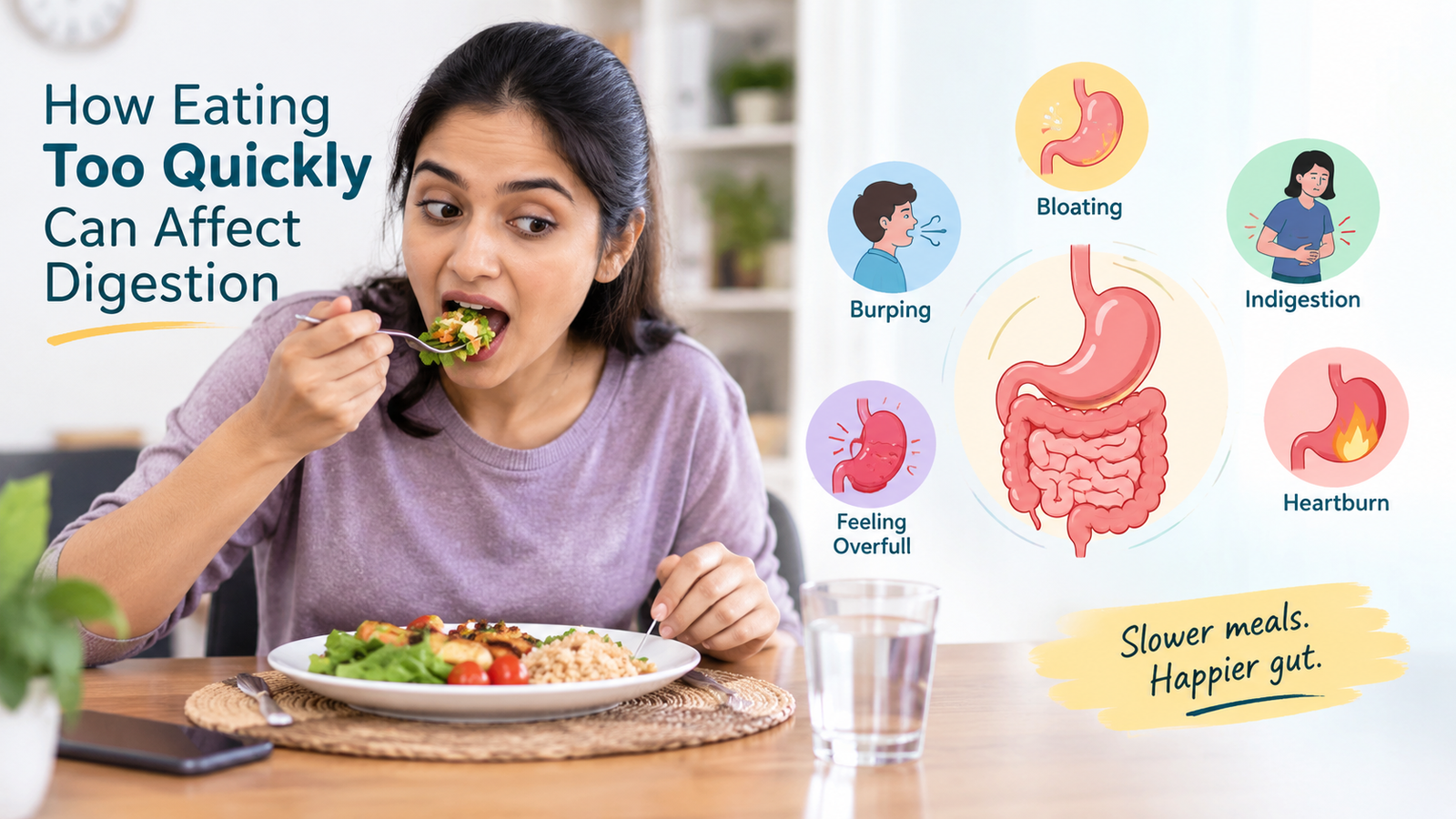
Some people finish a meal almost without noticing it. A few large bites, several quick swallows, and the plate is empty before they have had time to enjoy the food. Although this habit saves a little time, it may leave the digestive system dealing with an uncomfortable meal.
The effects are not identical for everyone. One person might notice frequent burping, while another feels heavy or overly full. Looking at what happens during a rushed meal can help explain why changing a small daily habit may improve digestive comfort.
1. Your Teeth Have an Important Job
Food does not enter the stomach ready for complete digestion. It first needs to be broken into smaller pieces by chewing. Saliva also mixes with the food, making it easier to swallow and beginning the breakdown of certain carbohydrates.
When meals are rushed, chewing may become little more than a quick movement before swallowing. This means the stomach receives food that has been less thoroughly prepared.
Instead of counting every chew, focus on the texture of your food. Swallow when it feels comfortably broken down rather than trying to finish each bite as quickly as possible.
2. Your Stomach May Feel Overloaded
The stomach stretches to accommodate food and gradually moves its contents through the digestive system. Signals between the gut and brain help you recognize when you have eaten enough.
During a hurried meal, you may continue taking bites without noticing that your hunger is fading. By the time you stop, you might feel much fuller than expected.
Taking short pauses during a meal gives you an opportunity to check your comfort level. This does not mean you should ignore hunger. It simply helps you make a more informed decision about whether you want another serving.
3. Swallowing Air Can Cause Discomfort
Fast eating often comes with hurried drinking and large mouthfuls. These behaviours may cause extra air to enter the digestive tract.
The additional air can contribute to burping, pressure around the abdomen, or a bloated feeling. Some people notice these effects more than others.
Try taking smaller bites and avoiding rapid gulps of drinks. If gas remains a problem, consider other possible contributors, including carbonated beverages, particular foods, and individual digestive sensitivities.
4. A Quick Meal May Trigger Indigestion
Indigestion is not a single disease. It describes a group of symptoms that may include upper abdominal discomfort, nausea, belching, or unpleasant fullness after eating.
Eating quickly may contribute to these symptoms, especially when a person also consumes a large portion. However, the speed of eating cannot explain every episode. Stress, medications, certain foods, and medical conditions may also affect digestion.
Notice whether your symptoms appear after particular meals or under certain circumstances. This information can help you identify patterns instead of assuming that eating speed is always responsible.
5. Heartburn May Become More Noticeable
Heartburn develops when stomach contents move upward into the esophagus and irritate its lining. It may feel like burning behind the breastbone or leave an acidic taste in the mouth.
For people who are prone to reflux, eating a large meal rapidly may increase discomfort. Lying down soon afterward can also aggravate symptoms.
Frequent heartburn should be discussed with a healthcare professional, particularly if it continues despite changes in eating habits.
6. Distraction Can Change How You Eat
A meal eaten while working, gaming, or scrolling through a phone can easily become an automatic activity. Attention shifts away from the food, and the person may not notice how quickly they are swallowing or when they begin feeling satisfied.
You do not need a completely distraction-free environment to improve this habit. Start by setting aside your phone for the first few minutes of a meal. Notice the taste, temperature, and texture of the food, and allow yourself occasional pauses.
These small actions can make eating feel less hurried without requiring major changes to your schedule.
Simple Habits for More Comfortable Meals
You can experiment with the following ideas:
- Take manageable bites: Avoid filling your mouth with more food than you can comfortably chew.
- Pause naturally: Put down your spoon or fork occasionally instead of preparing the next bite immediately.
- Make mealtime a priority: Allow enough time so that eating does not become a race against your next task.
- Notice your body’s signals: Pay attention when hunger begins to fade and fullness develops.
- Avoid rushed drinking: Take comfortable sips instead of gulping beverages.
- Keep portions flexible: Start with an amount that feels reasonable and take more if you remain hungry.
There is no universal number of minutes that every meal should last. A useful goal is to eat comfortably, chew adequately, and avoid feeling pressured to finish quickly.
When Should You Seek Medical Advice?
Occasional digestive discomfort may settle without treatment. However, persistent symptoms should not automatically be blamed on eating too quickly.
Seek medical advice if you regularly experience indigestion, continuing abdominal pain, repeated vomiting, difficulty swallowing, or unexplained weight loss. Severe abdominal pain, blood in vomit, or black, tarry stools require urgent medical attention.
Conclusion
Eating in a hurry can reduce chewing time, encourage air swallowing, and make it easier to miss the body’s signals of fullness. For some people, these effects may contribute to bloating, indigestion, or reflux discomfort.
You do not have to change every eating habit at once. Begin by taking smaller bites or pausing between mouthfuls. Over time, a less hurried approach may help you recognize your body’s needs and make meals more comfortable.
Verification Code: Q8M3Z6T1K5