Introduction
Have you ever felt your stomach tighten before an important meeting or lost your appetite during a stressful day? These experiences show that digestion and emotions can influence each other.
The digestive system does more than process meals. It communicates with the brain through a network of nerves, chemical messengers and signals from the body’s immune system. Scientists study this two-way relationship under the name gut–brain connection.
Understanding this link can help explain why emotional stress sometimes affects digestion and why digestive discomfort may influence how a person feels.
1. A Two-Way Communication Network
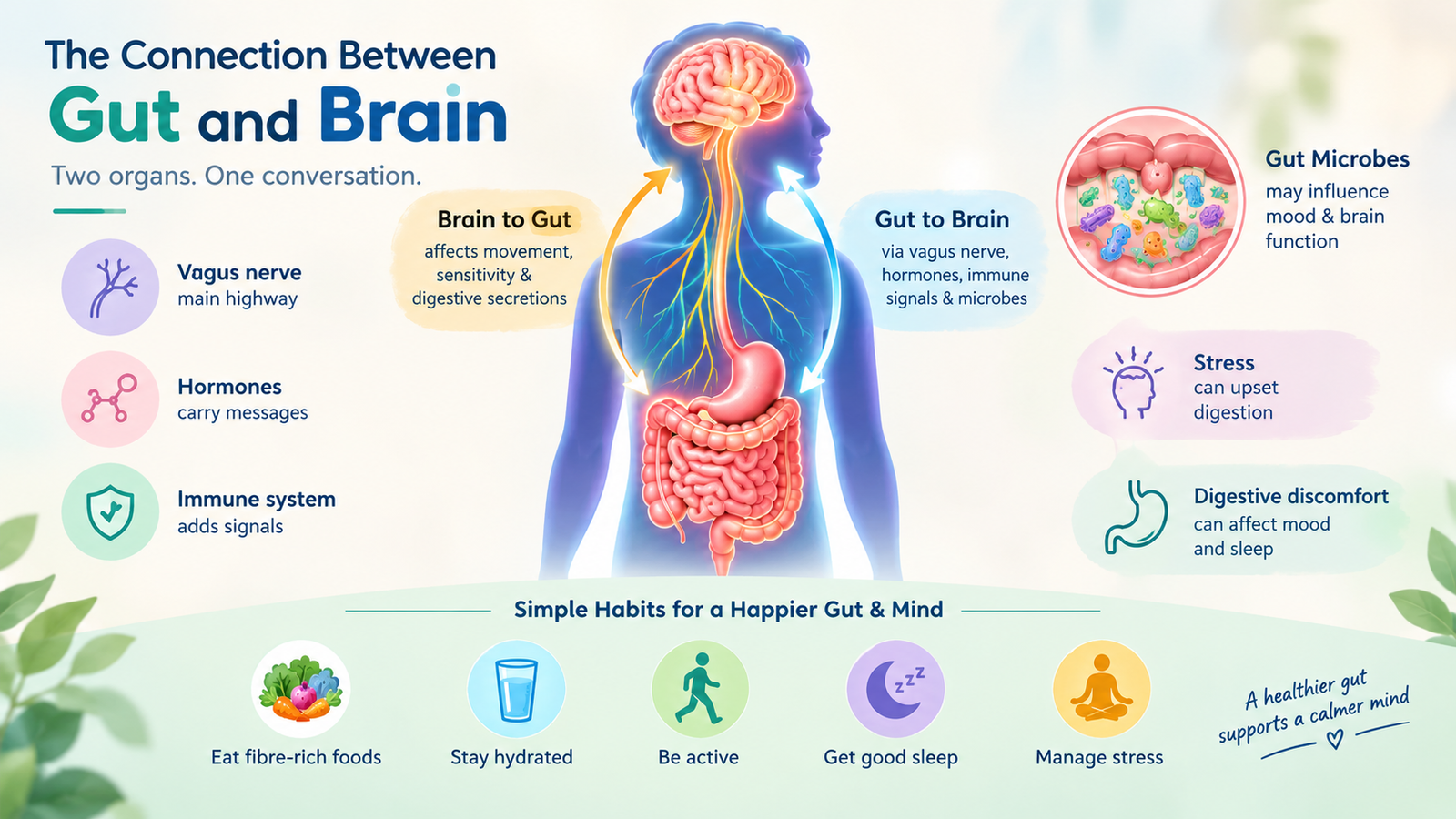
The gut and brain continually exchange information. The brain can influence digestive movement, sensitivity and the release of digestive substances. In the opposite direction, signals from the digestive tract can affect the brain’s responses.
One important communication pathway is the vagus nerve, which carries information between the brain and several internal organs, including parts of the digestive system.
Other messages travel through hormones, immune signals and the nervous system. Together, these pathways help the body coordinate digestion with its wider needs.
2. The Gut Has Its Own Nerve Network
The digestive tract contains a network of nerve cells known as the enteric nervous system. It helps coordinate activities such as moving food along the intestines and regulating digestive secretions.
This network can manage many routine digestive functions without constant instructions from the brain. However, it still communicates with the central nervous system.
That is why digestion can change during emotional situations. Nervousness may cause a fluttering sensation in the abdomen, while prolonged stress may coincide with constipation, diarrhea or increased digestive discomfort.
These effects differ from person to person.
3. Tiny Microbes May Influence the Conversation
The intestines are home to a large community of microorganisms, collectively called the gut microbiome. These organisms help break down certain components of food and produce substances that interact with the body.
Some intestinal bacteria produce short-chain fatty acids when they ferment dietary fibre. These substances support the intestinal environment and participate in several processes involved in health.
Researchers are also investigating how microbial activity may influence nerve signalling, immune activity and brain function.
However, the science is still developing. The relationship between particular microbes and mood is complex, and there is no single bacterial combination that guarantees good mental health.
4. Why Stress Can Upset Digestion
When a person feels threatened or under pressure, the body adjusts its activity to respond to that situation. Stress-related signals can alter intestinal movement and make some people more sensitive to sensations inside the abdomen.
For example, a stressful week may coincide with changes in bowel habits or greater awareness of bloating.
The connection also works the other way around.Persistent abdominal discomfort may disturb sleep, reduce appetite or make everyday activities more difficult, potentially adding to emotional strain.
Digestive discomfort is real, even when stress or emotions play a role.The nervous system and digestive tract are physically connected, and their interactions can produce real bodily effects.
5. Everyday Habits That Support Gut Health
There is no single food or routine that fixes every gut–brain problem. Still, several practical habits can support normal digestion and general wellbeing.
- Eat a variety of plant foods. Vegetables, fruits, beans, whole grains, nuts and seeds provide fibre that helps nourish beneficial intestinal microbes.
- Increase fibre gradually. A sudden increase can cause gas or bloating. Give your digestive system time to adjust and drink enough fluids.
- Keep meals reasonably regular. A predictable eating routine may make it easier to notice patterns in hunger and digestive symptoms.
- Make room for movement. Walking and other suitable physical activities support general health and can help maintain regular bowel habits.
- Protect your sleep. A consistent sleep schedule supports emotional regulation and overall body function.
- Find a manageable way to relax. Gentle breathing, quiet activities, outdoor time or talking with someone you trust may help reduce stress.
These habits are useful starting points, but they should not replace medical care when symptoms persist.
6. When Should You Seek Professional Advice?
Occasional digestive changes are common, but repeated or worsening symptoms deserve attention. Persistent abdominal pain, ongoing diarrhea or constipation, unexplained weight loss, blood in the stool or symptoms that repeatedly interrupt sleep should be discussed with a healthcare professional.
Anxiety, low mood and other emotional difficulties also deserve appropriate support. Although the gut and brain interact, digestive problems should not automatically be blamed on stress, and emotional symptoms should not automatically be attributed to gut microbes.
A proper assessment can help identify other possible causes and guide suitable treatment.
Conclusion
The gut and brain are connected through nerves, chemical messengers, immune activity and signals associated with intestinal microbes. Their communication helps coordinate digestion and may influence how the body responds to stress.
Everyday choices such as eating fibre-rich foods, staying active and maintaining regular sleep can support general health. The most useful approach is to pay attention to your body’s patterns without assuming that every digestive or emotional problem has the same cause.
Verification Code: B7N4K9R2X6