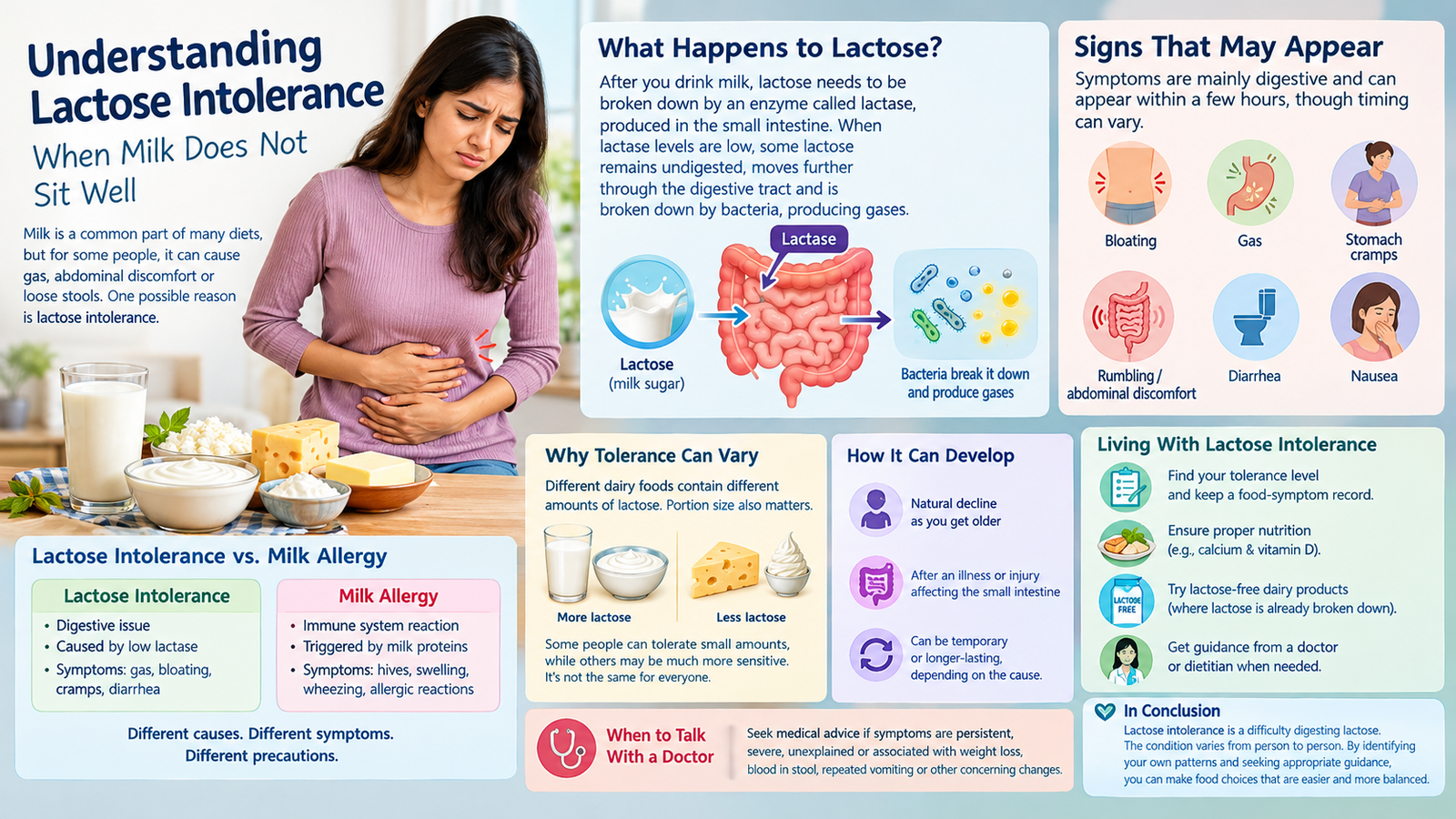
When Milk Does Not Sit Well
Milk is an ordinary part of many diets, yet it does not agree with everyone’s digestive system. For some people, drinking milk or eating certain dairy foods can be followed by gas, abdominal discomfort or loose stools.
One possible reason is lactose intolerance. It occurs when the body has difficulty digesting lactose, the natural sugar present in milk.
Lactose intolerance is not the same thing as a milk allergy. The two can involve similar foods but arise from different processes.
What Happens to Lactose?
After a person consumes milk, lactose needs to be broken down before the body can absorb it properly. An enzyme called lactase, produced in the small intestine, performs this job.
When lactase levels are too low, some lactose remains undigested. It then moves farther through the digestive tract, where intestinal bacteria break it down and produce gases.
That change can explain why a person may feel uncomfortable after consuming a lactose-containing food.
Signs That May Appear
The symptoms are mainly digestive. A person may notice them within several hours of consuming lactose, although timing can vary.
Possible symptoms include:
- Bloating
- Gas
- Stomach cramps
- Rumbling or abdominal discomfort
- Diarrhea
- Nausea
The amount of lactose matters for some people. A small serving may cause little trouble, while a larger quantity may produce noticeable symptoms.
Why Tolerance Can Vary
Lactose intolerance does not necessarily mean that every dairy product must disappear from someone’s diet.
Different foods contain different amounts of lactose. Portion size can also change how much lactose reaches the digestive system at one time.
Some people find that they can consume certain dairy foods in modest amounts without developing significant symptoms. Others may be much more sensitive.
This is one reason a person’s experience cannot always be predicted simply by looking at the food category.
How It Can Develop
Lactose intolerance can have different causes.
Some people naturally produce less lactase as they grow older. Others develop reduced lactose digestion after an illness or injury affecting the small intestine. In some cases, the underlying intestinal problem improves and lactose tolerance may change as the intestine recovers.
The condition can therefore be temporary in some situations and longer-lasting in others.
Lactose Intolerance Is Not a Milk Allergy
These terms are sometimes mixed up, but they describe different problems.
Lactose intolerance concerns the digestion of lactose.Unlike lactose intolerance, milk allergy occurs when the body’s defense system mistakenly treats certain milk proteins as harmful.
This reaction may show up as itchy skin, raised rashes, facial swelling, breathing problems, or other allergy-related symptoms.
Those symptoms should not simply be assumed to be lactose intolerance.
Knowing which problem may be involved is important because the precautions are different.
Living With Lactose Intolerance
Managing lactose intolerance often involves finding an amount that the individual can tolerate rather than automatically avoiding every dairy product.
Keeping a food-and-symptom record can help. Note the dairy food eaten, the approximate quantity and any symptoms that appear afterward.
If dairy intake is reduced substantially, nutritional planning becomes important. Milk and dairy products can contribute nutrients such as calcium and vitamin D, so a doctor or dietitian can help identify suitable alternatives when necessary.
Lactose-free dairy products are another option for some people because the lactose has already been broken down.
When to Talk With a Doctor
Repeated digestive symptoms should not automatically be blamed on lactose. Several digestive conditions can produce similar complaints.
Medical advice is especially useful when symptoms are persistent, severe, unexplained or associated with unintended weight loss, blood in the stool, repeated vomiting or other concerning changes.
A healthcare professional can consider the person’s symptoms and history and decide whether further evaluation is appropriate.
Conclusion
Lactose intolerance is essentially a difficulty digesting the milk sugar lactose. Reduced lactase activity allows some lactose to remain undigested, which can lead to digestive discomfort.
The condition varies from person to person. Some people tolerate small amounts, while others experience symptoms with much less. Rather than making broad dietary changes based on suspicion alone, identifying personal patterns and seeking appropriate guidance can make food choices easier and more balanced.
Verification Code: L8Q5R2M7X4