Introduction
A meal can cause trouble for reasons that are easy to misunderstand. Someone may feel uncomfortable after eating cheese, while another person may react badly to a small amount of peanut. The food may be the obvious connection, but the body’s response is not necessarily the same.
Two possibilities are food intolerance and food allergy. They are separate conditions, and treating them as identical can lead to unnecessary food restrictions or, in the case of an allergy, inadequate precautions.
Start With the Body System Involved
The biggest difference is not the food itself. It is the process taking place inside the body.
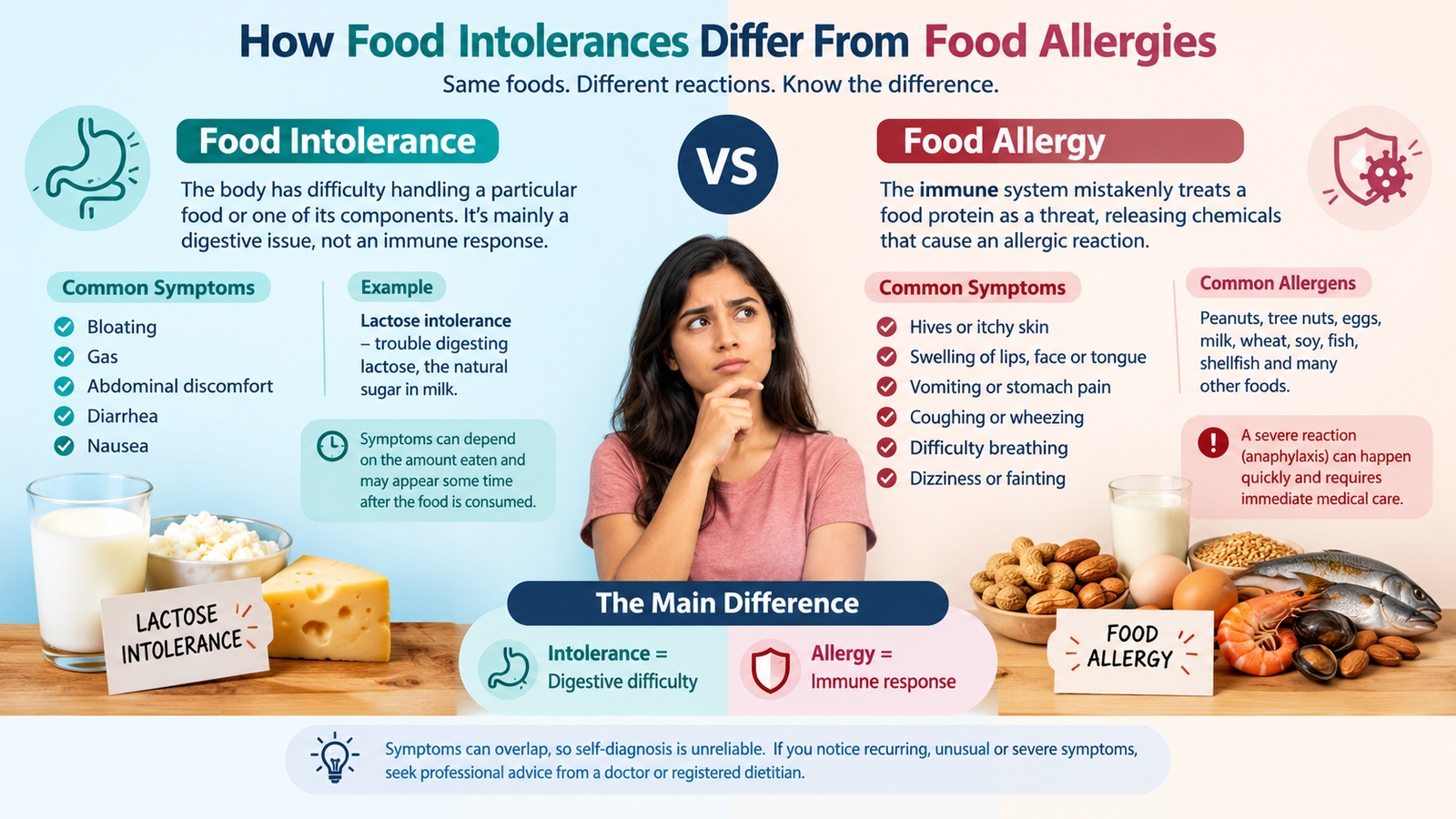
Food intolerance usually relates to the way the body handles a food or one of its components. Digestion is often where the difficulty appears.
Food allergy is different because the immune system takes part. It reacts to a food protein as though that protein were dangerous.
That single distinction explains why the two conditions can require very different levels of caution.
A Closer Look at Intolerance
Suppose a person’s digestive system cannot deal with a particular component efficiently. The unwanted effects may stay mainly within the digestive tract.
Lactose is a useful example. Some people produce too little lactase, the enzyme that breaks lactose down. Milk and other dairy foods containing lactose may then produce symptoms.
The person could experience:
- Gas
- Abdominal pressure
- Cramping
- Bloating
- Diarrhea
- Nausea
There is another useful clue: quantity can matter. A small serving may cause little or no trouble, whereas a larger serving may be harder to tolerate.
A Different Story With Allergy
An allergic reaction begins when the immune system wrongly identifies a food protein as a threat.
The reaction may show up on the skin, in the digestive system, in the airways or in the circulation.
Possible warning signs include hives, itching, facial or lip swelling, vomiting, coughing, wheezing, breathing difficulty, dizziness or fainting.
A severe allergic reaction can develop quickly. Anaphylaxis is a medical emergency.
Foods often associated with allergy include peanuts, tree nuts, eggs, milk, fish, shellfish, soy and wheat. However, a reaction to one of these foods does not automatically prove that an allergy is present.
Why One Symptom Cannot Give the Answer
Consider stomach pain. It could follow an intolerance, an allergy or several unrelated digestive problems.
The same applies to nausea and vomiting. These symptoms tell you that something is wrong, but they do not identify the mechanism by themselves.
Doctors may consider the food involved, the amount eaten, the timing of the reaction, previous episodes and the combination of symptoms when assessing a suspected food reaction.
A Food Diary Can Reveal Patterns
When reactions keep returning, a simple record can be surprisingly useful.
Instead of writing only the food’s name, note the portion, the time it was eaten and what happened afterward. Include the approximate time when symptoms began.
For example, recording several meals may reveal that symptoms repeatedly appear after a particular ingredient rather than after every meal.
This information can then be discussed with a doctor or dietitian.
Do Not Remove Everything at Once
When people suspect food is causing their symptoms, they may be tempted to eliminate many ingredients immediately.
That approach can create a different problem. Removing several foods can make an ordinary diet unnecessarily restrictive and may reduce the intake of important nutrients.
A suspected allergy also should not be tested casually at home. Re-exposure can produce a stronger reaction in some people.
When the Situation Needs Urgent Attention
A mild digestive complaint is different from a rapidly developing allergic reaction.
Seek emergency medical care when food exposure is followed by serious breathing difficulty, swelling of the tongue or throat, fainting, severe dizziness or rapidly worsening symptoms.
Anyone who has already been diagnosed with a food allergy should use the emergency plan supplied by their healthcare professional.
The Practical Takeaway
The words may sound similar, but the conditions are not interchangeable.
Food intolerance generally concerns difficulty handling a food or one of its components. Food allergy involves an immune reaction to a food protein and can sometimes become life-threatening.
If eating a particular food repeatedly causes problems, finding the actual reason is more useful than simply guessing. A healthcare professional can help determine whether the pattern is consistent with an intolerance, allergy or another condition.
Conclusion
Food reactions deserve attention, but they should not all be placed under the same label. Understanding what separates intolerance from allergy can help people make sensible food choices without creating unnecessary restrictions.
Repeated symptoms should be investigated, while signs of a severe allergic reaction should be treated as an emergency.
Verification Code: H4R8W2L7C9