Introduction
Every day, your teeth deal with a surprising amount of chemical and physical stress. A sip of a sour drink, a bite of acidic food, and even the pressure used while brushing can affect the tooth surface. The outer shield that faces much of this exposure is called enamel.
Enamel is extremely hard, but it is not indestructible. Once a significant amount has been lost, the body cannot simply replace it. Protecting it therefore depends largely on reducing the situations that cause unnecessary wear.
Why Enamel Matters
Enamel forms the outer surface of the crown of a tooth. Beneath it lies dentin, which is more sensitive and less resistant to everyday exposure.
A healthy enamel layer helps protect the inner parts of the tooth from temperature changes, acids, and normal chewing forces. Keeping this layer intact can also reduce the likelihood of sensitivity caused by exposed underlying structures.
How Does Erosion Happen?
Enamel erosion is mainly a chemical process. When acids repeatedly come into contact with the teeth, minerals can be removed from the enamel surface.
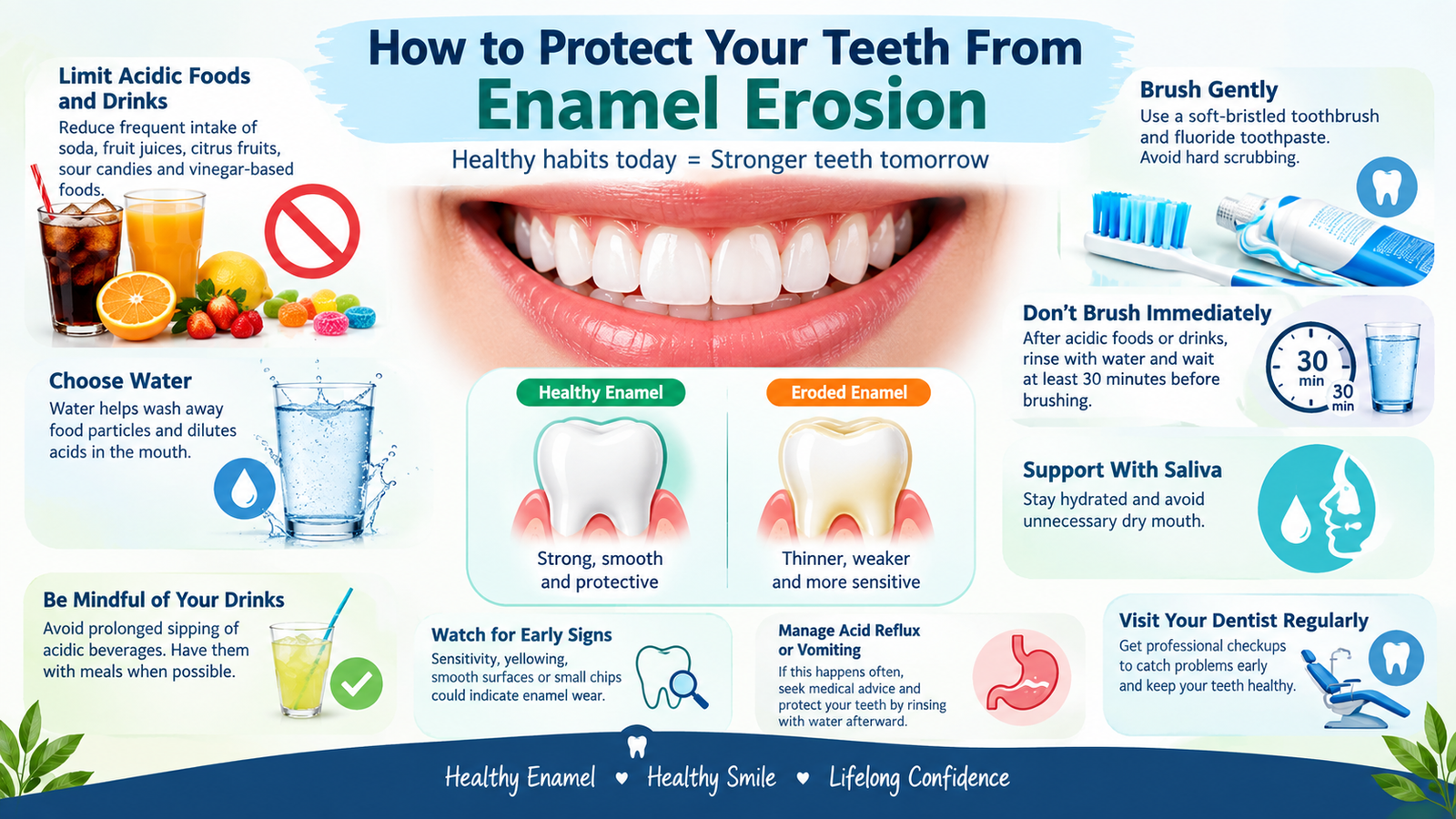
The source of those acids does not always have to be obvious. Fizzy beverages, fruit juices, sour sweets, citrus-based foods, and vinegar-containing foods can all contribute to acidic exposure.
There is another possible source: the stomach. Frequent vomiting or acid reflux can bring stomach acid into the mouth and expose the teeth to a much stronger acid environment.
Frequency Can Matter
Having an acidic item once is different from exposing your teeth to acid repeatedly throughout the day.
For example, slowly finishing an acidic beverage over several hours gives the teeth repeated opportunities to encounter acid. Reducing this prolonged pattern can be more useful than simply focusing on whether a particular food is “good” or “bad” for enamel.
Water is a simple choice between meals because it does not provide the same acidic exposure.
Don’t Brush Immediately After Acid Exposure
This is an easy habit to overlook.
Following an acidic food or drink, the enamel surface can temporarily become softer. Brushing immediately afterward adds physical friction at a time when the surface may be more vulnerable.
Instead, rinse your mouth with plain water and give your mouth some time before brushing. This allows saliva to help restore the oral environment.
Your Brushing Technique Matters
Cleaning your teeth is essential, but harder brushing does not mean better cleaning.
Use a soft toothbrush and gentle movements. Excessive pressure can contribute to mechanical wear, particularly when combined with other sources of enamel damage.
Fluoride toothpaste is useful because fluoride helps teeth withstand acid attacks and supports the maintenance of mineralized tooth surfaces.
Be Mindful of What You Drink
You don’t necessarily need to remove every acidic food from your diet. A more practical approach is to pay attention to how often your teeth encounter acidic drinks and foods.
If you choose an acidic beverage, avoid keeping it in your mouth or sipping it continuously for a long time. Having it during a meal rather than repeatedly between meals can also reduce the pattern of exposure.
Plain water can be used afterward to freshen the mouth and dilute remaining acids.
Saliva Is Part of Your Natural Defense
Your mouth has its own protective mechanism: saliva.
Saliva helps wash away food particles, dilute acids, and supply minerals involved in maintaining tooth surfaces. When the mouth stays unusually dry, some of these protective effects are reduced.
Dry mouth can have several causes, including certain medicines and health conditions. Persistent dryness is worth mentioning to a dentist or doctor.
Pay Attention to Early Changes
Enamel erosion may develop gradually rather than causing sudden pain.
Possible clues include greater sensitivity to cold or hot foods, discomfort with sweet or acidic items, teeth looking more yellow, or changes in the shape and edges of teeth.
These signs are not proof of erosion because similar symptoms can have other causes. A dental examination can help determine what is actually happening.
What If Stomach Acid Is Involved?
People who frequently experience vomiting or acid reflux may have repeated exposure of their teeth to stomach acid.
If this is happening regularly, protecting the teeth also means addressing the underlying problem with appropriate medical advice. After vomiting, rinsing with water is preferable to immediately brushing.
A Simple Enamel-Friendly Routine
A few habits can make everyday tooth care more protective:
- Choose water regularly throughout the day.
- Keep acidic drinks and foods from becoming constant snacks or sips.
- Rinse with water after acidic foods or beverages.
- Wait before brushing after significant acid exposure.
- Use a soft toothbrush.
- Brush with fluoride toothpaste and moderate pressure.
- Tell your dentist about persistent sensitivity or changes in tooth appearance.
- Seek medical advice if reflux or repeated vomiting is a recurring problem.
When a Dentist Should Take a Look
Make an appointment if your teeth become increasingly sensitive, appear to be changing shape, develop unusual smooth or worn areas, or cause discomfort that keeps returning.
A dentist can distinguish enamel erosion from tooth decay, abrasion, grinding-related wear, or other dental conditions. Identifying the source is important because the appropriate treatment depends on the cause.
Final Thoughts
Enamel is built to withstand everyday use, but repeated acid exposure and unnecessary physical wear can gradually reduce its strength. The most useful protection comes from changing the pattern of exposure rather than trying to follow a complicated list of forbidden foods.
Drink water regularly, treat acidic foods and beverages thoughtfully, brush gently, use fluoride toothpaste, and keep up with dental care. These simple choices can help preserve the enamel that your teeth depend on.
Verification Code: ER9V6KQ31TM