Introduction
A tooth that suddenly reacts while you enjoy a chilled drink, a dessert, or a breath of cool air can make an otherwise normal activity uncomfortable. This brief burst of discomfort is commonly associated with sensitive teeth.
The sensation can happen for many different reasons. In some people, it may be related to changes in the tooth surface, while in others, the gums, decay, cracks, or dental treatment may be involved. Finding the reason behind the reaction is important because sensitivity itself is a symptom rather than a single dental disease.
How Does Tooth Sensitivity Develop?
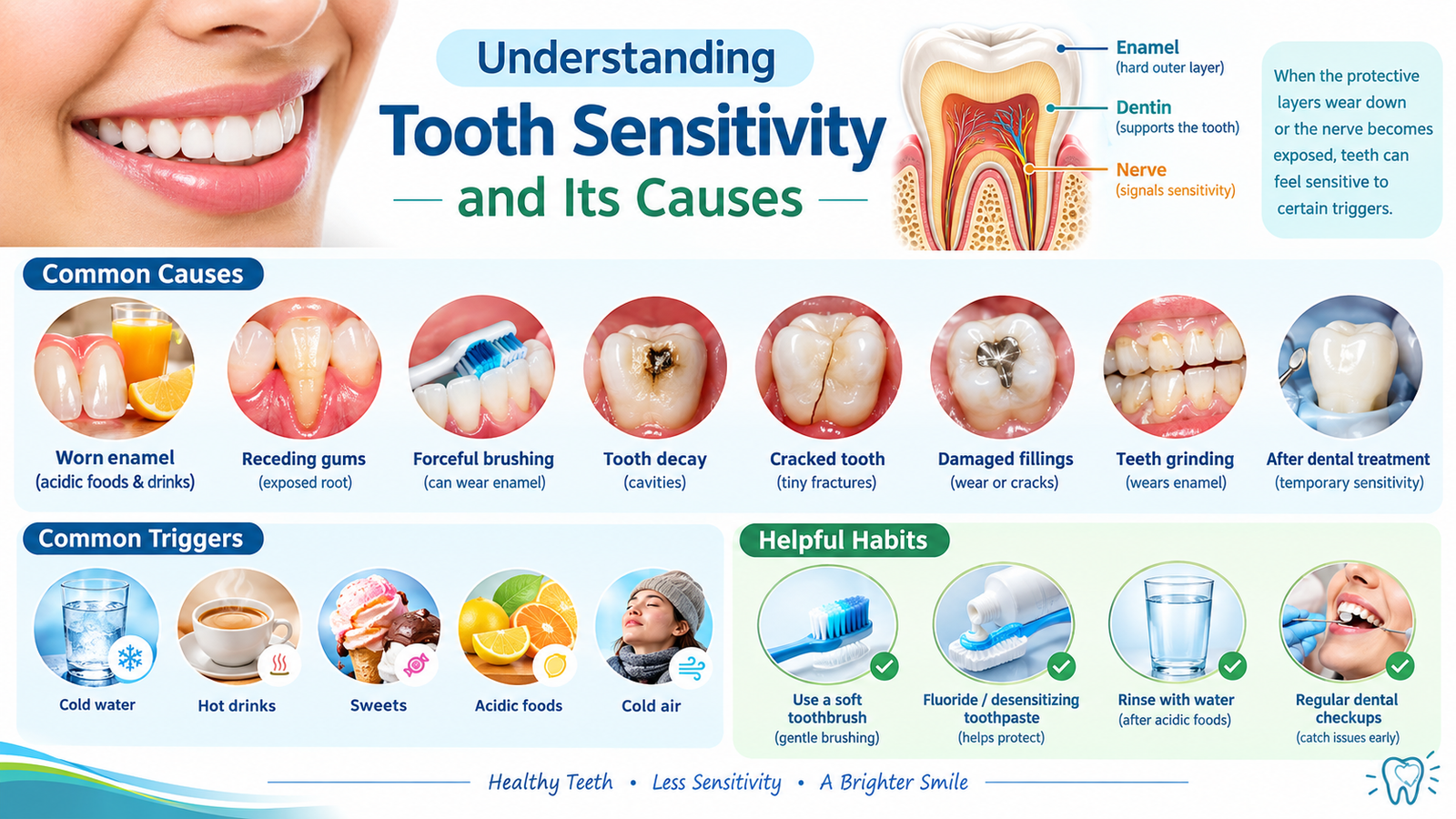
A tooth is made up of several layers that provide protection to its inner tissues. Enamel forms the hard outer surface of the crown. Underneath the enamel is dentin, which is more porous and contains microscopic channels.
When dentin becomes exposed or loses some of its normal protection, outside stimulation can affect the deeper parts of the tooth more easily. Cold, heat, sugar, acidic foods, touch, or pressure may then produce a short-lived but noticeable sensation.
Factors That May Make Teeth Sensitive
Loss of Tooth-Surface Protection
Enamel is constantly exposed to everything we eat and drink. Repeated contact with acidic foods and beverages can gradually affect this protective layer.
Frequently consuming fizzy drinks, citrus products, sour foods, or other acidic items may increase exposure. Stomach acid can also affect teeth when it regularly reaches the mouth.
Changes Around the Gums
Gum tissue provides protection around the roots of teeth. If the gumline moves downward or away from the tooth, some of the root may become exposed.
The root surface is not covered by the same thick enamel found on the crown. Because of this difference, an exposed root may respond more strongly to temperature changes and physical contact.
Brushing With Too Much Pressure
Good brushing is important, but more force does not mean better cleaning. Vigorous scrubbing can place unnecessary stress on the gums and tooth surfaces.
A soft toothbrush combined with light, controlled movements can clean the mouth effectively without excessive pressure.
Tooth Decay
A cavity can gradually destroy the material that protects the inside of a tooth. Once the damaged area becomes more extensive, the tooth may start reacting to particular foods, drinks, or pressure.
Sensitivity caused by decay needs attention because the discomfort is only one sign of the underlying problem. Treating the damaged tooth is more important than relying solely on products intended to reduce sensitivity.
Cracks in a Tooth
A damaged or cracked tooth may behave differently from the surrounding teeth. Some people notice discomfort when chewing, while others experience a reaction to hot or cold foods.
A weakened filling can sometimes produce similar symptoms. If the discomfort repeatedly comes from one tooth, particularly during eating, a dental examination can help determine the cause.
Sensitivity After Dental Treatment
Teeth may occasionally feel different after certain dental procedures. Cleaning, fillings, and some cosmetic treatments can be followed by temporary sensitivity.
The reaction may settle with time, depending on the procedure and the individual tooth. Increasing pain or symptoms that fail to improve should be brought to the attention of a dental professional.
What Can Set Off the Sensation?
Different people have different triggers. A sensitive tooth may react during:
- Drinking a very cold beverage
- Having hot tea or coffee
- Eating ice cream
- Consuming sweets
- Eating sour foods
- Brushing the teeth
- Cleaning between the teeth
- Breathing through the mouth in cold weather
- Biting or chewing certain foods
Noticing the exact situation in which sensitivity occurs can provide useful information when discussing the problem with a dentist.
Everyday Ways to Care for Sensitive Teeth
Use a Light Touch When Brushing
Choose a toothbrush with soft bristles and concentrate on gentle movements instead of forceful scrubbing. Pay attention to areas where the gums meet the teeth.
Consider a Toothpaste for Sensitive Teeth
Some specially formulated toothpastes are designed to reduce the response from exposed dentin. Their benefits may become more noticeable with regular use.
They are not intended to replace dental treatment when sensitivity is caused by decay, a crack, gum disease, or another dental problem.
Limit Frequent Acidic Exposure
Acidic foods do not necessarily need to disappear from your diet. However, repeatedly sipping acidic drinks or eating acidic foods throughout the day can increase the amount of time teeth are exposed to acid.
After consuming acidic foods or beverages, rinsing the mouth with water can be helpful. It is generally better to wait before brushing because acid can temporarily make the tooth surface softer.
Pay Attention to Night-Time Grinding
Some people press or grind their teeth during sleep without realizing it. Repeated grinding can gradually wear down tooth surfaces and place additional stress on the teeth.
Morning jaw soreness, frequent headaches, or noticeable tooth wear may be reasons to discuss the habit with a dentist. If protection is needed, the dentist can advise whether a professionally fitted mouthguard is appropriate.
When Should Sensitivity Be Checked?
A brief reaction that happens occasionally is different from discomfort that keeps returning or becomes stronger.
A dental appointment is particularly important when:
- The same tooth repeatedly causes discomfort
- Pain remains after the food or drink is removed
- Sensitivity makes eating difficult
- A tooth appears cracked or damaged
- The gums seem to be moving away from the teeth
- Gum bleeding occurs regularly
- Chewing produces pain
- A tooth develops an unusual color
- Symptoms continue despite changes in oral care
Severe dental pain together with facial swelling, fever, or trouble swallowing needs prompt professional evaluation.
What Happens During a Dental Examination?
The dentist will usually examine the teeth and gums and pay particular attention to the area producing the symptoms. Existing fillings, visible damage, gum position, and signs of tooth wear may also be considered.
Depending on what is found, additional testing or an X-ray may be recommended. The purpose is to discover what is causing the sensitivity so that treatment can be directed at the actual problem.
Depending on the cause, treatment may include improving home-care habits, managing gum problems, treating decay, repairing damaged dental work, or using measures designed to reduce sensitivity.
Can Sensitive Teeth Be Avoided?
There is no way to prevent every possible cause of tooth sensitivity, but everyday dental care can reduce some risks.
Brush your teeth twice a day using fluoride toothpaste, clean the spaces between your teeth, use a soft toothbrush, and avoid applying excessive pressure. It is also helpful to avoid frequent exposure to acidic drinks and foods.
Routine dental examinations can provide another layer of protection by allowing problems such as decay, gum changes, cracks, or unusual tooth wear to be identified early.
Conclusion
Sensitive teeth can produce a sudden and uncomfortable reaction to temperature, food, drinks, touch, or pressure. The reason may be something as simple as an overly forceful brushing habit, but sensitivity can also accompany enamel wear, exposed roots, decay, cracks, grinding, gum changes, or recent dental procedures.
Instead of treating every sensitive tooth in the same way, it is useful to consider what is triggering the reaction and whether other symptoms are present. Gentle oral care and sensitivity-focused toothpaste may help in some cases, while persistent or unusual symptoms require a dental assessment.
Taking action when sensitivity repeatedly occurs can help identify its source and support the long-term health of the affected tooth.
Verification Code: TS8Q4XM57LK