Introduction
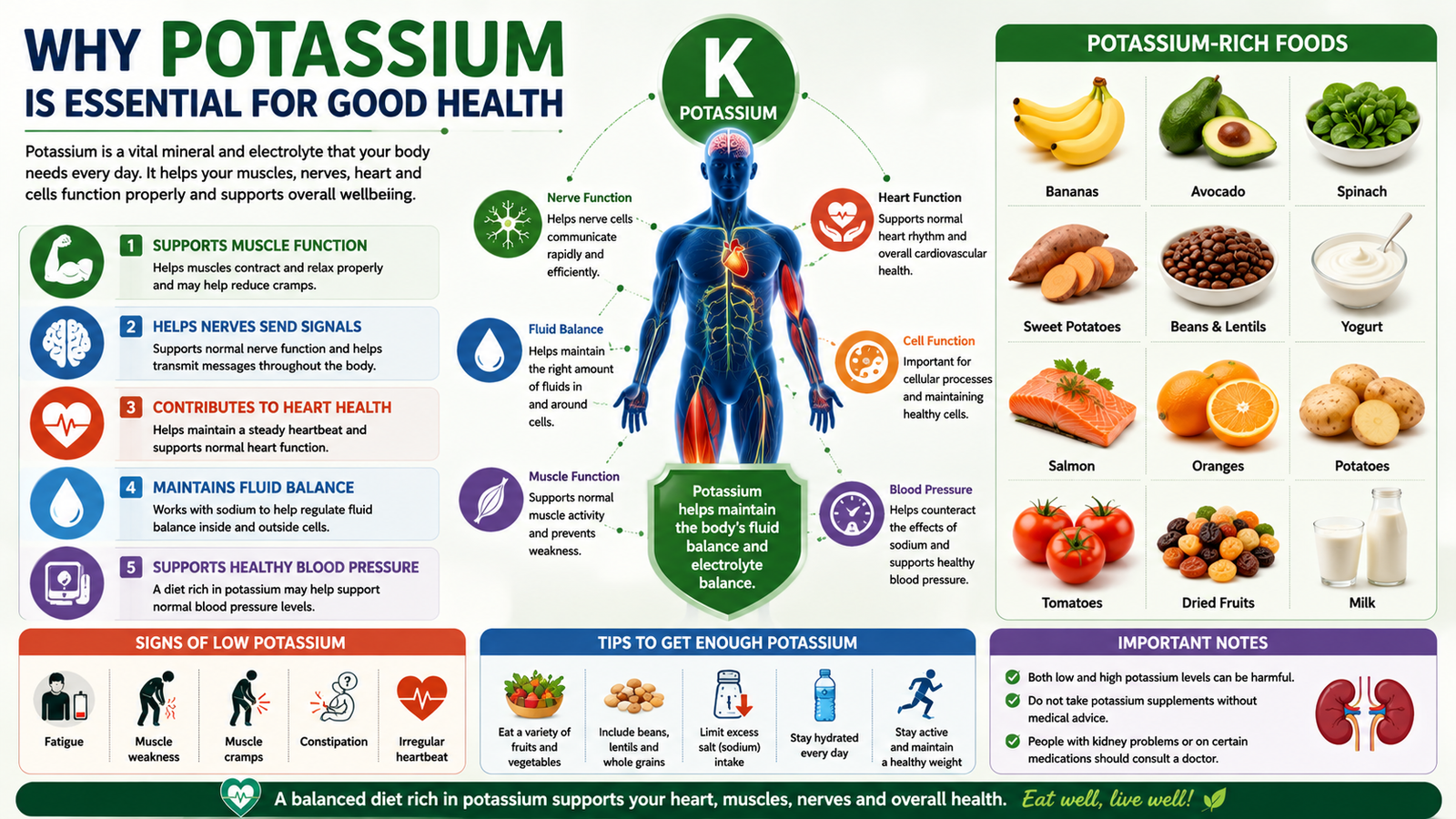
Potassium is an essential mineral that the body needs every day. It is naturally present in many foods and plays an important role in keeping muscles, nerves, cells, and the heart functioning normally.
Unlike nutrients that receive attention mainly when a deficiency occurs, potassium quietly supports several processes happening inside the body all the time. Maintaining an appropriate potassium level is therefore an important part of a balanced diet.
What Is Potassium?
Potassium is a mineral and electrolyte. Electrolytes help the body manage electrical activity and fluid movement.
The body carefully controls potassium levels, particularly through the kidneys. Too much or too little potassium in the bloodstream can interfere with normal body functions, which is why balance is more important than simply consuming large amounts.
1. Supports Normal Muscle Function
Muscles need electrical signals to contract and relax. Potassium works with other electrolytes to help maintain the conditions required for normal muscle activity.
Adequate dietary potassium contributes to normal muscle function. However, muscle cramps or weakness can have many different causes and should not automatically be assumed to result from low potassium.
2. Helps Nerves Send Signals
The nervous system constantly sends messages between the brain, spinal cord, nerves, and muscles. Potassium is involved in maintaining the electrical differences across cell membranes that allow nerve signals to work properly.
This makes potassium an important part of normal communication between different parts of the body.
3. Contributes to Normal Heart Function
The heart depends on carefully coordinated electrical signals to maintain its rhythm. Potassium is one of the electrolytes involved in this process.
Both unusually low and unusually high potassium levels can affect heart rhythm. For this reason, potassium supplements should not be taken casually, especially by people with kidney problems or those using medications that influence potassium levels.
4. Helps Maintain Fluid Balance
Potassium works together with sodium to help regulate fluid distribution inside and around cells.
Maintaining an appropriate balance of these electrolytes supports normal cellular function. This is one reason a varied diet containing potassium-rich foods can be beneficial as part of an overall healthy eating pattern.
5. Supports Healthy Blood Pressure
Getting enough potassium from food may support healthy blood pressure, particularly when it is part of a diet that emphasizes fruits, vegetables, legumes, whole grains, and other minimally processed foods.
Potassium can also work alongside reduced sodium intake and regular physical activity as part of a heart-healthy lifestyle.
People with high blood pressure should continue following their healthcare professional’s treatment recommendations.
6. Helps Cells Function Properly
Every cell in the body depends on an appropriate balance of minerals and fluids. Potassium contributes to maintaining electrical activity and fluid conditions within cells.
Because cells are involved in virtually every body process, maintaining normal electrolyte balance is fundamental to overall health.
Foods Rich in Potassium
Potassium is available in many everyday foods, so most people can obtain it through a varied diet.
Good sources include:
- Bananas
- Potatoes and sweet potatoes
- Beans and lentils
- Tomatoes
- Spinach and other leafy vegetables
- Avocados
- Oranges and other fruits
- Yogurt and milk
- Fish
- Dried fruits
Eating different types of potassium-containing foods can provide the mineral along with fiber, vitamins, protein, and other useful nutrients.
Potassium and Bananas: Is That the Whole Story?
Bananas are commonly associated with potassium, but they are certainly not the only source.
Beans, potatoes, leafy vegetables, dairy products, fish, fruits, and several other foods can provide substantial amounts. Focusing on dietary variety is a better approach than depending on a single food.
Can You Have Too Little Potassium?
Low potassium levels can occur for different reasons, including substantial fluid loss, certain medications, or particular medical conditions.
Possible symptoms can include weakness, tiredness, muscle problems, constipation, or abnormal heart rhythms. However, these symptoms can also occur for many other reasons.
A suspected potassium deficiency should be evaluated by a healthcare professional rather than treated through self-prescribed supplements.
Can Too Much Potassium Be Harmful?
Yes. More potassium is not automatically better.
Healthy kidneys normally remove excess potassium from the body. When kidney function is impaired, or when certain medications affect potassium regulation, potassium can accumulate in the blood.
Excessively high potassium levels can become dangerous because they may interfere with the heart’s electrical activity.
Should You Take Potassium Supplements?
For most healthy people, food is the preferred source of potassium. Supplements are not necessary simply because potassium is important.
Potassium supplements can be inappropriate or unsafe for some people, particularly those with kidney disease or those taking certain medications. Anyone considering supplementation should discuss it with a healthcare professional.
Simple Ways to Include More Potassium-Rich Foods
Increasing potassium intake through food can be simple. Add beans or lentils to meals, include leafy vegetables with lunch or dinner, choose potatoes with their nutrient-rich skin when appropriate, or enjoy fruit and yogurt as a snack.
The goal should be an overall nutritious eating pattern rather than focusing on one mineral alone.
Potassium Works With Other Nutrients
Potassium does not work in isolation. It interacts with sodium, magnesium, calcium, and other electrolytes to support normal body processes.
A balanced diet containing a wide range of whole and minimally processed foods helps provide these nutrients together.
Conclusion
Potassium is a small but essential part of maintaining good health. It supports normal muscle activity, nerve communication, heart function, fluid balance, cellular processes, and healthy blood pressure.
Fortunately, potassium is found in many accessible foods, including vegetables, fruits, beans, dairy products, potatoes, and fish. For most people, choosing a varied and nutritious diet is the simplest way to obtain adequate potassium.
Because both low and excessive potassium levels can cause health problems, taking large amounts of potassium supplements without professional advice is not recommended. The best approach is to focus on balanced nutrition and seek medical guidance when there are concerns about potassium levels or related symptoms.
Verification Code: PT8Q5XM73LR