Introduction
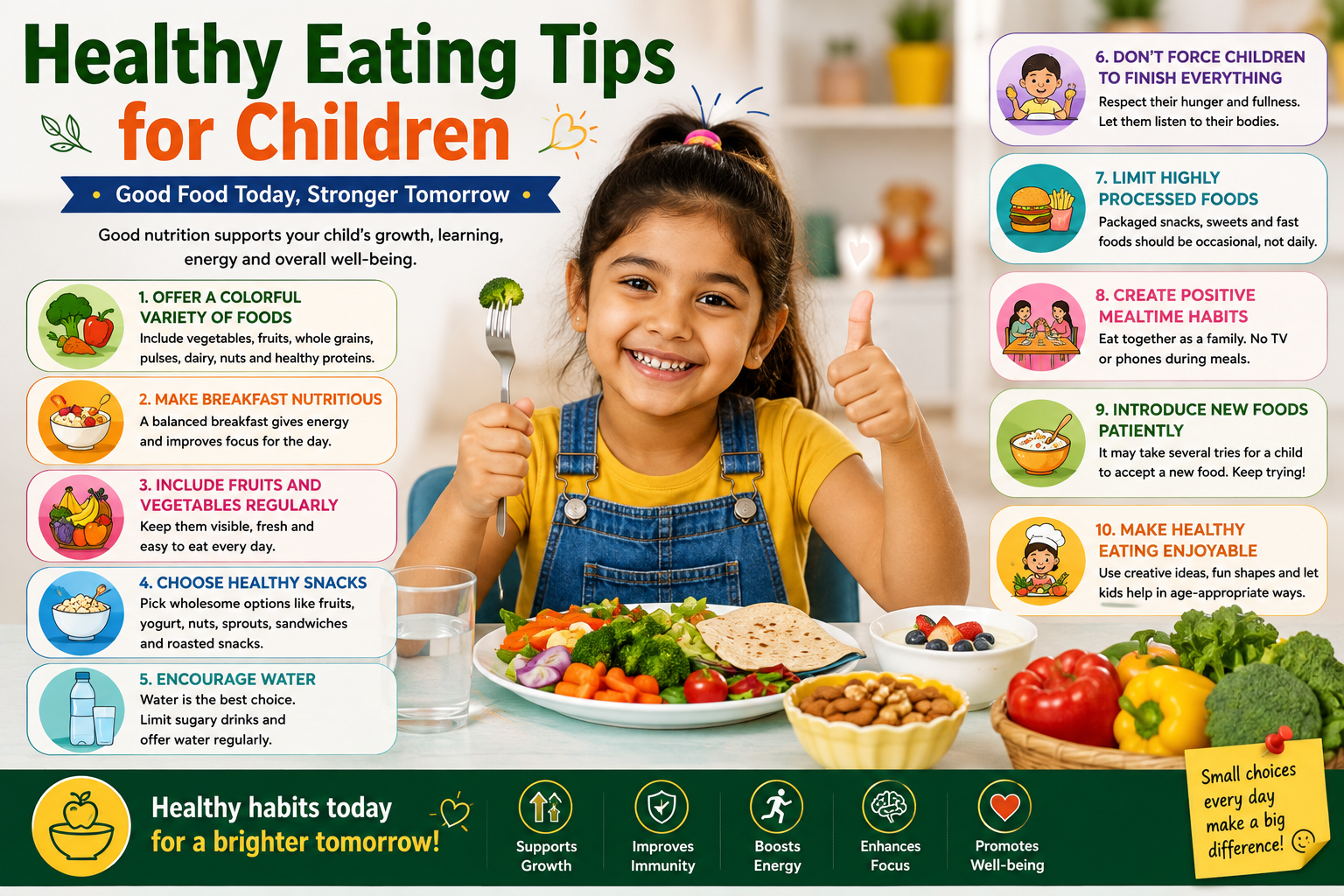
Good nutrition during childhood helps support growth, learning, energy, and overall development. Children need a variety of nutrients because their bodies and brains are developing rapidly. Instead of focusing on strict diets, parents can encourage simple, balanced eating habits that make nutritious foods enjoyable. Small changes at home can gradually help children develop healthy food choices that may continue into adulthood.
1. Offer a Colorful Variety of Foods
Try to include foods from different groups throughout the day. Vegetables, fruits, whole grains, pulses, dairy products, nuts, seeds, and suitable protein sources can provide different nutrients. Offering foods in different colors and textures can also make meals more interesting for children.
2. Make Breakfast Nutritious
A balanced breakfast can provide children with energy for school and daily activities. Options such as vegetable upma, idli with sambar, oats with fruit, dosa with vegetables, or whole grain toast with an appropriate protein source can be filling and nutritious.
3. Include Fruits and Vegetables Regularly
Keep fruits and vegetables easily available at home. Add chopped vegetables to dishes children already enjoy, or serve fruit as a snack. Parents can also involve children in washing, arranging, or choosing produce to make healthy foods more appealing.
4. Choose Healthy Snacks
Children often need snacks between meals, but snacks do not have to be highly processed. Homemade options such as fruit, roasted chickpeas, yogurt, vegetable sandwiches, boiled corn, or nuts for children who can safely eat them can be useful choices.
5. Encourage Water
Water should be the main drink during the day. Regularly offering water can help children develop the habit of choosing it when they are thirsty. Sugary drinks and sweetened beverages are better kept occasional rather than making them everyday choices.
6. Do Not Force Children to Finish Everything
Children’s appetites can change from one meal to another. Encourage them to listen to their hunger and fullness signals rather than insisting that they clean their plate. Parents can decide what nutritious foods are offered, while children can gradually learn how much they need.
7. Limit Highly Processed Foods
Foods such as packaged snacks, sweets, sugary cereals, and heavily processed fast foods can be enjoyed occasionally, but they should not replace nutritious meals. A balanced approach is generally more practical than completely banning favorite foods.
8. Create Positive Mealtime Habits
Whenever possible, eat together as a family without distractions such as television or phones. Children often learn by observing adults, so parents can demonstrate healthy habits by enjoying vegetables, fruits, whole grains, and balanced meals themselves.
9. Introduce New Foods Patiently
A child may reject a new food the first time it is offered. This does not necessarily mean they will never like it. Continue presenting unfamiliar foods alongside familiar favorites without pressure. Repeated, relaxed exposure can help children become more comfortable with different tastes and textures.
10. Make Healthy Eating Enjoyable
Healthy food does not need to be boring. Use different shapes, colors, combinations, and simple presentations to make meals attractive. Letting children participate in age-appropriate food preparation can also make them more interested in trying what they helped create.
Conclusion
Healthy eating for children is about building balanced habits rather than demanding perfection. Providing nutritious choices, encouraging water, offering fruits and vegetables, choosing wholesome snacks, and creating positive mealtimes can help children develop a healthy relationship with food. With patience and consistency, everyday family meals can become an important part of supporting a child’s growth and well-being.
Verification Code: HEC8M42RQ