Introduction
A healthy smile plays an important role in our overall well-being, confidence, and quality of life. Dental care is not limited to brushing teeth when they look dirty; it involves maintaining proper oral hygiene, preventing dental problems, and getting regular professional check-ups. Many people visit a dentist only when they experience pain or discomfort, but preventive dental care is much more effective. Regular dental care helps protect teeth and gums, detect problems early, and support better overall health.
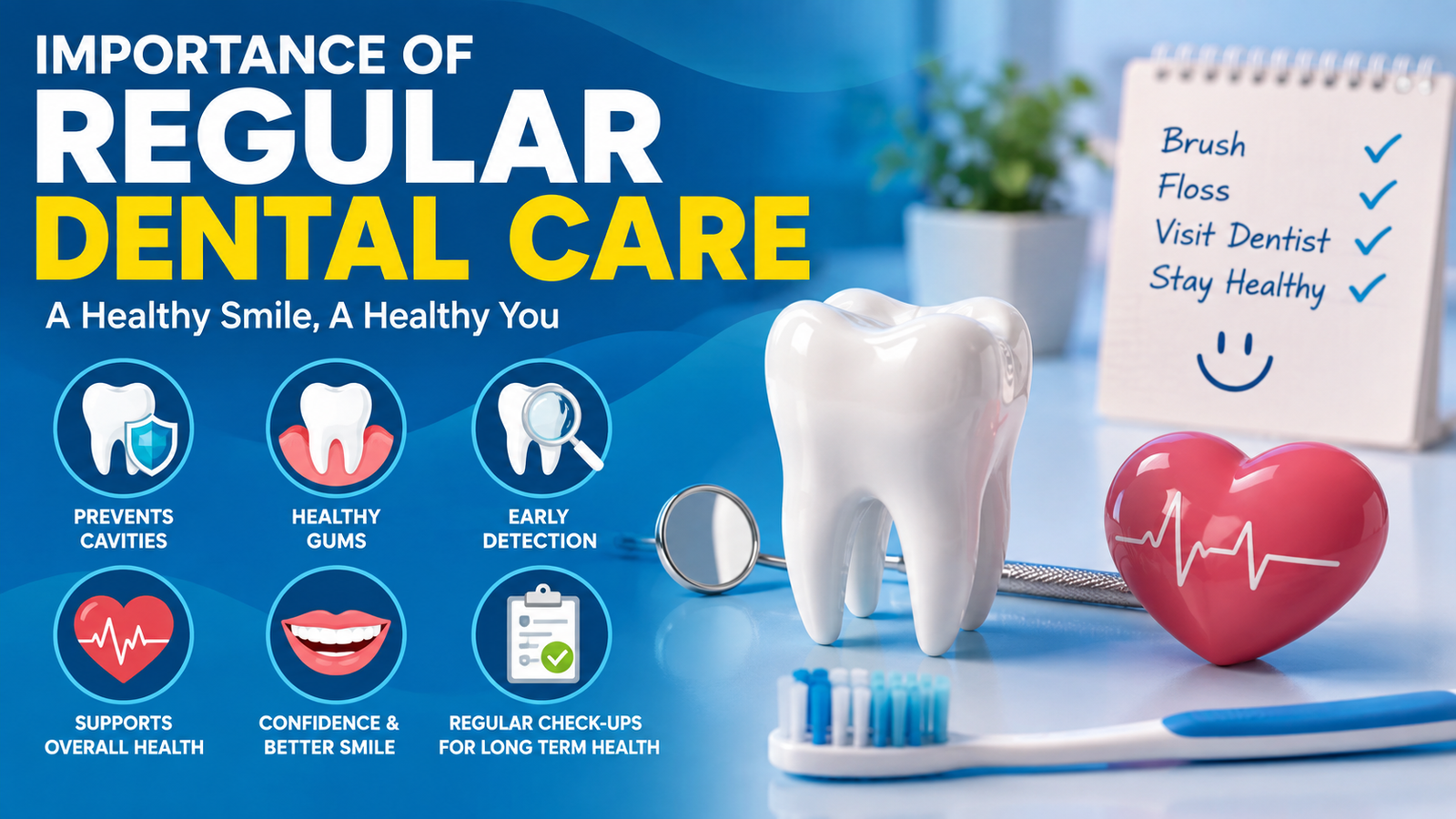
Prevents Tooth Decay and Cavities
Tooth decay is one of the most common oral health problems faced by people of all ages. It occurs when bacteria in the mouth combine with sugars from food and produce acids that gradually damage the protective layer of teeth called enamel. Over time, this can lead to cavities, sensitivity, and pain.
Following a proper oral hygiene routine can significantly reduce the risk of tooth decay. Brushing twice daily with fluoride toothpaste, flossing regularly, and rinsing the mouth after meals help remove food particles and harmful bacteria. Regular dental visits also allow professionals to clean areas that may be difficult to reach through daily brushing.
Maintains Healthy Gums
Gums provide essential support to teeth, and keeping them healthy is a key part of dental care. Poor oral hygiene can cause plaque buildup along the gumline, leading to gum inflammation. Early signs of gum problems may include redness, swelling, bleeding while brushing, or bad breath.
If gum problems are ignored, they can progress into more serious conditions that may affect the tissues supporting the teeth. Regular dental check-ups and professional cleanings help control plaque buildup and maintain strong, healthy gums. Taking care of gums also contributes to long-lasting oral health.
Helps Identify Dental Problems Early
One of the biggest advantages of regular dental care is early detection of oral health issues. Some dental problems may not show noticeable symptoms in the beginning but can become more complicated if left untreated.
During routine dental examinations, dentists can identify early signs of cavities, gum disease, tooth damage, or other concerns. Addressing these problems at an early stage often requires simpler treatments and helps prevent unnecessary discomfort and expenses in the future.
Supports Overall Health and Wellness
Oral health is closely connected with general health. The mouth is the entry point for food and plays an important role in digestion. Maintaining good oral hygiene supports comfortable eating, proper nutrition, and better daily functioning.
Neglecting dental care can lead to infections, pain, and difficulty chewing food. A healthy mouth allows people to enjoy a balanced diet and maintain better physical well-being. This is why dental care should be considered an important part of a complete health routine.
Improves Smile and Self-Confidence
A clean and healthy smile can have a positive impact on confidence. Dental issues such as stained teeth, bad breath, or visible problems may affect how people feel in social situations. Regular brushing, professional cleaning, and proper dental care help maintain a fresh and attractive smile.
Feeling confident about your smile can improve communication and create a positive impression in personal and professional interactions. Good oral hygiene is not only about appearance but also about feeling comfortable and confident every day.
Prevents Bad Breath
Bad breath, also known as halitosis, is often caused by bacteria, food particles, or poor oral hygiene. Regular brushing, flossing, cleaning the tongue, and drinking enough water help maintain freshness in the mouth.
Routine dental visits can also help identify underlying causes of persistent bad breath. Maintaining proper dental care habits ensures a cleaner mouth and improves overall comfort when interacting with others.
Encourages Healthy Habits from Childhood
Developing good dental habits at an early age creates a strong foundation for lifelong oral health. Children who learn the importance of brushing, flossing, and regular dental visits are more likely to maintain these habits as they grow.
Parents can help children understand that dental care is a normal part of staying healthy. Early dental check-ups also help monitor tooth development and identify any concerns before they become serious.
Reduces the Risk of Emergency Dental Problems
Ignoring small dental issues can sometimes lead to sudden and painful problems. A minor cavity or gum concern may become severe if not treated at the right time. Regular dental examinations reduce the chances of unexpected dental emergencies by identifying and managing problems early.
Preventive care saves time, reduces discomfort, and helps maintain better oral health in the long run.
Conclusion
Regular dental care is an essential part of a healthy lifestyle. Maintaining daily oral hygiene, eating a balanced diet, and scheduling routine dental check-ups can protect teeth and gums from many common problems. A healthy mouth contributes to better comfort, confidence, and overall wellness.
Taking small steps every day, such as brushing properly, flossing, and visiting a dentist regularly, can make a significant difference in maintaining a beautiful and healthy smile for years. Prioritizing dental care today helps ensure stronger teeth, healthier gums, and improved quality of life in the future.
Verification Code: DC7M4Q82LX

Regular dental care is an essential part of a healthy lifestyle. Maintaining daily oral hygiene, eating a balanced diet, and scheduling routine dental check-ups can protect teeth and gums from many common problems. A healthy mouth contributes to better comfort, confidence, and overall wellness.