Introduction
Negative thoughts are a natural part of human life. Everyone experiences moments of worry, self-doubt, frustration, or fear. However, when negative thinking becomes frequent and starts affecting emotions, relationships, or daily activities, it is important to learn healthy ways to manage it. Developing control over negative thoughts does not mean ignoring problems; instead, it means responding to challenges with a balanced and positive mindset.
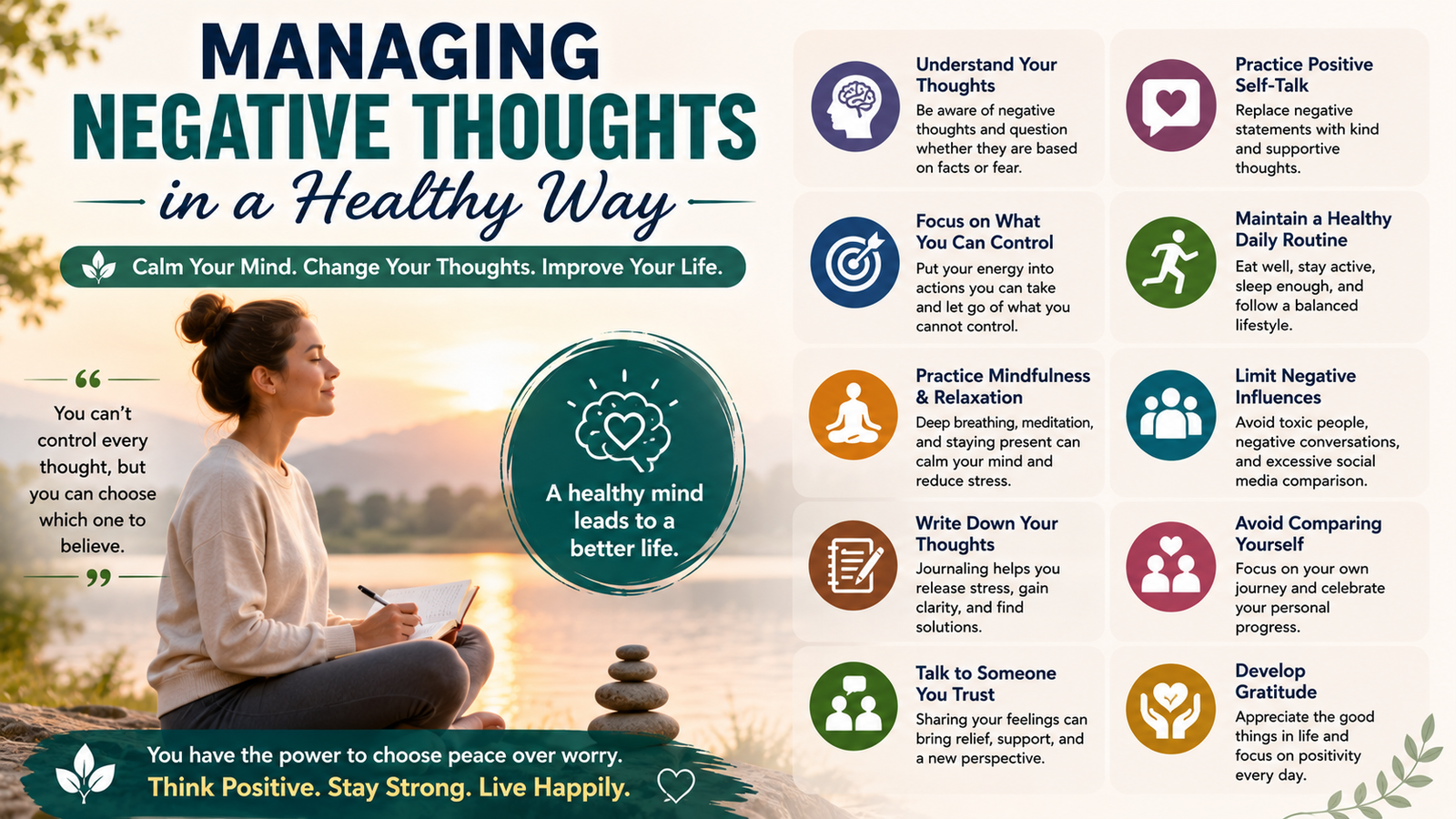
Understand Where Negative Thoughts Come From
Negative thoughts can develop due to stress, past experiences, uncertainty, pressure, or unrealistic expectations. Sometimes, the mind automatically focuses on mistakes, failures, or possible problems rather than recognizing achievements and positive moments.
The first step toward managing negative thinking is becoming aware of these thoughts. Instead of immediately believing every negative idea that appears, try to observe it and understand whether it is based on facts or simply created by fear and anxiety.
Practice Positive Self-Talk
The way we talk to ourselves has a strong impact on our emotions. Negative self-talk, such as “I cannot do this” or “I always fail,” can reduce confidence and increase stress.
Replacing negative statements with supportive thoughts can improve mental strength. For example, instead of thinking, “I made a mistake, so I am not good enough,” try thinking, “I made a mistake, but I can learn and improve from this experience.”
Positive self-talk helps build self-confidence and encourages a healthier approach toward challenges.
Focus on What You Can Control
Many negative thoughts come from worrying about situations that are beyond our control. Constantly thinking about uncertain outcomes can create unnecessary stress.
A healthier approach is to focus your energy on actions you can take. Creating small goals, planning solutions, and taking practical steps can make problems feel more manageable. Accepting that some things cannot be controlled can also bring emotional relief.
Maintain a Healthy Daily Routine
A balanced lifestyle plays an important role in managing thoughts and emotions. Poor sleep, unhealthy eating habits, and lack of physical activity can increase stress levels and make negative thinking stronger.
Regular exercise, nutritious meals, proper hydration, and sufficient rest support overall mental well-being. Even simple activities like walking, stretching, or spending time outdoors can help refresh the mind.
Practice Mindfulness and Relaxation Techniques
Mindfulness helps you stay focused on the present moment instead of constantly worrying about the past or future. Simple practices such as deep breathing, meditation, and mindful observation can calm the mind.
When negative thoughts appear, taking a few slow breaths and bringing attention back to the present can reduce emotional reactions. Regular mindfulness practice can improve concentration and help develop better control over thoughts.
Limit Exposure to Negative Influences
The environment around us can influence our mindset. Spending too much time with negative conversations, stressful content, or constant comparisons on social media may increase feelings of dissatisfaction.
Creating healthy boundaries and choosing positive influences can support emotional balance. Spend more time with people who encourage, motivate, and support your personal growth.
Write Down Your Thoughts
Journaling is a simple method to understand emotions and reduce mental pressure. Writing down worries, fears, or stressful thoughts can help organize the mind.
A useful practice is to write about the problem, possible solutions, and things you are grateful for. This can shift attention from negativity toward constructive thinking and appreciation.
Avoid Comparing Yourself With Others
Comparing your life, progress, or achievements with others can create unnecessary negative thoughts. Every person has different experiences, challenges, and timelines.
Instead of focusing on someone else’s journey, concentrate on your own improvement. Celebrating small achievements and recognizing personal growth can improve confidence and happiness.
Talk to Someone You Trust
Keeping negative emotions hidden for a long time can increase stress. Sharing thoughts with a trusted friend, family member, or supportive person can provide comfort and a different perspective.
Sometimes, simply expressing feelings can make problems feel lighter. Seeking support is a positive step toward maintaining emotional health.
Develop Gratitude
Practicing gratitude can help train the mind to notice positive aspects of life. Taking a few moments each day to appreciate good experiences, supportive people, or personal strengths can improve overall outlook.
Gratitude does not remove problems, but it helps create a balanced view by reminding us that challenges are only one part of life.
Conclusion
Managing negative thoughts is a skill that improves with practice and patience. Negative emotions may appear from time to time, but they do not have to control your life. By practicing positive self-talk, maintaining healthy habits, focusing on solutions, and developing mindfulness, you can build a stronger and more balanced mindset.
A healthy mind does not mean having no negative thoughts; it means learning how to handle them in a constructive way and moving forward with confidence.
Verification Code: DC7M4Q82LX