Introduction
Inside the digestive tract lives a complex community of microorganisms that quietly interacts with the food we eat and the tissues around it. Among these microorganisms, bacteria are especially important.
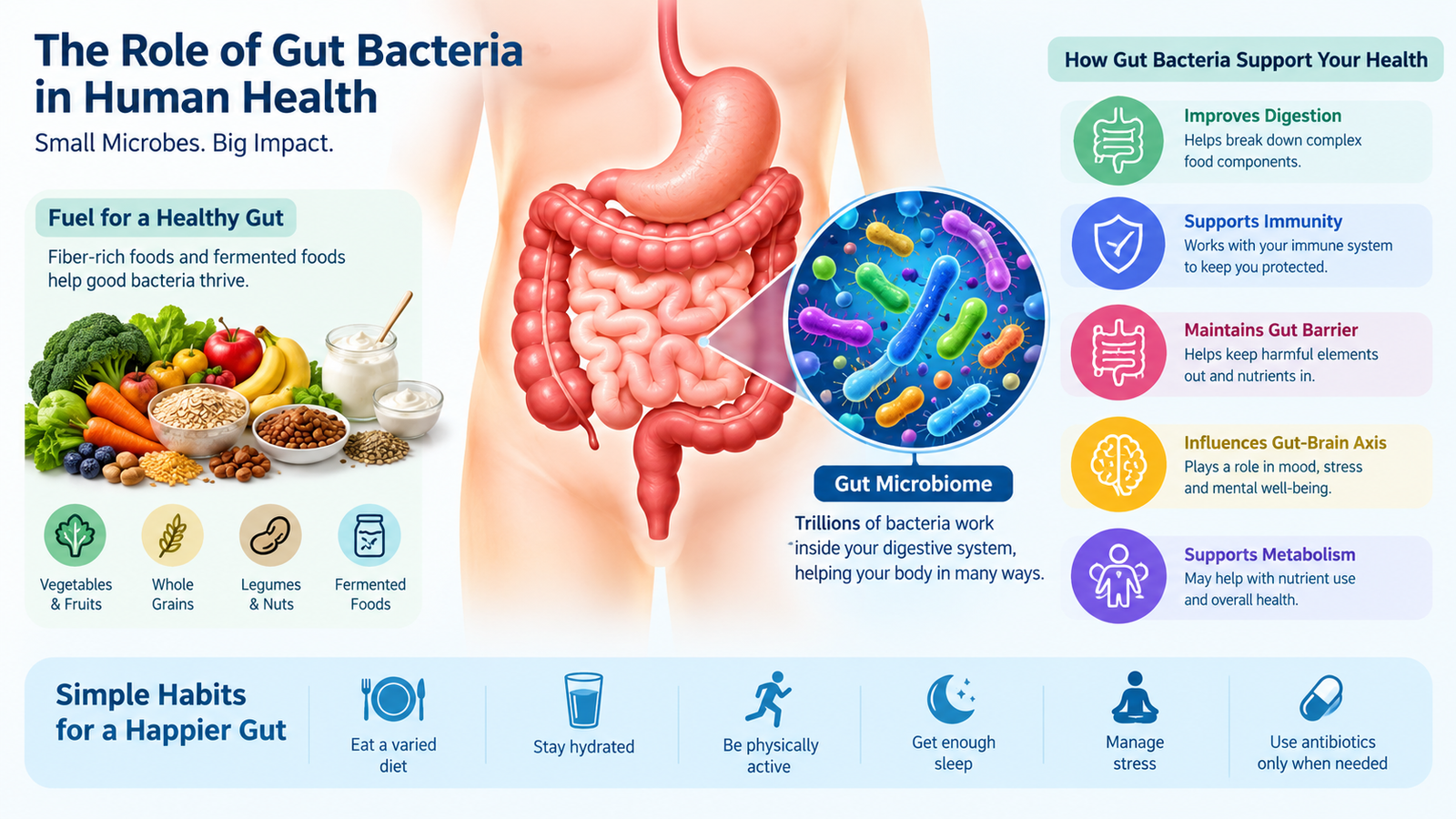
These tiny organisms are involved in several processes connected with digestion and intestinal health. They can use parts of food that the human body cannot fully digest, produce useful substances, and interact with the body’s natural defense system.
The collection of microorganisms living in the digestive tract is commonly known as the gut microbiome.
What Makes the Gut Microbiome Important?
The gut microbiome is not made up of one type of bacterium. It contains many different microorganisms, and their numbers and proportions can vary between individuals.
These organisms live in close contact with the intestinal environment. Some help break down food components, while others interact with the intestinal lining or participate in chemical processes inside the colon.
Because the microbiome is constantly influenced by diet, lifestyle, age, medicines, and other factors, it can change over time.
Bacteria Help Process Parts of Food
Human digestive enzymes cannot break down every component found in food.
Certain types of dietary fiber reach the large intestine without being completely digested. Gut bacteria can use some of this material as a source of energy. During this process, they produce several compounds that become part of the intestinal environment.
One group of these compounds is called short-chain fatty acids. These substances are being studied for their role in maintaining normal conditions within the colon.
Fiber Feeds the Microbial Community
The type of food regularly consumed can influence which microorganisms have material available to use.
Foods containing dietary fiber include:
- Vegetables
- Fruits
- Beans
- Lentils
- Whole grains
- Nuts
- Seeds
Different fibers behave differently during digestion. Some are more readily fermented by gut bacteria than others.
For this reason, eating a variety of plant foods can provide the microbiome with different types of material rather than relying on one food repeatedly.
Gut Bacteria and the Body’s Defenses
The digestive tract has an important relationship with the immune system. The intestinal lining constantly encounters food particles and microorganisms.
Gut bacteria interact with this environment and can influence immune activity. They also live alongside the protective structures of the intestine, helping shape the conditions in which these systems operate.
This relationship is complicated. The presence of a particular bacterium does not automatically mean that a person has good or poor health.
The Intestinal Lining
The intestine has a protective barrier separating its contents from the body’s internal tissues.
This barrier has several components, including intestinal cells, mucus, immune defenses, and microorganisms. Substances produced by certain gut bacteria can interact with intestinal cells and may contribute to normal barrier activity.
Keeping this environment healthy depends on multiple factors rather than bacteria alone.
Why Different Bacteria Matter
A healthy microbiome is not simply about having a large number of bacteria.
Different microorganisms perform different functions. Some can process particular types of dietary material, while others produce different metabolic compounds.
The overall microbial community therefore matters. Researchers continue to investigate how microbial diversity, bacterial activity, and interactions between different organisms relate to human health.
Everyday Factors That Can Change the Microbiome
The gut microbiome is not fixed permanently. Its composition can shift in response to various influences.
Some factors include:
- Long-term eating patterns
- Dietary fiber intake
- Age
- Physical activity
- Sleep
- Stress
- Illness
- Certain medications
- Antibiotic treatment
Antibiotics can affect many types of bacteria. This includes bacteria that normally live in the digestive tract, which is one reason antibiotic use should follow appropriate medical guidance.
Fermented Foods
Fermentation is used to produce a variety of foods. Some fermented products contain living microorganisms when consumed.
Examples can include certain yogurts and other fermented foods.
However, fermented products are not identical. The microorganisms present, their quantities, and their effects can differ from one product to another.
Including fermented foods in a balanced diet can be reasonable for many people, but no single fermented food should be considered a guaranteed way to improve the microbiome.
The Gut and the Brain
The digestive system and nervous system communicate through a complicated network often referred to as the gut-brain connection.
Signals can travel in both directions. Digestive activity can influence how a person feels, while emotional and physical stress can affect digestive function.
Gut microorganisms are also being investigated for their possible involvement in this communication. Although research in this field is expanding, many proposed connections between individual bacteria and specific health outcomes still need further study.
Can Gut Bacteria Affect Bowel Function?
The activities of gut microorganisms can influence the substances present in the large intestine.
Because bacteria can ferment certain carbohydrates and fibers, their activity may contribute to gas production and changes in the intestinal environment.
This means that changes in digestion or bowel habits should not automatically be blamed on the microbiome. Constipation, food intolerance, infections, medications, diet, and several other conditions can produce similar symptoms.
Building a Supportive Environment for Gut Health
There is no universal diet that creates the same microbiome in every person.
Instead, general healthy habits can provide the digestive system with a supportive environment. A varied eating pattern is particularly useful because different foods provide different nutrients and types of fiber.
Some practical habits include:
- Include a variety of plant foods in meals.
- Increase fiber gradually if your current intake is low.
- Drink adequate fluids.
- Stay physically active.
- Maintain regular sleep habits.
- Choose nutritious foods more often.
- Take antibiotics only when medically appropriate.
Why Variety in Food Can Be Helpful
Eating the same limited selection of foods every day provides a narrower range of nutrients and fibers.
Adding different vegetables, fruits, legumes, whole grains, nuts, and seeds can expose the digestive system to a wider selection of plant compounds.
This does not mean that every person needs to eat every type of food. Individual allergies, intolerances, medical conditions, and dietary requirements should always be considered.
Should You Take Probiotic Supplements?
Probiotics are live microorganisms found in certain foods and supplements. Different probiotic products contain different strains.
Importantly, probiotics are not interchangeable. A product containing one bacterial strain cannot automatically be expected to produce the same effect as another product.
People with ongoing digestive problems should discuss supplement use with a healthcare professional instead of assuming that symptoms are caused by a lack of beneficial bacteria.
When Digestive Problems Need Medical Attention
Occasional gas or changes in bowel habits can happen as part of normal digestion.
However, ongoing or worsening digestive symptoms should not automatically be attributed to the gut microbiome.
Medical evaluation is particularly important when symptoms occur with:
- Blood in the stool
- Unexplained weight loss
- Persistent vomiting
- Severe abdominal pain
- Long-lasting diarrhea
- Significant changes in bowel habits
- Persistent loss of appetite
- Other symptoms that interfere with daily activities
Finding the actual cause is more useful than attempting to correct an assumed “bacterial imbalance.”
A Balanced View of Gut Health
The gut microbiome is an important area of modern health research, but it is also easy to find exaggerated claims about it.
Having more bacteria is not automatically better. Having a particular bacterial species does not by itself determine whether someone is healthy.
Gut health depends on the interaction between microorganisms, diet, intestinal tissues, immunity, lifestyle, genetics, and many other factors.
Conclusion
Gut bacteria form a living community that works alongside the digestive system. They can help process certain dietary components, produce metabolic compounds, and interact with the intestinal environment and immune defenses.
A varied diet containing fiber-rich foods, together with regular physical activity, adequate sleep, hydration, and appropriate medical care, can support overall digestive health.
Rather than focusing on a single “good” or “bad” bacterium, it is more useful to understand the gut microbiome as a constantly changing community that forms one part of the body’s larger health system.
Verification Code
GM9K4XP73RT