Introduction
In today’s fast-moving world, many people spend most of their time working, studying, or managing daily responsibilities. While dedication and ambition are valuable qualities, constantly prioritizing work over personal well-being can gradually affect both physical and mental health. Long hours, insufficient rest, and limited family time often lead to stress, fatigue, and reduced happiness.
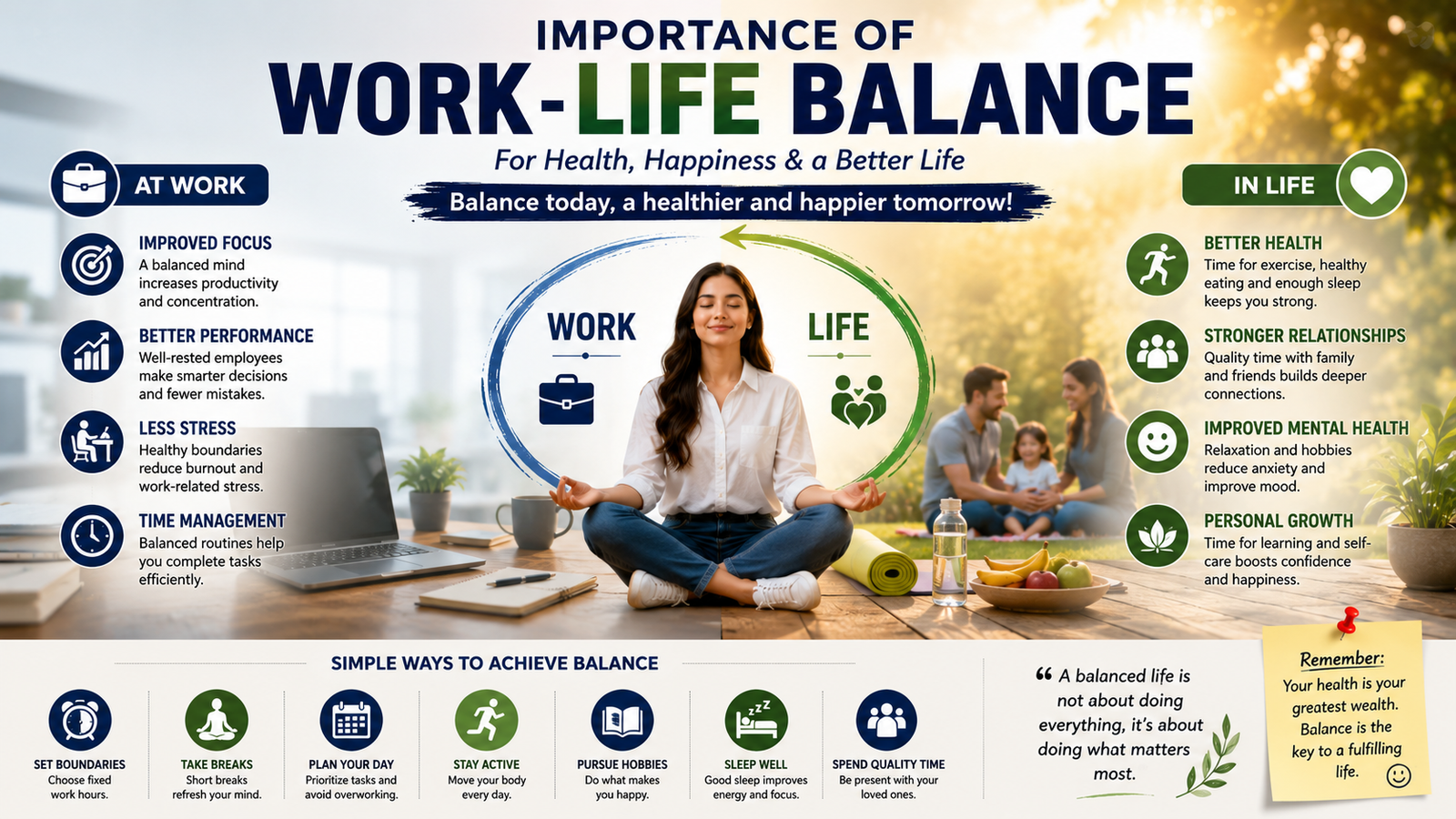
Work-life balance is not about choosing between career and personal life. It is about creating a healthy routine where work, health, relationships, and relaxation receive equal attention. Maintaining this balance helps improve productivity, strengthens emotional well-being, and supports long-term health.
What Is Work-Life Balance?
Work-life balance means managing professional responsibilities while also making time for personal needs such as family, exercise, hobbies, sleep, and self-care. It allows individuals to perform well at work without sacrificing their health or meaningful relationships.
A balanced lifestyle looks different for everyone. For some, it may mean leaving work on time. For others, it may involve setting boundaries while working from home or scheduling regular family activities.
Health Benefits of Work-Life Balance
1. Reduces Stress Naturally
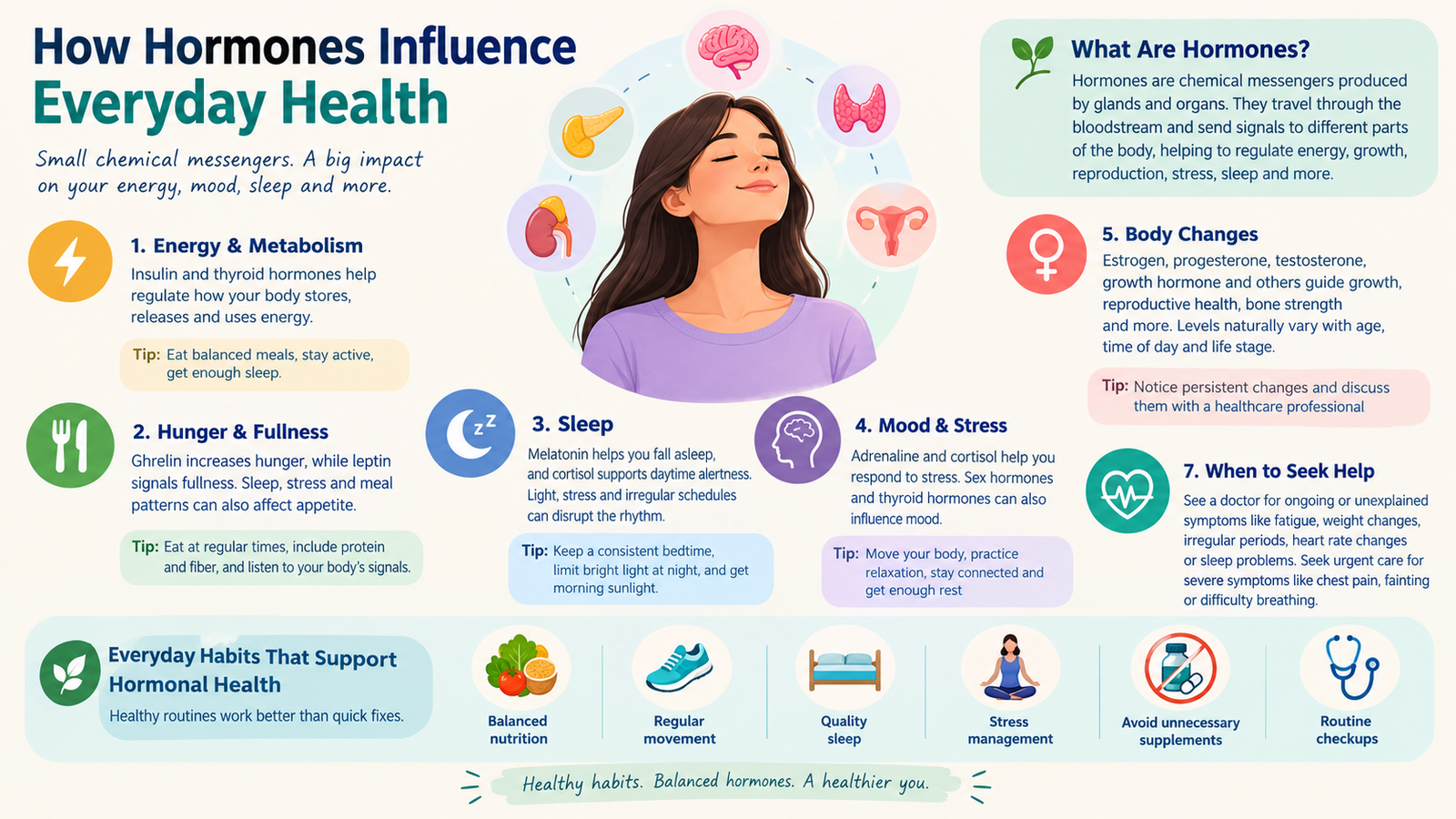
Continuous work pressure can increase stress hormones, leaving the body feeling tense and exhausted. Taking regular breaks, relaxing after work, and spending time on enjoyable activities help the mind recover. Lower stress levels contribute to better emotional stability and improved overall health.
2. Improves Physical Health
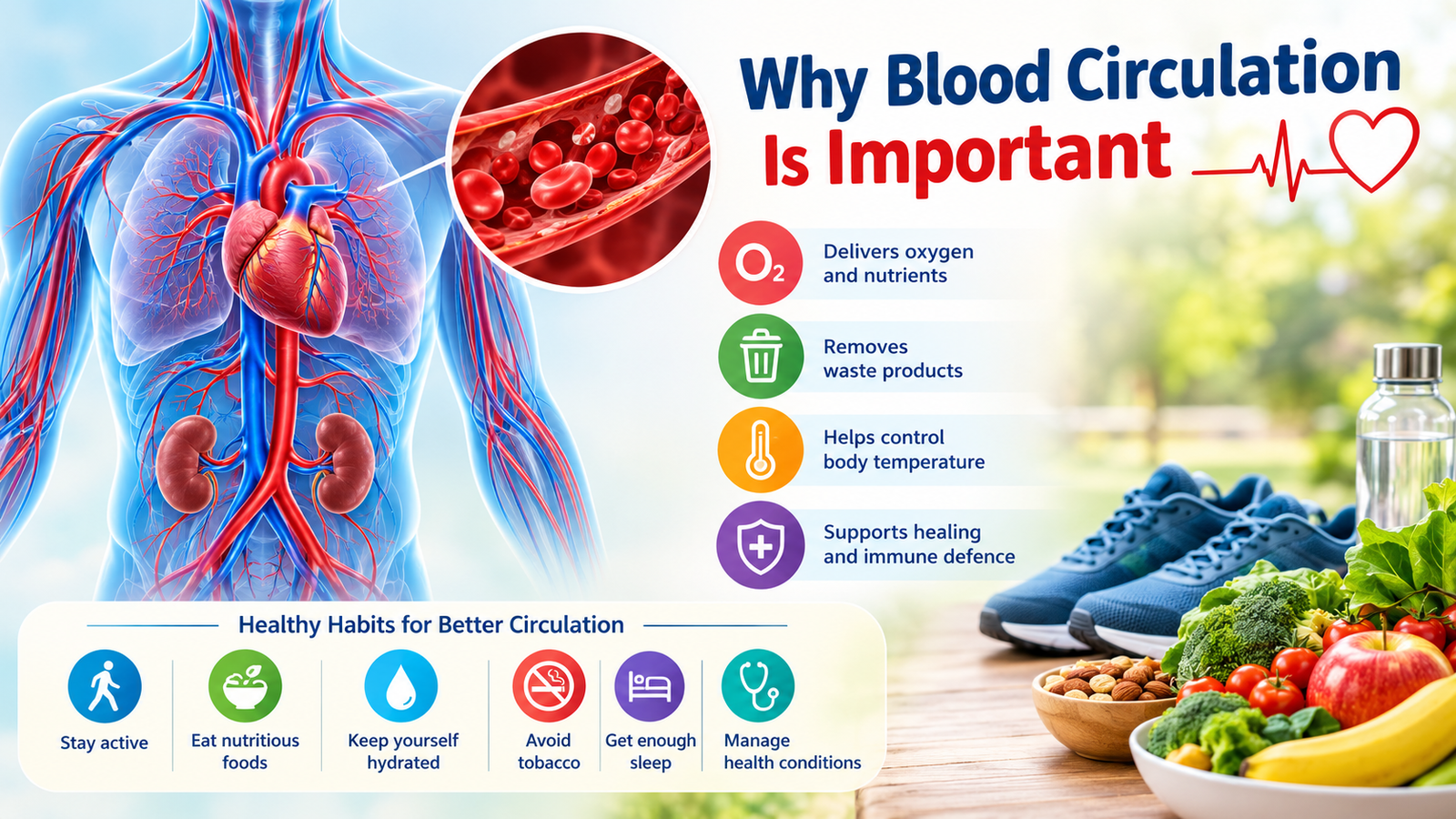
People with better work-life balance are more likely to exercise regularly, prepare healthy meals, stay hydrated, and avoid unhealthy habits. These simple behaviors help maintain a healthy weight, support heart health, and reduce the risk of lifestyle-related diseases.
3. Supports Better Sleep
Sleep is essential for repairing the body and restoring mental energy. Working late into the night or constantly thinking about work can disturb sleep quality. Creating a clear separation between work and personal time helps the brain relax, making it easier to enjoy deep and refreshing sleep.
4. Strengthens Mental Well-being
A healthy balance provides time to recharge emotionally. Activities like reading, meditation, gardening, listening to music, or spending time outdoors improve mood and reduce anxiety. These moments of relaxation help build emotional resilience during challenging periods.
5. Builds Stronger Relationships
Family and friends play an important role in maintaining emotional health. Sharing meals, having meaningful conversations, celebrating special moments, and supporting one another create stronger relationships that contribute to happiness and a greater sense of belonging.
6. Increases Productivity
Many people believe working longer hours leads to better results, but research consistently shows that well-rested individuals often perform more efficiently. Taking breaks improves concentration, creativity, and decision-making while reducing the likelihood of mistakes.
Practical Ways to Create Better Balance
Developing healthier routines does not require major lifestyle changes. Small daily habits can make a significant difference.
- Set a regular start and finish time for work whenever possible.
- Take a five-minute stretch or walking break every hour.
- Avoid checking work emails during meals.
- Schedule exercise like any other important appointment.
- Keep one hour before bedtime free from screens.
- Spend quality time with family without distractions.
- Practice deep breathing or mindfulness for a few minutes each day.
Consistency matters more than perfection.
Overcoming Common Challenges
Achieving balance can feel difficult when responsibilities are high. Parents, students, remote workers, and caregivers often face unique challenges. Instead of feeling guilty about not doing everything perfectly, focus on making gradual improvements.
If your schedule is busy, begin with one habit, such as walking after dinner, eating lunch away from your desk, or sleeping thirty minutes earlier. Small improvements are easier to maintain and often lead to lasting positive change.
Long-Term Impact on Quality of Life
A balanced lifestyle benefits more than daily comfort—it supports lifelong wellness. People who regularly prioritize rest, relationships, movement, and healthy eating often experience greater energy, stronger immunity, improved mental clarity, and better overall life satisfaction.
Rather than viewing self-care as a reward after completing work, it should become an essential part of everyday living. Caring for yourself allows you to care for others more effectively.
Conclusion
Work-life balance is one of the most valuable investments you can make in your health. By creating time for meaningful relationships, regular exercise, nutritious meals, quality sleep, relaxation, and personal growth, you protect both your body and mind from the effects of chronic stress.
Remember that wellness is built through consistent daily choices, not endless busyness. A balanced life leads to better health, greater happiness, and long-term success in both personal and professional life.
Verification Code: WB6Q8XT41LM