Introduction
The human digestive system does much more than break down food. It is home to trillions of tiny microorganisms that work together to help digest nutrients, support the immune system, and maintain overall health. Among these microorganisms are beneficial bacteria, often called “good bacteria,” which play an essential role in keeping the digestive system balanced.
Probiotics are live microorganisms that, when consumed in appropriate amounts, help support this natural balance. Although they are microscopic, their contribution to digestive health is significant. Including probiotic-rich foods as part of a balanced diet may help maintain a healthy gut and promote overall well-being.
This article explains what probiotics are, how they support digestion, their natural food sources, and simple ways to include them in everyday life.
What Are Probiotics?
Probiotics are beneficial microorganisms that naturally live in the digestive tract. They help maintain the balance between helpful and harmful bacteria inside the gut.
A healthy digestive system contains many different types of bacteria that work together. When this balance is disturbed by factors such as illness, poor diet, stress, or certain medications, digestive problems may occur. Consuming probiotic-rich foods can help restore and maintain a healthier balance.
Understanding the Gut Microbiome
Inside the digestive system lives a large community of microorganisms known as the gut microbiome. This community supports many important body functions beyond digestion.
A balanced gut microbiome helps:
- Break down certain foods.
- Produce some vitamins.
- Support normal immune function.
- Protect against harmful microorganisms.
- Maintain the health of the intestinal lining.
Keeping this natural ecosystem balanced contributes to better digestive health.
How Probiotics Help Digestion
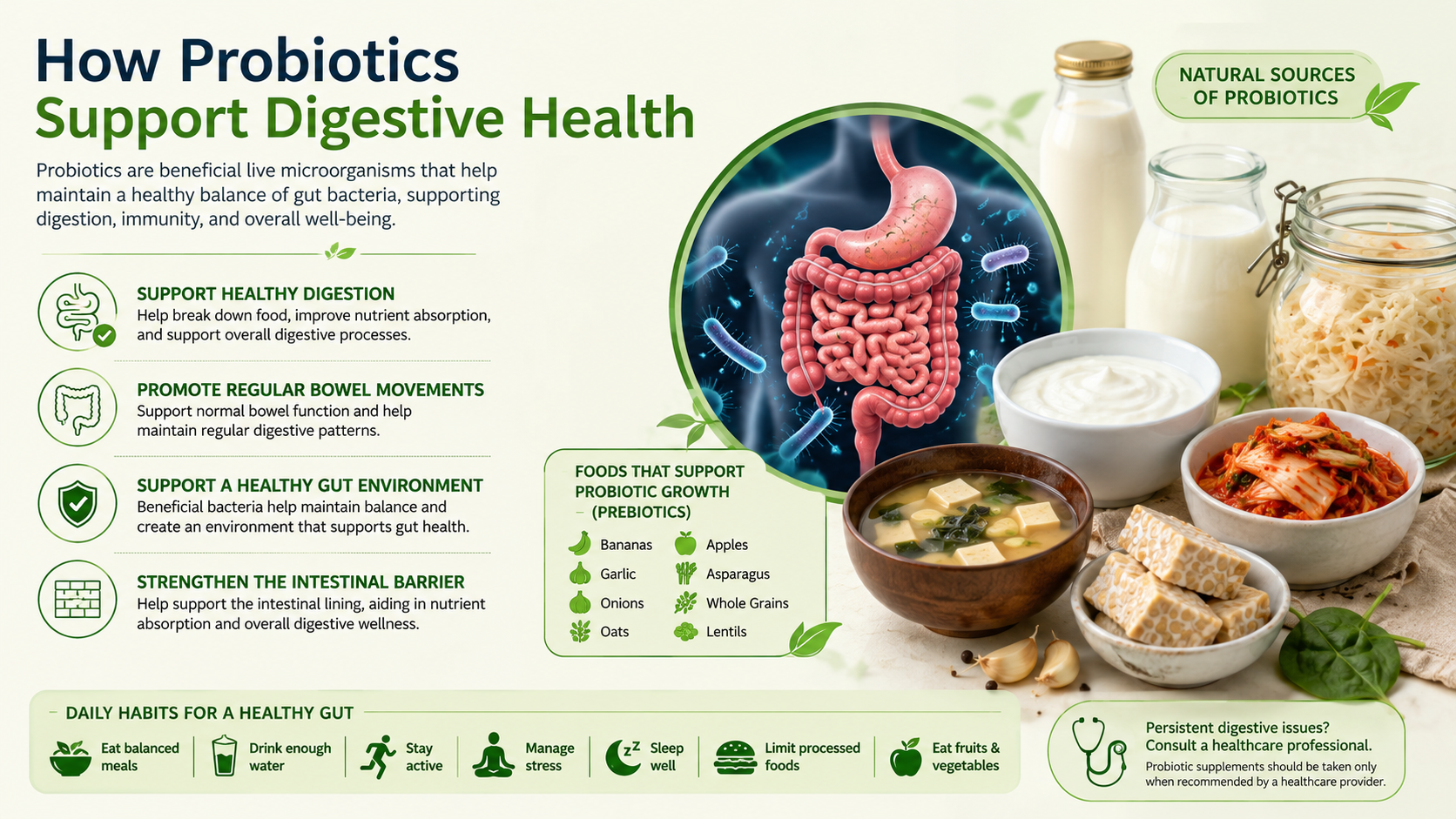
Support Healthy Digestion
Probiotics assist the body in breaking down food more efficiently. They help maintain normal digestive processes and contribute to smoother nutrient absorption.
A balanced digestive system allows the body to make better use of the nutrients obtained from everyday meals.
Promote Regular Bowel Movements
Many people experience occasional constipation or irregular bowel habits. A healthy balance of beneficial bacteria supports normal bowel function and may help maintain regular digestive patterns.
Adequate water intake and sufficient dietary fiber also work together with probiotics to support digestive health.
Support a Healthy Gut Environment
Beneficial bacteria compete with harmful microorganisms for space and nutrients inside the digestive tract. By maintaining this balance, probiotics help create an environment that supports normal digestive function.
A balanced gut environment is one of the foundations of long-term digestive wellness.
Strengthen the Intestinal Barrier
The lining of the digestive tract acts as a protective barrier between the contents of the intestine and the rest of the body.
Healthy probiotic bacteria help support the integrity of this barrier, allowing nutrients to be absorbed efficiently while maintaining normal digestive function.
The Connection Between Gut Health and Immunity
A large portion of the body’s immune system is associated with the digestive tract.
When the gut microbiome remains balanced, it supports normal immune responses and helps the body defend itself against harmful microorganisms.
Although probiotics are not a substitute for medical treatment, maintaining good digestive health contributes to overall immune wellness.
Natural Food Sources of Probiotics
Many everyday foods naturally contain beneficial bacteria.
Examples include:
- Yogurt with live cultures.
- Kefir.
- Buttermilk prepared with live cultures.
- Fermented vegetables.
- Kimchi.
- Sauerkraut.
- Miso.
- Tempeh.
Choosing fermented foods that contain active cultures can help introduce beneficial microorganisms into the digestive system.
Foods That Support Probiotic Growth
Beneficial bacteria also need nourishment to thrive.
Foods rich in dietary fiber act as food for these helpful microorganisms. These are often called prebiotic foods.
Examples include:
- Bananas.
- Garlic.
- Onions.
- Oats.
- Apples.
- Asparagus.
- Whole grains.
- Lentils.
Combining probiotic-rich foods with fiber-rich foods supports a healthier digestive environment.
Daily Habits That Promote Gut Health
Healthy digestion depends on more than probiotics alone.
Simple daily habits include:
- Eating balanced meals.
- Drinking enough water.
- Staying physically active.
- Managing stress.
- Sleeping adequately.
- Limiting highly processed foods.
- Including fruits and vegetables regularly.
Together, these habits help maintain digestive balance over time.
When to Seek Medical Advice
Occasional digestive discomfort is common, but persistent symptoms should not be ignored.
Individuals experiencing ongoing abdominal pain, unexplained weight loss, persistent diarrhea, blood in the stool, or severe digestive symptoms should consult a qualified healthcare professional for proper evaluation.
Probiotic supplements should also be taken only when recommended by a healthcare provider.
Conclusion
Probiotics are valuable partners in maintaining a healthy digestive system. By supporting beneficial bacteria, promoting balanced digestion, and contributing to a healthy gut environment, they play an important role in overall wellness.
Including probiotic-rich foods alongside fiber-rich fruits, vegetables, whole grains, and healthy lifestyle habits can naturally support digestive health for years to come. Rather than relying on quick solutions, caring for the gut through everyday choices creates a strong foundation for lifelong health.
Verification Code: PB8K4XT91LM
The information was valuable about daily routine of food