Introduction
Many people believe that staying healthy requires expensive gym memberships, costly organic foods, or premium health supplements. This misconception often discourages individuals and families with limited incomes from making healthier lifestyle choices. In reality, good health is not determined by how much money a person spends but by the decisions they make every day.
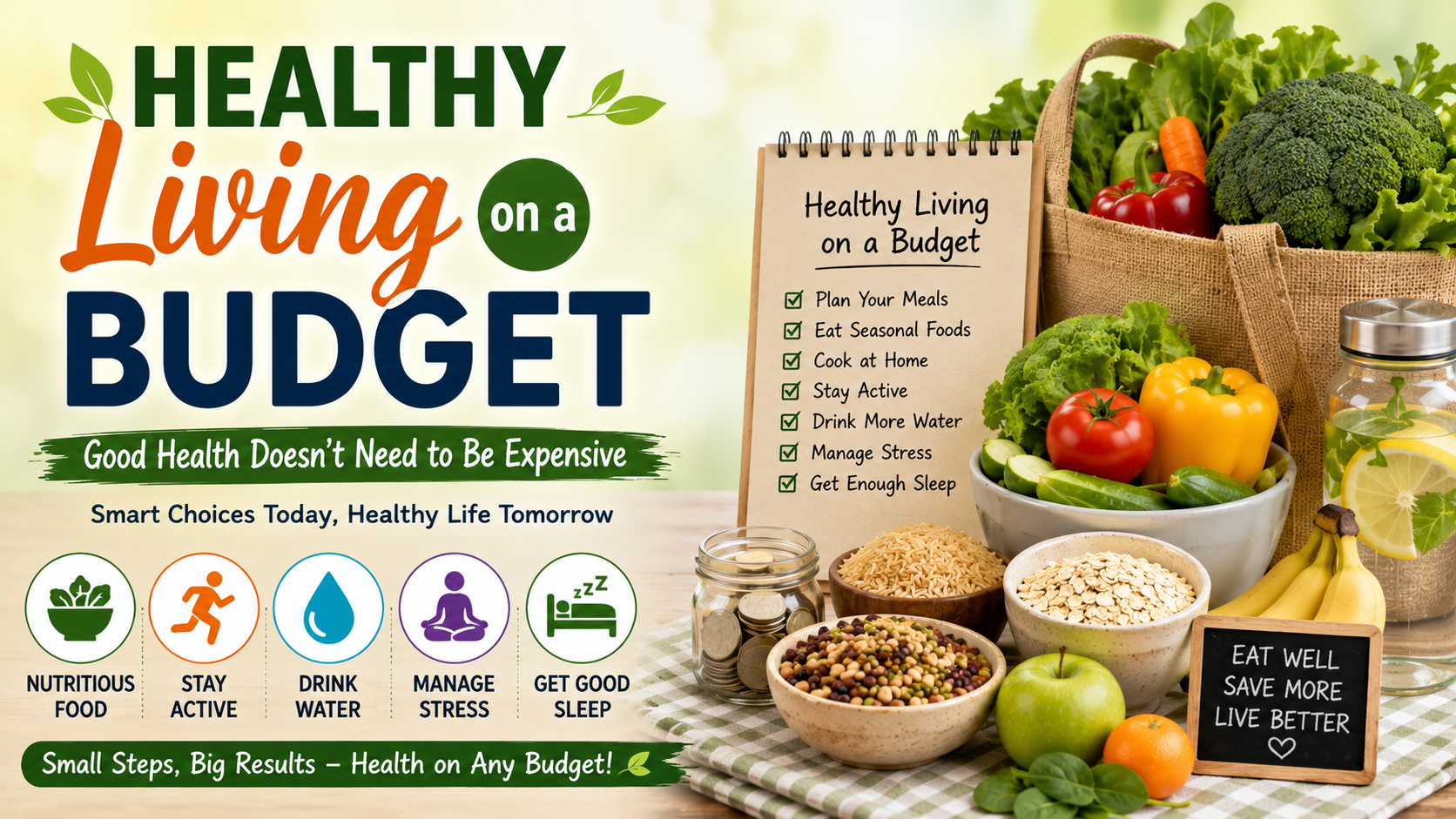
Simple habits such as preparing meals at home, drinking enough water, staying physically active, getting adequate sleep, and practicing good hygiene can improve overall well-being without placing a heavy burden on the household budget. Healthy living is built on consistency, planning, and smart choices rather than expensive products.
This article explores practical ways to maintain a healthy lifestyle while managing expenses wisely.
Understanding Healthy Living
Healthy living means caring for both the body and mind through balanced nutrition, regular physical activity, sufficient rest, stress management, and preventive healthcare. These habits work together to improve energy levels, strengthen immunity, reduce the risk of illness, and enhance quality of life.
A healthy lifestyle does not require perfection. Small improvements made consistently often produce better long-term results than costly short-term programs.
Why Healthy Living Does Not Have to Be Expensive
Marketing campaigns frequently promote expensive foods, supplements, and fitness equipment as necessities for good health. However, many affordable everyday foods provide excellent nutrition, and numerous physical activities require no equipment at all.
Walking in the neighborhood, cooking homemade meals, choosing seasonal fruits and vegetables, and following a regular sleep schedule are all examples of healthy practices that cost very little.
Making informed decisions is often more valuable than spending more money.
Plan Meals Before Shopping
One of the easiest ways to save money while eating well is to prepare a weekly meal plan. Planning meals reduces unnecessary purchases and helps prevent food waste.
Before visiting the grocery store, creating a shopping list based on planned meals encourages better spending habits and reduces the temptation to buy unhealthy convenience foods.
Cooking larger portions and using leftovers creatively also minimizes waste while saving both time and money.
Choose Affordable Nutritious Foods
Healthy eating does not require expensive ingredients. Many affordable foods provide excellent nutritional value.
Examples include:
- Rice and whole grains.
- Lentils and beans.
- Eggs.
- Seasonal fruits.
- Seasonal vegetables.
- Oats.
- Peanuts and other affordable nuts.
- Milk or suitable alternatives.
- Yogurt.
- Potatoes and sweet potatoes.
Combining these foods creates balanced meals that support good health without increasing grocery costs.
Prepare Meals at Home
Home-cooked meals usually contain fewer unhealthy fats, sugars, and excess salt than many restaurant or packaged foods.
Preparing food at home also allows better portion control and reduces spending on take-away meals. Learning a few simple recipes can significantly improve both nutrition and household finances.
Cooking together as a family may also encourage healthier eating habits among children.
Drink Water Instead of Sugary Beverages
Soft drinks, energy drinks, and sweetened beverages can increase food expenses while adding unnecessary sugar and calories.
Choosing water as the primary drink supports hydration, reduces sugar intake, and saves money over time. Carrying a reusable water bottle also helps reduce spending on bottled drinks.
Stay Active Without Paying for a Gym
Physical activity does not require expensive exercise equipment or fitness memberships.
Many free activities provide excellent health benefits, including:
- Walking.
- Jogging.
- Cycling.
- Climbing stairs.
- Stretching exercises.
- Yoga using freely available instructional resources.
- Dancing at home.
- Playing outdoor games.
The most important factor is maintaining regular movement rather than participating in expensive fitness programs.
Prioritize Quality Sleep
Adequate sleep costs nothing but contributes enormously to physical and mental health.
Establishing a regular bedtime, reducing screen time before sleeping, and maintaining a comfortable sleep environment help improve sleep quality. Proper rest supports immunity, concentration, emotional well-being, and daily productivity.
Practice Preventive Healthcare
Preventing illness is generally more affordable than treating advanced medical conditions.
Simple preventive measures include:
- Washing hands regularly.
- Maintaining oral hygiene.
- Receiving recommended vaccinations.
- Attending routine health check-ups.
- Managing stress effectively.
- Avoiding tobacco products.
- Limiting alcohol consumption.
These habits help reduce future healthcare costs while supporting long-term wellness.
Manage Stress Without Spending Money
Managing stress does not always require expensive activities or vacations.
Reading, meditation, deep breathing exercises, spending time in nature, listening to music, gardening, or talking with trusted family members and friends can all improve emotional well-being at little or no cost.
Regular relaxation helps maintain both mental and physical health.
Build Healthy Habits Gradually
Trying to change everything at once often leads to frustration. A more practical approach is to introduce one healthy habit at a time.
Examples include:
- Cooking one extra homemade meal each week.
- Walking for twenty minutes every evening.
- Drinking more water daily.
- Choosing fruit instead of packaged snacks.
- Sleeping thirty minutes earlier.
- Preparing lunch at home for work or school.
Small habits become easier to maintain and gradually create lasting lifestyle improvements.
Conclusion
Healthy living is possible for people with every budget. Good health depends far more on daily choices than on expensive products or services. Eating nutritious homemade meals, staying physically active, drinking enough water, sleeping well, managing stress, and practicing preventive healthcare are all affordable ways to improve overall well-being.
The journey toward better health begins with simple, practical decisions rather than large financial investments. By making thoughtful choices and developing sustainable habits, anyone can enjoy a healthier, more energetic, and more fulfilling life without overspending.
Verification Code: HB5X8QT91LM