Introduction
Walk through a local market during any season, and you will notice that certain fruits and vegetables appear in abundance while others are difficult to find. This is nature’s way of providing foods that grow best under specific weather conditions. Choosing seasonal produce is not simply about availability—it is also one of the smartest ways to improve nutrition, support local agriculture, and enjoy fresh, flavorful meals.
As modern transportation allows food to be imported from around the world throughout the year, many people overlook the advantages of eating foods that naturally grow during a particular season. Seasonal fruits and vegetables are often harvested at the right stage of maturity, making them richer in flavor and nutritional value. Including them in daily meals is a practical step toward better health and a more sustainable lifestyle.
What Are Seasonal Fruits and Vegetables?
Seasonal fruits and vegetables are crops that naturally grow and are harvested during a specific time of the year. Their growth depends on factors such as temperature, rainfall, sunlight, and soil conditions.
For example, mangoes are widely available during summer, while oranges are commonly harvested in winter. Leafy vegetables often thrive during cooler months, whereas cucumbers and watermelons are plentiful in warmer weather. Eating produce during its natural growing season allows people to enjoy foods when they are at their freshest.
Why Seasonal Produce Is More Nutritious
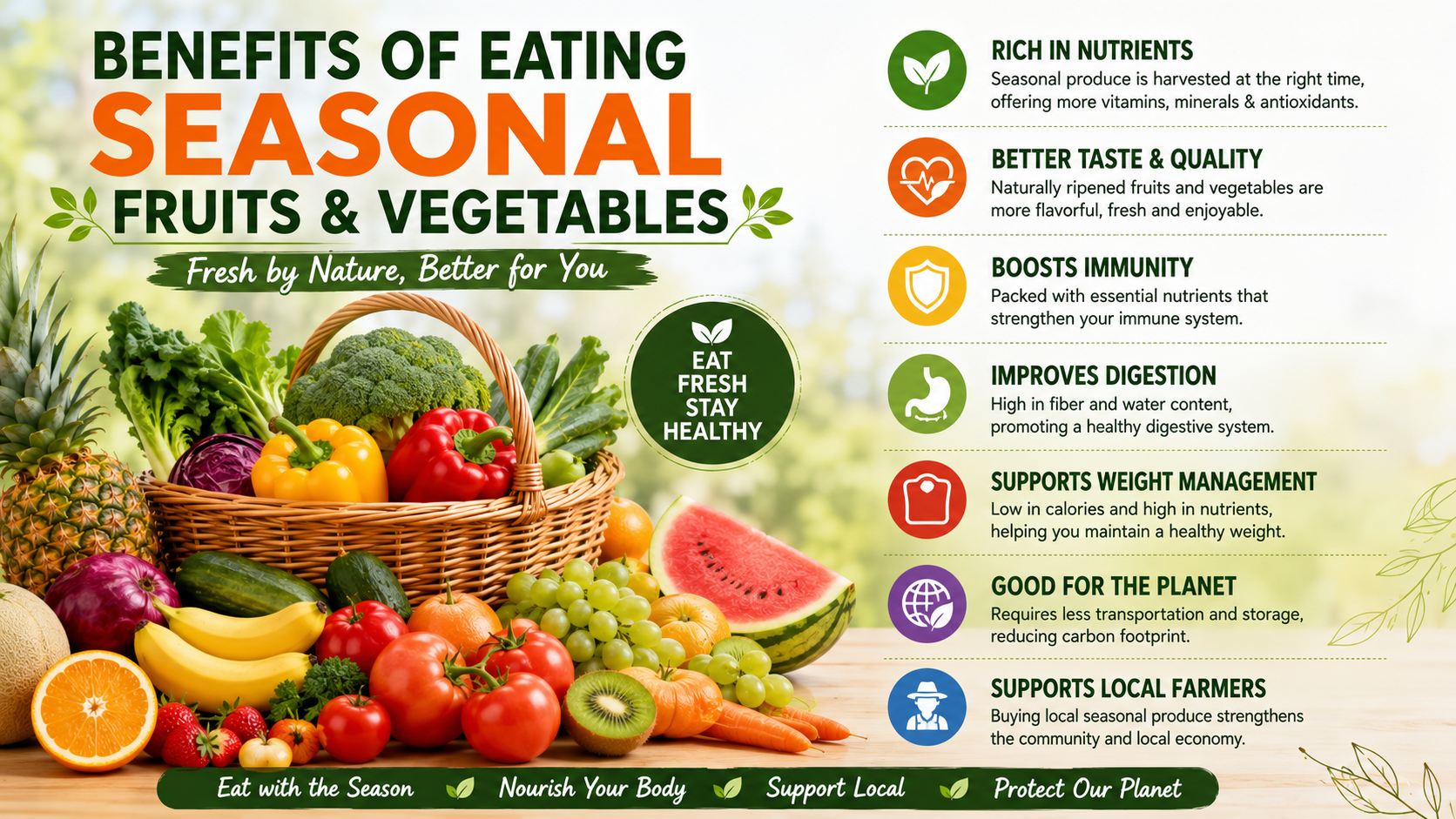
Freshly harvested fruits and vegetables usually spend less time in storage before reaching consumers. Because they are picked closer to full ripeness, they often retain more vitamins, minerals, and natural antioxidants.
Produce transported over long distances may be harvested before it fully ripens to withstand shipping. Although still nutritious, such foods may not always develop the same natural taste or nutrient content as freshly harvested seasonal produce.
Eating a wide variety of seasonal foods throughout the year also provides different nutrients that support overall health.
Better Taste and Natural Freshness
One of the most noticeable advantages of seasonal fruits and vegetables is their taste. Fruits allowed to ripen naturally on the plant generally develop better sweetness, aroma, and texture.
Fresh vegetables harvested during their growing season are often crisp, colorful, and flavorful. Their natural quality makes healthy meals more enjoyable without relying heavily on extra sugar, salt, or artificial flavorings.
Supports a Strong Immune System
Seasonal produce supplies essential vitamins and minerals that help maintain normal body functions.
Vitamin C found in citrus fruits, guava, and berries supports immune health. Leafy vegetables provide folate and iron, while carrots and pumpkins contain vitamin A, which contributes to healthy vision and skin.
Including different seasonal fruits and vegetables throughout the year ensures a diverse supply of nutrients that strengthen the body’s natural defenses.
Encourages Better Digestion
Many seasonal fruits and vegetables are naturally rich in dietary fiber. Fiber supports healthy digestion by promoting regular bowel movements and maintaining a healthy digestive system.
Foods such as apples, pears, carrots, spinach, cucumbers, and many leafy vegetables contribute to improved digestive health while helping individuals feel satisfied for longer periods.
Helps Maintain a Healthy Weight
Seasonal fruits and vegetables are generally low in calories while providing plenty of vitamins, minerals, and water. They help satisfy hunger without excessive calorie intake, making them valuable additions to a balanced diet.
Replacing processed snacks with fresh fruits or adding extra vegetables to meals supports healthy weight management over time.
Naturally Supports Hydration
Different seasons provide foods that match the body’s changing needs.
During hot weather, water-rich fruits and vegetables such as watermelon, cucumber, muskmelon, and tomatoes help maintain hydration. In cooler months, root vegetables, citrus fruits, and leafy greens provide nutrients that support overall health during seasonal changes.
Nature often supplies foods that complement the environmental conditions of each season.
Better for the Environment
Eating seasonal produce reduces the need for long-distance transportation, refrigerated storage, and energy-intensive growing methods.
When fruits and vegetables are produced closer to where they are consumed, fewer resources are required for transportation and preservation. Choosing seasonal foods therefore contributes to environmentally responsible eating habits.
Supports Local Farmers
Purchasing seasonal produce from local markets encourages local agriculture and strengthens farming communities.
Farmers receive better opportunities to sell freshly harvested crops, while consumers benefit from fresher produce and often lower prices due to increased seasonal availability.
Supporting local farming also helps preserve agricultural traditions and regional food diversity.
Practical Tips for Choosing Seasonal Produce
Making seasonal eating a regular habit is easier than many people think.
- Visit local fruit and vegetable markets regularly.
- Choose produce that appears fresh and naturally colored.
- Plan meals based on fruits and vegetables currently available.
- Wash produce thoroughly before consumption.
- Store fruits and vegetables properly to maintain freshness.
- Experiment with different seasonal recipes throughout the year.
These simple habits encourage healthier eating while making meals more enjoyable.
Conclusion
Eating seasonal fruits and vegetables is one of the easiest ways to improve daily nutrition while supporting overall health. Fresh seasonal produce offers excellent flavor, valuable nutrients, better hydration, improved digestion, and natural support for the immune system. It also benefits local farmers and reduces environmental impact by encouraging sustainable food choices.
Healthy eating does not require expensive or complicated diets. Often, the best nutrition comes from choosing fresh foods that nature provides during each season. By filling our plates with colorful seasonal fruits and vegetables throughout the year, we nourish our bodies, support our communities, and build lifelong healthy eating habits.
Verification Code: SF9X4PT82LM