Introduction
Some mornings, you wake up feeling energetic, while on other days, even simple activities seem tiring. Your appetite may change, your sleep might become irregular, or your mood may shift without an obvious reason. Several factors can explain these experiences, and hormones are among them.
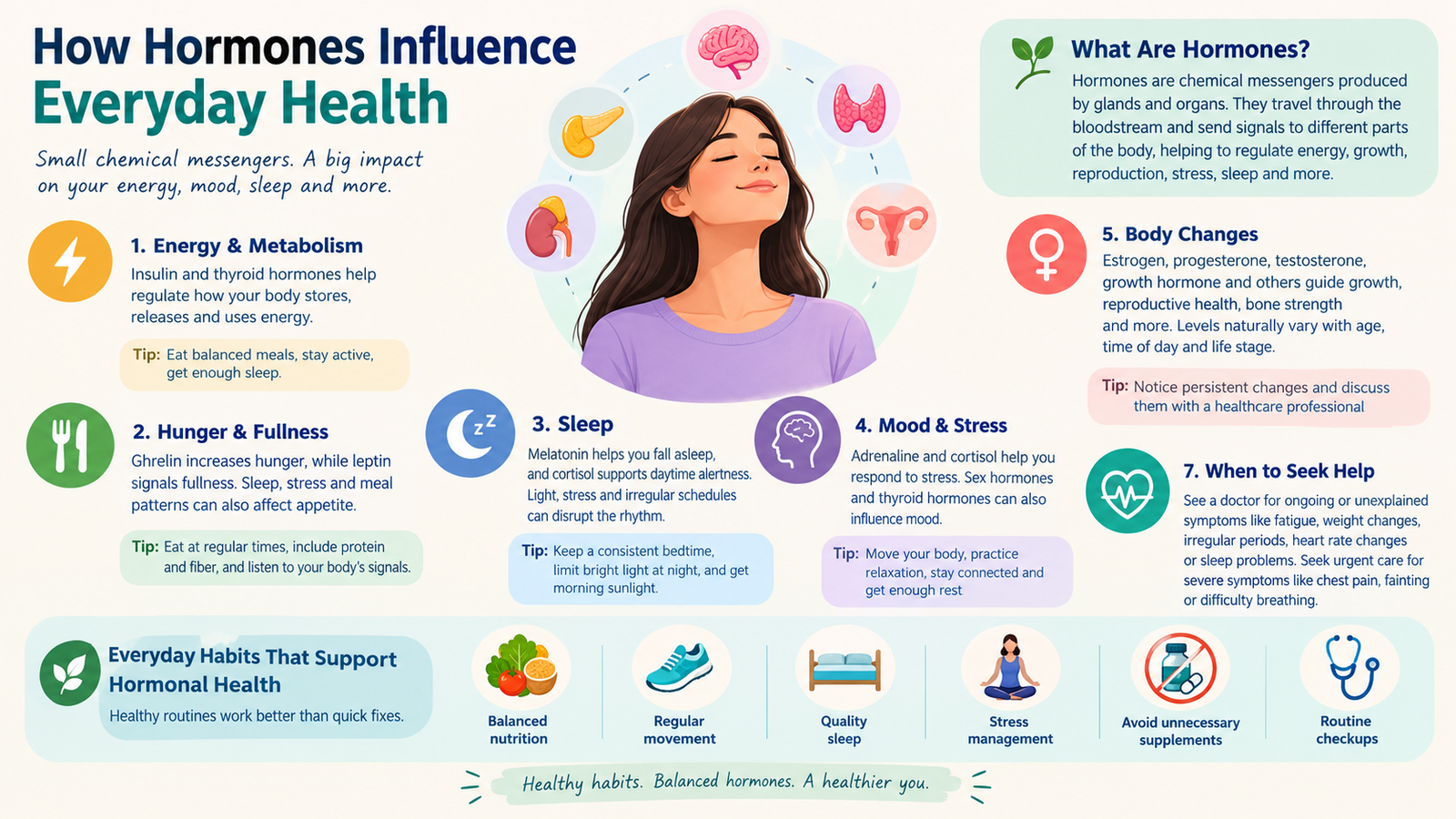
Hormones are chemical messengers produced by glands and certain organs. They travel through the bloodstream and deliver instructions to different parts of the body. These signals help coordinate processes such as energy use, growth, reproduction, stress responses, and sleep.
Understanding how hormones work can help you recognize everyday body changes and develop habits that support general health.
1. How Hormones Affect Your Energy
The body needs a steady supply of energy to keep its organs functioning and support daily activities. Hormones help regulate how that energy is stored, released, and used.
Insulin, produced by the pancreas, helps glucose move from the bloodstream into cells. Thyroid hormones influence how quickly the body carries out many metabolic processes.
When these systems do not function properly, a person may experience unusual tiredness, changes in weight, or difficulty maintaining normal activity levels.
Helpful habit: Eat balanced meals, stay physically active, and maintain regular sleep hours. Persistent fatigue should not automatically be blamed on hormones because anemia, infections, and other conditions can cause similar symptoms.
2. Why Hunger and Fullness Can Change
Hunger is influenced by more than the amount of food in your stomach. Hormones help the brain interpret signals about the body’s energy needs.
Ghrelin, produced mainly in the stomach, generally increases the feeling of hunger. Leptin, released by fat cells, helps communicate information about stored energy and contributes to appetite regulation.
Sleep loss, stress, meal patterns, and individual differences can affect appetite. As a result, you may feel hungrier after a poor night’s sleep or notice changes in your usual eating habits during a stressful week.
Helpful habit: Eat at reasonably consistent times, include protein and fiber in meals, and pay attention to your body’s hunger and fullness signals. Avoid assuming that every appetite change indicates a hormonal problem.
3. The Connection Between Hormones and Sleep
Your body follows an internal timing system that helps coordinate sleep and wakefulness. Melatonin, produced by the pineal gland, plays an important role in signaling that it is time to sleep.
Cortisol also follows a daily rhythm. It is generally higher around the time you wake up and helps prepare the body for daytime activity.
Bright light late at night, irregular working hours, stress, and changing sleep schedules can interfere with these patterns. Hormonal conditions may also contribute to sleep difficulties, although many nonhormonal causes exist.
Helpful habit: Keep a consistent bedtime, reduce bright light before sleeping, and spend some time in natural daylight during the morning.
4. How Hormones Influence Mood and Stress
When you face a demanding situation, the body activates systems that help you respond. Adrenaline can increase alertness and heart rate, while cortisol helps manage the body’s response to stress.
These reactions are useful for short-term challenges. However, prolonged stress can affect sleep, appetite, concentration, and emotional well-being.
Sex hormones and thyroid hormones can also influence mood in some circumstances. Nevertheless, sadness, anxiety, or irritability should not automatically be attributed to hormone changes.
Helpful habit: Make time for physical activity, relaxation, social connection, and adequate rest. If emotional difficulties continue or interfere with daily life, consider speaking with a qualified healthcare professional.
5. Hormones and Changes in the Body
Hormones help guide growth, reproductive development, bone maintenance, and other long-term functions.
Estrogen and progesterone fluctuate during the menstrual cycle. These changes may affect bleeding patterns, breast tenderness, and other symptoms. Hormonal changes during pregnancy, after childbirth, and around menopause can produce different physical experiences.
Testosterone contributes to reproductive function and muscle and bone health. Growth hormone supports tissue growth and repair, particularly during childhood and adolescence.
Hormone levels naturally vary with age, time of day, and life stage. A difference in symptoms does not necessarily mean something is wrong.
Helpful habit: Notice significant changes in your usual patterns and discuss persistent or troublesome symptoms with a healthcare professional rather than trying to correct hormone levels yourself.
6. Everyday Habits That Support Hormonal Health
Although you cannot control every hormonal change, certain routines support the body’s normal regulatory systems.
- Choose balanced meals: Include vegetables, fruits, whole grains, protein sources, and healthy fats.
- Move regularly: Walking, strength exercises, and other suitable activities support metabolic health.
- Protect sleep: Aim for a consistent schedule and sufficient rest.
- Manage ongoing stress: Try breathing exercises, enjoyable hobbies, or other relaxation techniques.
- Avoid unnecessary supplements: Hormone-related products may interact with medicines or cause harm. Use supplements or hormone treatments only when appropriate for your circumstances.
- Attend recommended health checkups: Medical advice can help identify conditions that need treatment.
No single food, drink, or exercise can balance every hormone. The body’s hormone systems interact in complex ways, so healthy routines are more useful than quick-fix claims.
7. When Should You Seek Professional Help?
Consider arranging a medical appointment if you experience persistent or unexplained symptoms, such as unusual fatigue, substantial weight changes, excessive thirst or urination, irregular menstrual periods, changes in heart rate, or ongoing difficulty sleeping.
A healthcare professional will consider your symptoms, medical history, medicines, and other possible explanations before deciding whether hormone testing is appropriate. Testing every hormone is not necessary for everyone, and results must be interpreted in context.
Seek urgent medical attention for severe symptoms such as fainting, confusion, chest pain, or difficulty breathing.
Conclusion
Hormones quietly coordinate many processes that shape everyday health, from appetite and energy to sleep, stress responses, and reproductive function. Their levels naturally change, and these variations are not always signs of illness.
Consistent sleep, nutritious food, regular movement, and appropriate medical care can support overall well-being. By paying attention to persistent changes without jumping to conclusions, you can better understand your body’s signals and seek help when necessary.
Verification Code: H7Q4M9X2B6