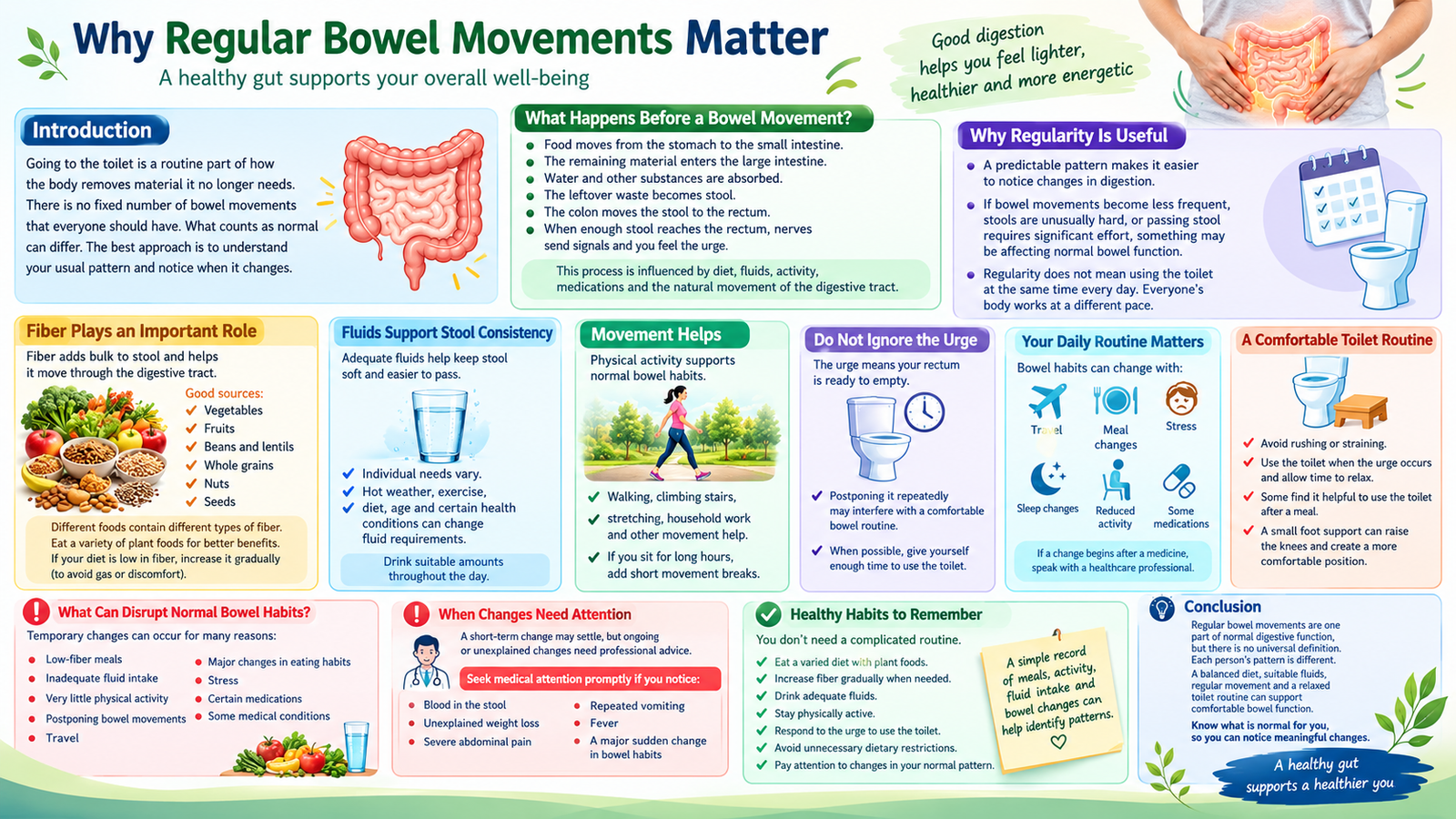
Introduction
Going to the toilet is a routine part of how the body removes material it no longer needs. Although bowel habits are rarely discussed, changes in stool frequency, consistency, or comfort can provide useful information about digestive health.
There is no fixed number of bowel movements that every person should have. What counts as normal can differ considerably. The more useful approach is to understand your usual pattern and notice when it changes.
What Happens Before a Bowel Movement?
After food passes through the stomach and small intestine, the remaining material enters the large intestine. Water and some other substances are absorbed there, while the remaining waste gradually becomes stool.
The colon then moves the stool toward the rectum. When enough stool reaches the rectum, nerves send signals that create the urge to use the toilet.
This process is influenced by diet, fluids, physical activity, medications, and the normal movement of the digestive tract.
Why Regularity Is Useful
A reasonably predictable bowel pattern can make it easier to recognize changes in digestion.
If bowel movements suddenly become much less frequent, stools become unusually hard, or passing stool repeatedly requires significant effort, something may be affecting normal bowel function.
Regular bowel movements do not mean that a person must use the toilet at the same time every day. Digestive systems naturally work at different speeds.
Fiber Plays an Important Role
Dietary fiber comes mainly from plant foods. It can add bulk to stool and influence how quickly material moves through the digestive tract.
Useful sources include:
- Vegetables
- Fruits
- Beans and lentils
- Whole grains
- Nuts
- Seeds
Different foods contain different forms of fiber. Eating a mixture of plant foods can therefore provide a wider range of fiber types.
If your current diet contains little fiber, increase it gradually. A sudden increase can cause temporary gas or abdominal discomfort.
Fluids Support Normal Stool Consistency
Adequate fluid intake is another part of healthy bowel habits. When stool becomes excessively dry, passing it may require more effort.
Individual fluid requirements are not identical. Hot weather, exercise, diet, age, and certain health conditions can change how much fluid a person needs.
Regularly drinking suitable amounts throughout the day can support normal bowel function.
Movement Can Help the Digestive System
Physical activity benefits the body in many ways, and it can also support normal bowel habits.
A person does not need to perform strenuous exercise to become more active. Walking, climbing stairs, stretching, household work, and other forms of movement can reduce long periods of inactivity.
For people who spend many hours sitting, adding short movement breaks throughout the day can be a practical starting point.
Do Not Repeatedly Ignore the Urge
The urge to pass stool is the body’s signal that the rectum is ready to empty.
Busy schedules, work, travel, or lack of access to a suitable bathroom can make people postpone this signal. Doing so occasionally is understandable, but repeatedly ignoring the urge may interfere with a comfortable bowel routine.
When possible, give yourself enough time to use the toilet rather than constantly delaying it.
Your Daily Routine Can Affect Bowel Habits
Bowel patterns may change when normal routines are disrupted. Travel, altered meal times, stress, changes in sleep, reduced activity, and dietary changes can all influence digestion.
Some medicines can also affect bowel movements. If a noticeable change begins after starting a medicine, speak with a healthcare professional before making changes to the treatment yourself.
A Comfortable Toilet Routine
Rushing or repeatedly straining during a bowel movement is not ideal.
Try to use the toilet when the urge occurs and allow enough time to relax. Some people find that attempting to use the bathroom after a meal fits naturally with the body’s digestive activity.
A small foot support can also raise the knees while sitting, which may create a more comfortable position for some people.
What Can Disrupt Normal Bowel Habits?
Temporary changes can occur for many reasons. Common contributors include:
- Low-fiber meals
- Inadequate fluid intake
- Very little physical activity
- Repeatedly postponing bowel movements
- Travel
- Major changes in eating habits
- Stress
- Certain medications
- Some medical conditions
Because there are many possible causes, persistent bowel changes should not automatically be blamed on one food.
When Changes Need Attention
A short-term change may settle after a routine returns to normal. However, ongoing or unexplained changes deserve professional attention.
Speak with a healthcare professional if bowel problems continue or repeatedly interfere with daily life.
Seek medical attention promptly when bowel changes occur with blood in the stool, unexplained weight loss, severe abdominal pain, repeated vomiting, fever, or a major sudden change in bowel habits.
Healthy Habits to Remember
Supporting regular bowel function does not require a complicated routine.
Try to:
- Eat a varied diet containing plant foods.
- Increase fiber gradually when needed.
- Drink adequate fluids.
- Stay physically active.
- Respond to the urge to use the toilet.
- Avoid making frequent, unnecessary dietary restrictions.
- Pay attention to changes in your normal bowel pattern.
A simple record of meals, activity, fluid intake, and bowel changes can sometimes help identify patterns.
Conclusion
Regular bowel movements are one part of normal digestive function, but regularity does not have one universal definition. Each person’s bowel pattern can be different.
A balanced diet, suitable fluid intake, regular movement, and a relaxed toilet routine can support comfortable bowel function. More importantly, knowing what is normal for you makes it easier to notice meaningful changes.
Persistent or concerning bowel symptoms should be evaluated rather than repeatedly ignored. Understanding the body’s signals can help identify problems earlier and support better digestive health.
Verification Code
RB7M4QX82LK