Introduction
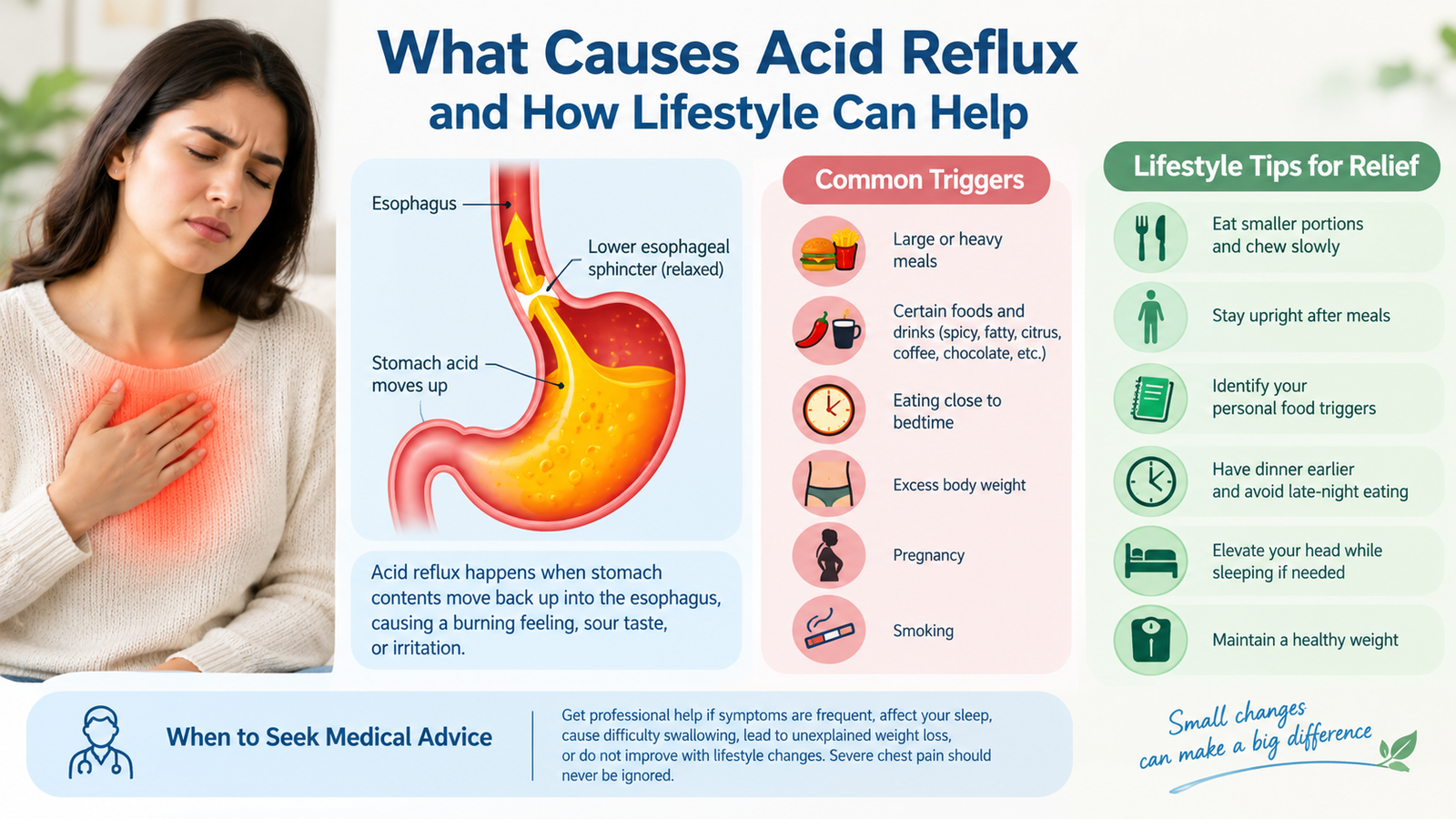
Acid reflux happens when some of the contents of the stomach move upward into the food pipe, also called the esophagus. The stomach is designed to handle acidic digestive juices, but the esophagus is more sensitive to them. When reflux occurs repeatedly, it can lead to an uncomfortable burning feeling, sour taste, or irritation in the throat.
Occasional reflux can happen to many people. However, frequent symptoms may be linked to eating habits, body weight, certain foods, medications, or other factors. Understanding the possible triggers can make everyday management easier.
How Acid Reflux Happens
A ring of muscle called the lower esophageal sphincter sits between the esophagus and stomach. Normally, it opens when food is swallowed and then closes to help keep stomach contents where they belong.
If this muscle relaxes when it should remain closed, stomach contents can travel upward. The result may be heartburn, regurgitation, throat irritation, or an unpleasant acidic taste.
Reflux can become more noticeable after a large meal, particularly when a person lies down soon afterward.
Common Reasons Acid Reflux May Occur
Large or Heavy Meals
A very full stomach can increase pressure around the stomach area. This may make reflux more likely, especially if someone bends over or lies down shortly after eating.
Certain Foods and Drinks
Triggers are not identical for everyone. Some people notice symptoms after consuming spicy dishes, fatty meals, chocolate, coffee, citrus foods, tomatoes, or carbonated drinks. Keeping track of personal reactions can be more useful than avoiding every food that is sometimes associated with reflux.
Eating Close to Bedtime
Going to bed soon after dinner gives stomach contents less time to move through the digestive system. Remaining upright for a while after eating may reduce nighttime symptoms for some people.
Excess Body Weight
Additional abdominal pressure can contribute to reflux in some individuals. For people who are overweight, gradual weight reduction may help lessen symptoms.
Pregnancy
Hormonal changes and pressure from the growing uterus can make reflux more common during pregnancy. Symptoms often vary throughout pregnancy and may improve afterward.
Smoking
Smoking can affect the normal function of the valve between the stomach and esophagus. Quitting or reducing tobacco use can be beneficial for overall health and may also help with reflux symptoms.
Lifestyle Habits That May Help
Eat Smaller Portions
Instead of regularly having very large meals, try moderate portions spread throughout the day. Eating slowly may also make it easier to recognize when you are comfortably full.
Stay Upright After Eating
Try not to lie down immediately after meals. A gentle walk or simply remaining seated or standing can keep the body upright while digestion begins.
Identify Your Personal Triggers
There is no single food list that causes reflux in everyone. A simple food-and-symptom diary can help reveal patterns. Record what you ate, approximately when you ate it, and whether symptoms appeared afterward.
Make Dinner Earlier
If nighttime reflux is a problem, leaving several hours between the evening meal and bedtime may be helpful. This gives the stomach more time to empty before you lie down.
Consider Sleeping Position
People who frequently experience nighttime reflux may benefit from raising the upper part of the bed rather than relying only on extra pillows. Elevating the upper body can reduce the chance of stomach contents moving upward while sleeping.
Maintain a Healthy Weight
If excess weight is contributing to abdominal pressure, gradual weight management may improve reflux symptoms. Sustainable changes in meals and physical activity are generally more useful than extreme diets.
When Acid Reflux Should Not Be Ignored
Occasional heartburn does not necessarily mean there is a serious problem. However, repeated or troublesome symptoms deserve medical attention.
Seek professional advice if reflux happens frequently, interferes with sleep, causes difficulty swallowing, leads to unexplained weight loss, or does not improve with lifestyle changes. Chest pain should not automatically be assumed to be acid reflux, particularly when it is severe or accompanied by symptoms such as breathlessness, sweating, dizziness, or pain spreading to the arm or jaw.
Conclusion
Acid reflux can be influenced by what a person eats, how much they eat, when they eat, and what they do afterward. Lifestyle changes such as choosing moderate portions, staying upright after meals, identifying individual food triggers, avoiding late-night eating, and maintaining a healthy weight may help reduce symptoms.
The most useful approach is usually personal rather than restrictive. Observing when reflux occurs can reveal habits that are contributing to the problem. If symptoms continue despite reasonable lifestyle adjustments, a healthcare professional can help determine the underlying cause and appropriate treatment.
Verification Code
AR7K4MP82QZ