Introduction
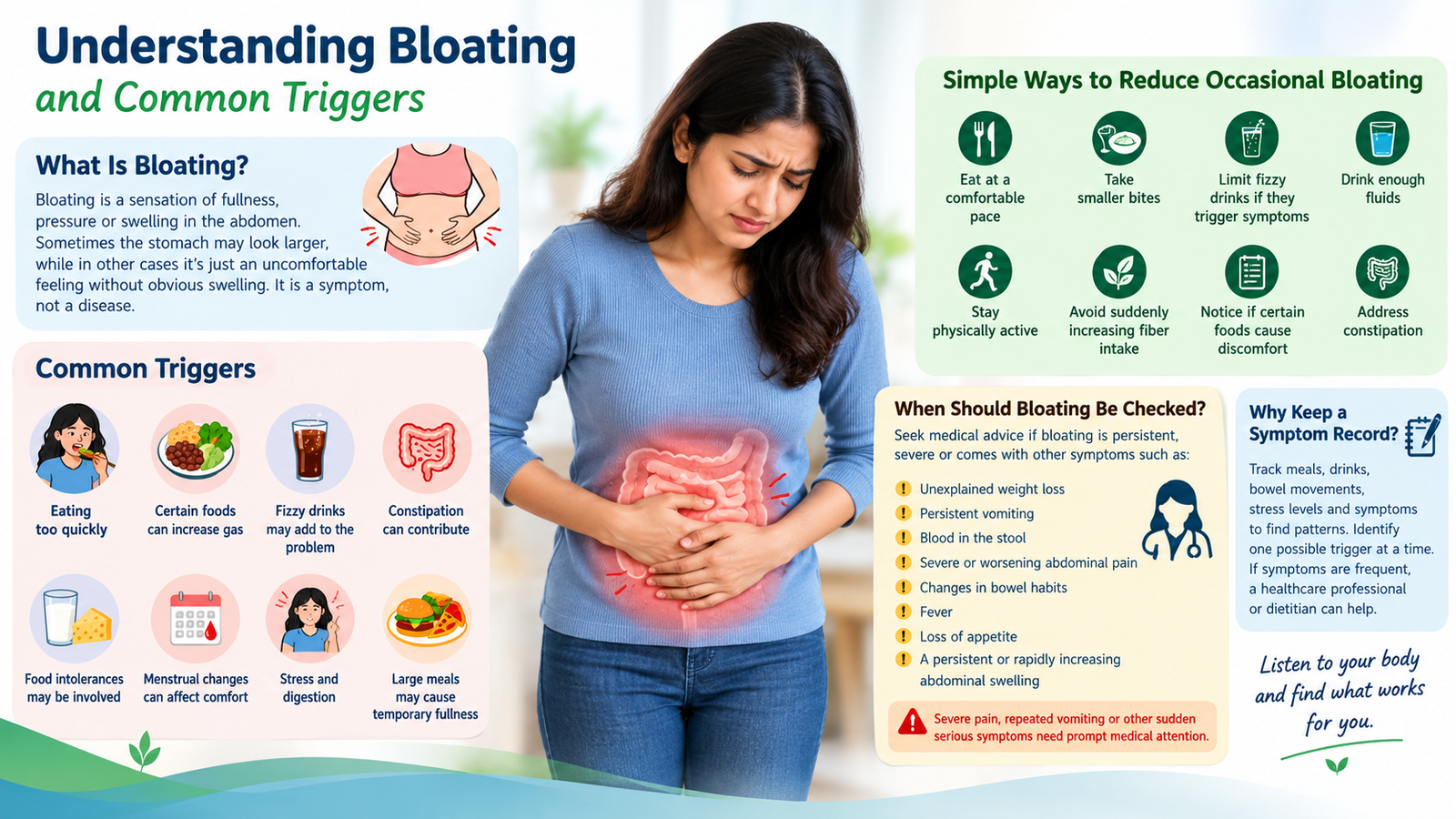
Bloating can make the stomach area feel unusually full, tight, or uncomfortable. Sometimes the abdomen may also look slightly larger than usual. It can appear after a particular meal, during periods of constipation, or without an obvious reason.
Occasional bloating is common and may disappear on its own. However, repeated episodes can make it useful to look at eating habits, bowel patterns, food choices, and other possible triggers.
What Does Bloating Feel Like?
Bloating is mainly a sensation of pressure or fullness in the abdomen. Some people describe it as heaviness, stretching, or tightness.
It can occur with other digestive symptoms, including:
- Passing gas
- Frequent burping
- Abdominal discomfort
- Changes in bowel movements
- Feeling full sooner than expected
The experience is different from person to person, and the same trigger may not affect everyone in the same way.
Eating Too Fast
The speed at which food is eaten can influence digestive comfort. When meals are rushed, larger bites may be swallowed quickly, and more air can enter the digestive tract.
Taking smaller bites, chewing comfortably, and allowing enough time for a meal may reduce this problem for some people.
Foods That Produce More Gas
Certain carbohydrates are not completely digested before reaching the large intestine. Bacteria naturally present there can break them down and release gas.
Foods that may cause increased gas in some individuals include:
- Beans and lentils
- Onions and garlic
- Certain vegetables
- Some fruits
- Whole-grain foods
- Milk and other dairy products in people who have difficulty digesting lactose
These foods are not unhealthy simply because they can cause gas. The important factor is how an individual’s digestive system responds to them.
Carbonated Drinks
Soft drinks, sparkling beverages, and other fizzy drinks contain dissolved carbon dioxide. Drinking them can increase the amount of gas entering the digestive system.
For people who notice bloating after carbonated beverages, reducing them for a period and observing the difference may help identify whether they are a personal trigger.
Constipation and Bloating
Bloating and constipation can sometimes occur together. When bowel movements become less frequent or stools become difficult to pass, abdominal fullness and discomfort may increase.
Regular physical activity, adequate fluid intake, and a balanced intake of dietary fiber can support normal bowel function. However, increasing fiber suddenly can sometimes produce additional gas, so gradual changes may be more comfortable.
Food Intolerances
Some people experience digestive symptoms after eating particular foods because their body has difficulty processing certain components.
Lactose intolerance is one example. A person with lactose intolerance may develop gas, abdominal discomfort, or loose stools after consuming foods containing significant amounts of lactose.
If a particular food repeatedly causes symptoms, recording the food and the timing of the symptoms can provide useful information for discussion with a healthcare professional.
Hormonal Changes
Some women notice increased abdominal fullness around the time of menstruation. Changes associated with the menstrual cycle can influence fluid balance and digestive activity.
Keeping track of symptoms alongside the menstrual cycle may help reveal whether bloating follows a recurring pattern.
Stress Can Influence Digestion
The digestive system communicates continuously with the brain. Emotional stress can affect how the digestive tract moves and can also change how strongly digestive sensations are noticed.
This does not mean that bloating is imaginary or caused only by stress. Instead, stress can be one factor among several. Regular sleep, physical activity, relaxed meals, and suitable methods of managing everyday stress may support digestive comfort.
Very Large Meals
Even foods that normally cause no problems can leave a person feeling uncomfortable when eaten in very large quantities.
A large meal places more contents in the digestive system at one time and can create temporary fullness or pressure. Eating according to hunger and stopping when comfortably satisfied may help prevent this type of discomfort.
Simple Habits That May Help
For occasional bloating, a few everyday habits may be worth trying:
- Eat meals at a comfortable pace.
- Chew food thoroughly before swallowing.
- Drink enough fluids throughout the day.
- Stay physically active.
- Notice whether fizzy drinks trigger symptoms.
- Increase fiber gradually rather than suddenly.
- Pay attention to bowel regularity.
- Keep a record of foods followed by repeated symptoms.
- Avoid making several major dietary changes at once.
A food and symptom diary can be particularly useful because digestive reactions are not always immediate.
When Should Bloating Be Evaluated?
Bloating that happens occasionally is usually different from bloating that is persistent, severe, or repeatedly returning without an obvious explanation.
Medical advice is important if bloating occurs along with symptoms such as unexplained weight loss, blood in the stool, ongoing vomiting, significant appetite changes, persistent diarrhea or constipation, fever, or severe abdominal pain.
Sudden severe abdominal symptoms or rapidly worsening swelling should receive prompt medical attention.
Why Tracking Your Symptoms Can Be Useful
There is no single cause of bloating. Two people can eat the same meal and experience completely different reactions.
Instead of removing many foods at once, recording meals, drinks, bowel movements, menstrual timing, stress levels, and symptoms can make patterns easier to recognize. A healthcare professional or registered dietitian can help interpret recurring patterns when necessary.
Conclusion
Bloating can be linked to eating speed, certain foods, carbonated beverages, constipation, food intolerance, hormonal changes, stress, or simply eating a large meal.
Understanding personal patterns is often more useful than assuming that one particular food or habit is responsible. Occasional bloating may settle naturally, while frequent or troublesome symptoms deserve appropriate medical evaluation.
Verification Code : QZ8M4RT67KP