Introduction
We depend on our feet from the moment we get out of bed. They help us walk to the kitchen, climb stairs, travel to work, exercise, and stand during everyday activities. Despite doing so much work, foot care is often forgotten until pain or another visible problem appears.
Changes such as rough skin, an uncomfortable toenail, repeated rubbing, or soreness after walking may seem minor at first. Paying attention to these signs can help you identify problems earlier and protect your ability to move comfortably.
The Important Job Your Feet Perform
Each foot contains a complex combination of bones, joints, muscles, tendons, ligaments, nerves, and blood vessels. These structures work together to provide support, movement, and balance.
Whenever you take a step, your feet handle pressure created by your body weight and movement. They also help adjust your position as you walk over different surfaces.
A problem in one part of the foot can sometimes change the way you place your weight. Over time, this altered movement may make other areas feel uncomfortable as well.
Everyday Problems That Can Affect the Feet
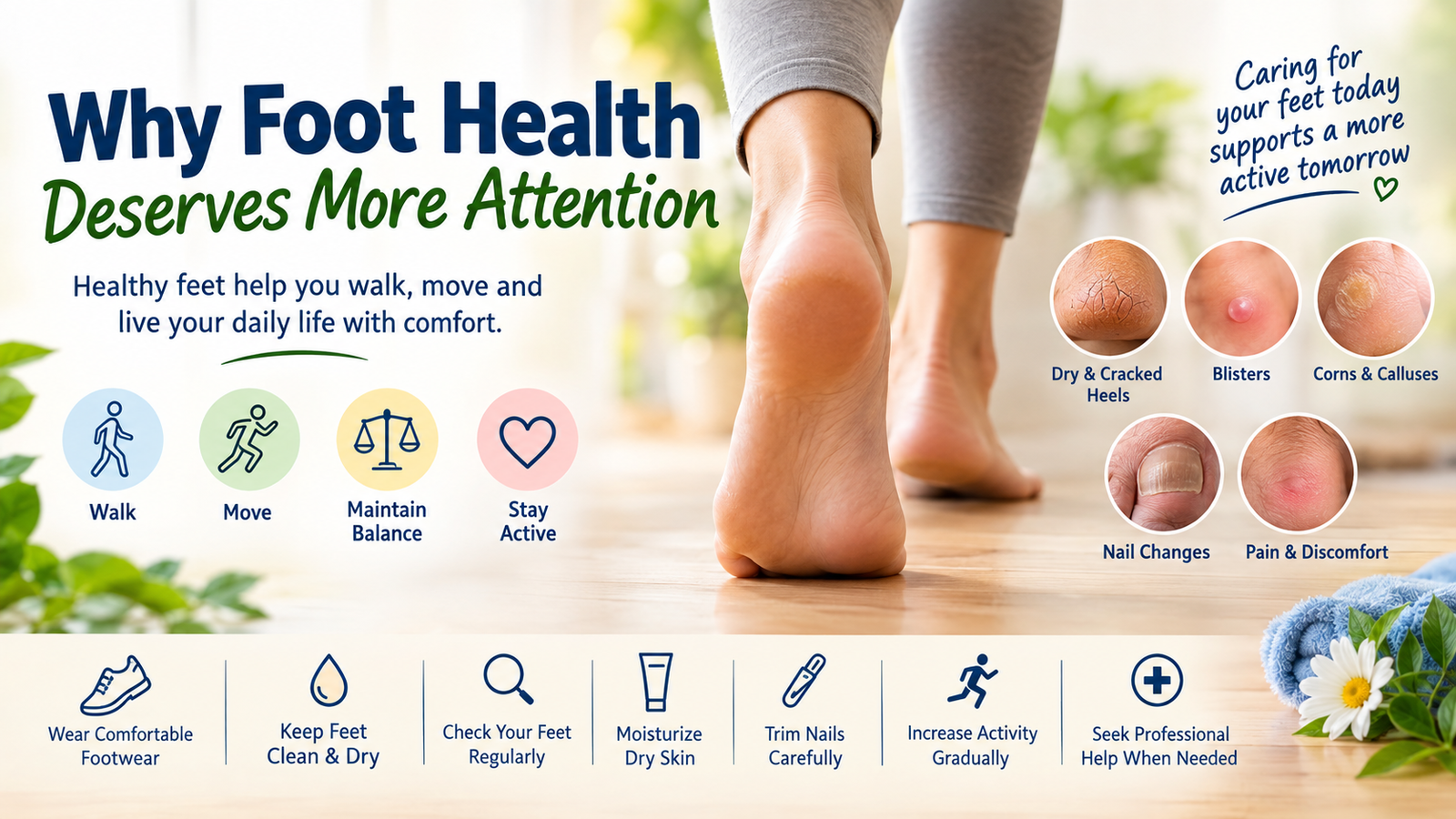
Dry Heel Skin
The skin around the heels can lose moisture and become coarse or flaky. Repeated pressure and friction may make the area rougher.
If dryness develops into deep cracks, walking or standing may become uncomfortable. Applying a suitable moisturizer can help maintain the skin’s softness.
Blisters From Repeated Rubbing
A blister may form when the same area of skin experiences repeated friction. This can happen after wearing unfamiliar footwear or spending more time walking than usual.
Shoes that fit properly and socks that reduce friction can help lower the chance of repeated rubbing.
Thickened Areas of Skin
Corns and calluses are areas where the skin becomes thicker in response to repeated pressure or friction. They may appear on the toes, soles, or other areas that experience frequent contact.
Simply removing the thickened skin without addressing the source of pressure may not prevent it from returning.
Changes in the Toenails
Toenails can change because of injury, pressure from footwear, fungal infections, or other causes. A nail may become thicker, brittle, discolored, or differently shaped.
A persistent change is worth having checked, particularly when discomfort accompanies it.
Why Your Shoes Matter
Footwear has a direct relationship with how pressure is placed on the feet. Shoes that squeeze the toes or rub against particular areas can create repeated irritation.
When selecting footwear, consider whether:
- Your toes have enough space to move.
- The heel stays reasonably secure.
- The shoe does not create painful pressure points.
- The design is appropriate for the activity.
- The sole provides suitable support and cushioning.
A shoe that looks comfortable is not necessarily a good fit once you begin walking in it.
Keeping Feet Clean
Regular washing can remove sweat, dirt, and other material from the feet. After washing, dry them carefully, including the spaces between the toes.
Keeping the area between the toes from staying damp for long periods can be helpful for maintaining healthy skin.
Socks should be changed when they become wet or heavily sweaty. Footwear also benefits from being allowed to dry properly between uses.
Make Foot Checks a Routine
You do not need a complicated examination to notice many changes. A quick look at your feet can help you spot something unusual.
Pay attention to:
- New cuts or sores
- Swelling
- Persistent redness
- Unusual skin color
- Blisters
- Cracks
- Changes in nail appearance
- Areas that feel unusually thick
- New or recurring pain
Early awareness is particularly useful when an injury is located somewhere that is difficult to see during normal daily activities.
Pain Should Not Always Be Dismissed
Foot discomfort after an unfamiliar activity may settle with rest. However, pain that repeatedly returns or interferes with normal movement deserves closer attention.
There are many possible reasons for foot pain, including injuries, pressure from footwear, tendon problems, joint conditions, changes in foot structure, and nerve-related issues.
Instead of repeatedly ignoring the symptom, finding its underlying cause can help determine the appropriate response.
Staying Active Without Overloading Your Feet
Movement is an important part of maintaining general physical function. Walking and other suitable activities can help you remain mobile.
Problems can arise when activity levels increase suddenly. If you have been inactive and begin exercising much more than usual, your feet may need time to adapt.
Increase activity gradually and choose footwear appropriate for the exercise. Persistent pain during an activity is a reason to reconsider the activity and seek professional advice when necessary.
People With Certain Health Conditions Need Extra Care
Some medical conditions can make foot monitoring particularly important. Diabetes, for example, may affect sensation and circulation, which can make certain foot injuries harder to notice or heal.
Anyone who has been advised by a healthcare professional to follow a specific foot-care routine should follow that individualized guidance.
When Professional Attention Is Important
Arrange a medical evaluation if you experience:
- Foot pain that does not settle
- Difficulty walking normally
- A wound that remains open or fails to heal
- Increasing swelling
- Significant redness or warmth
- Unusual discharge
- Persistent numbness
- Reduced sensation
- Repeated foot problems
- A major change following an injury
Sudden, severe symptoms after an injury should receive prompt medical attention.
Easy Ways to Look After Your Feet
Healthy foot care can become part of your normal routine.
Choose suitable footwear: Avoid shoes that repeatedly pinch, rub, or create pressure.
Keep the feet clean: Wash them regularly and dry them thoroughly.
Look at your feet: Check for changes instead of waiting until something hurts.
Manage dry skin: Use an appropriate moisturizer on areas that become excessively dry.
Trim nails carefully: Cut toenails regularly and avoid damaging the surrounding skin.
Protect your feet: Wear appropriate footwear in places where walking barefoot could result in cuts or other injuries.
Increase exercise gradually: Give your feet time to adjust when changing your activity level.
Conclusion
Foot health deserves attention because the feet are involved in almost every part of daily movement. Small changes in the skin, nails, footwear comfort, or walking pattern can sometimes provide an early indication that something needs attention.
Simple habits such as choosing well-fitting shoes, keeping the feet clean and dry, checking them regularly, caring for dry skin, and increasing physical activity gradually can support everyday foot comfort.
Foot problems that persist, worsen, or interfere with walking should not be repeatedly ignored. A healthcare professional can examine the problem and help determine what may be causing it.
Verification Code: FK9R2WL64QM