Introduction
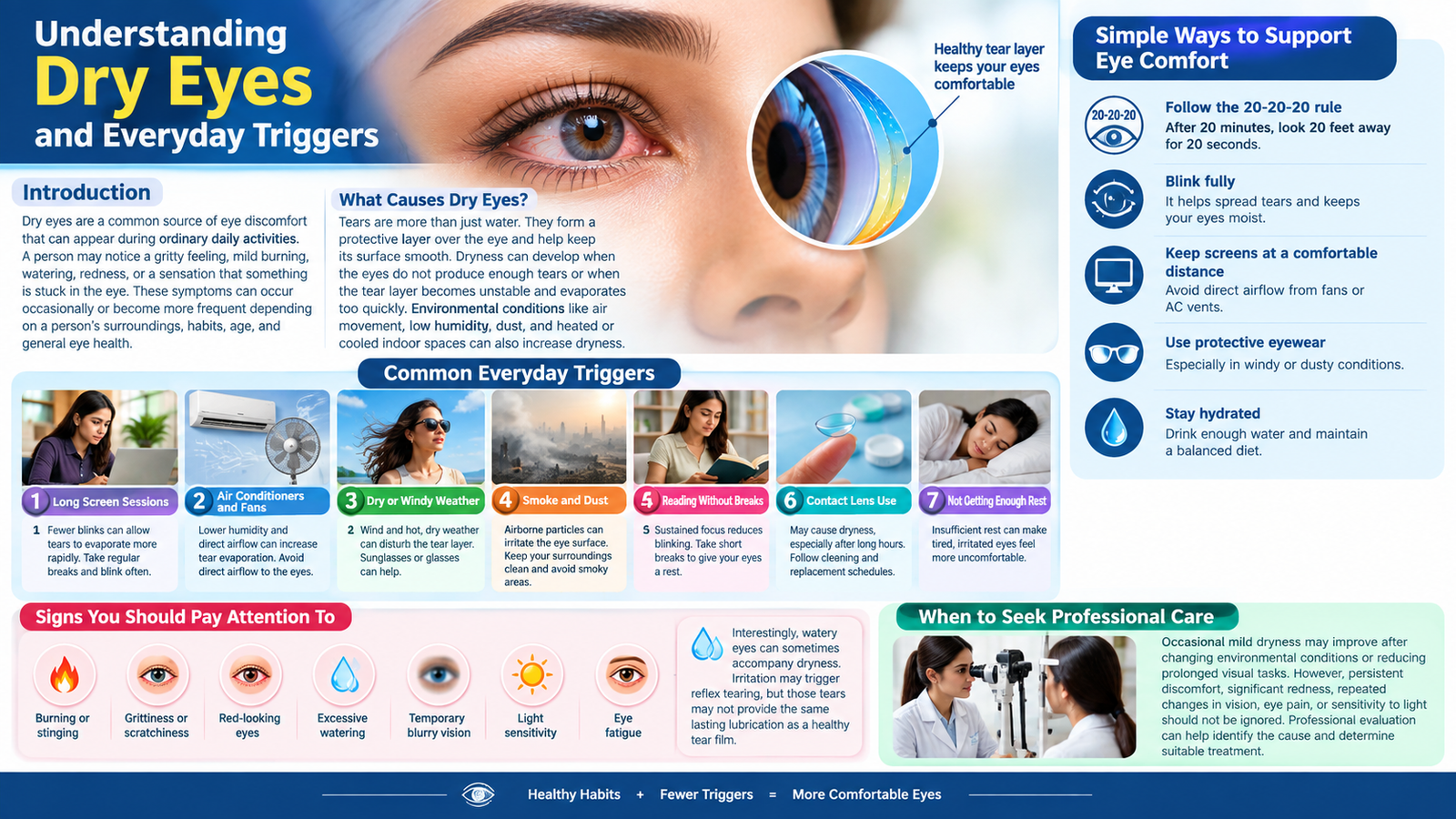
Dry eyes are a common source of eye discomfort that can appear during ordinary daily activities. A person may notice a gritty feeling, mild burning, watering, redness, or a sensation that something is stuck in the eye. These symptoms can occur occasionally or become more frequent depending on a person’s surroundings, habits, age, and general eye health.
The surface of the eye needs a stable layer of tears to remain comfortable. When tears are not produced adequately or disappear too quickly, the eyes may become irritated. Understanding the everyday factors that contribute to dryness can make it easier to protect eye comfort.
What Causes Dry Eyes?
Tears are more than just water. They form a protective layer over the eye and help keep its surface smooth. Dryness can develop when the eyes do not produce enough tears or when the tear layer becomes unstable and evaporates too quickly.
Environmental conditions can also influence how quickly moisture is lost from the eye. Air movement, low humidity, dust, and prolonged exposure to heated or cooled indoor spaces may increase discomfort.
Common Everyday Triggers
1. Long Screen Sessions
When concentrating on a phone, computer, or television, people often blink less frequently. Fewer complete blinks can allow tears to evaporate more rapidly. Taking regular visual breaks and consciously blinking can help reduce this strain.
2. Air Conditioners and Fans
Air conditioners can lower indoor humidity, while fans may direct moving air toward the face. Both situations can increase tear evaporation. Avoiding direct airflow toward the eyes may help maintain greater comfort.
3. Dry or Windy Weather
Outdoor wind can disturb the tear layer on the surface of the eye. Hot, dry weather may have a similar effect. Sunglasses or glasses that provide some protection around the eyes can be useful when spending time outdoors.
4. Smoke and Dust
Smoke, dust, and other airborne particles can irritate the eye surface. Repeated exposure may make existing dryness feel worse. Keeping living spaces clean and limiting exposure to smoky environments can help reduce irritation.
5. Reading Without Breaks
Extended reading, studying, or detailed work requires sustained visual concentration. This can reduce blinking and leave the eyes feeling tired or dry. Short breaks can give the eyes an opportunity to relax.
6. Contact Lens Use
Some contact lens wearers experience dryness, particularly after wearing lenses for many hours. Proper cleaning, replacement schedules, and appropriate wearing habits are important for maintaining eye comfort.
7. Not Getting Enough Rest
Poor sleep does not necessarily cause every case of dry eye, but insufficient rest can make tired, irritated eyes feel more uncomfortable. Maintaining a consistent sleep routine may support overall eye comfort.
Signs You Should Pay Attention To
Dryness may cause several sensations, including:
- Burning or stinging
- Grittiness or scratchiness
- Red-looking eyes
- Excessive watering
- Temporary blurry vision
- Light sensitivity
- Eye fatigue
Interestingly, watery eyes can sometimes accompany dryness. Irritation may trigger reflex tearing, but those tears may not provide the same lasting lubrication as a healthy tear film.
Simple Ways to Support Eye Comfort
Small changes in daily habits may help reduce occasional dryness. Follow the 20-20-20 approach during prolonged screen use: after about 20 minutes of close-up viewing, look at something roughly 20 feet away for around 20 seconds. Remembering to blink fully can also be helpful.
Keep digital screens at a comfortable viewing distance and avoid positioning fans or air-conditioning vents so that air blows directly into the eyes. When outdoors in windy conditions, protective eyewear can reduce direct exposure.
If dryness occurs frequently, an eye-care professional can determine whether an underlying eye problem, medication, contact-lens issue, or another factor may be contributing.
When to Seek Professional Care
Occasional mild dryness may improve after changing environmental conditions or reducing prolonged visual tasks. However, persistent discomfort, significant redness, repeated changes in vision, eye pain, or sensitivity to light should not be ignored. Professional evaluation can help identify the cause and determine suitable treatment.
Conclusion
Dry eyes can be influenced by surprisingly ordinary parts of daily life, from long screen sessions and indoor airflow to windy weather and prolonged reading. Recognizing personal triggers is an important first step toward reducing discomfort. Regular breaks, complete blinking, protection from direct airflow, and sensible screen habits can support healthier eye comfort. If symptoms continue or become troublesome, an eye-care professional can provide appropriate guidance.
Verification Code: DE7K9PL42QM