Introduction
The tongue does much more than help us taste food and speak. Its surface, moisture, movement, and overall appearance can sometimes change when something is affecting the mouth or the body. Because the tongue is easy to see, certain changes may be noticed before other symptoms become obvious.
However, a tongue cannot diagnose a medical condition by itself. Changes in its appearance can have many different causes, ranging from simple irritation to infections, nutritional problems, or other health issues. Persistent or unusual changes should be assessed by a healthcare professional.
What Makes the Tongue Useful to Observe?
The tongue contains muscles, blood vessels, nerves, taste receptors, and a specialized surface covered with tiny structures called papillae. It is constantly exposed to food, drinks, bacteria, medications, and changes in the mouth.
Because of this, its appearance can vary from day to day. A healthy tongue commonly appears pink and moist, although normal color and texture can differ between individuals.
Changes in Tongue Color
A noticeable change in color can sometimes provide a clue that deserves attention.
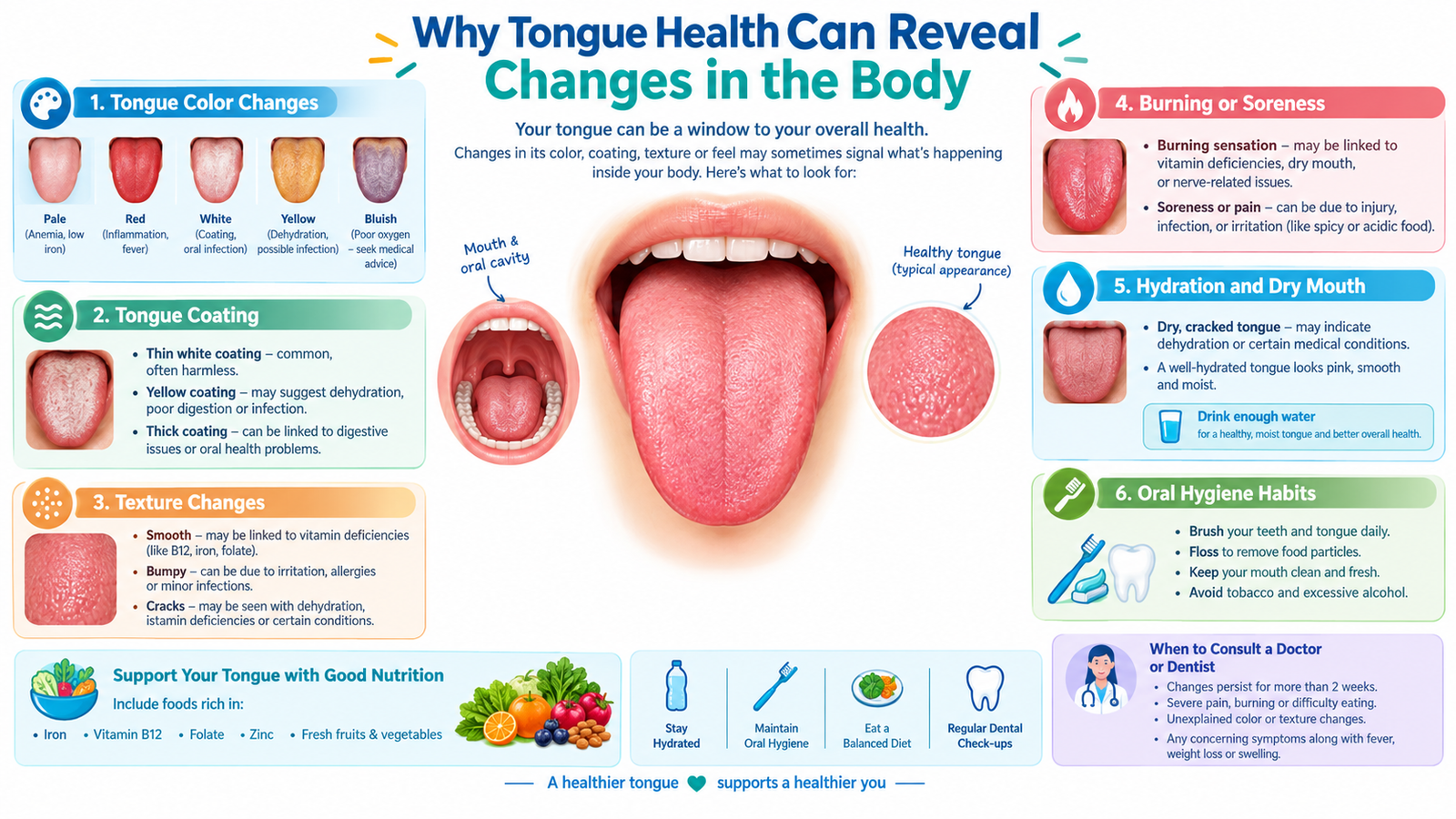
A very pale tongue may occur alongside conditions that affect blood or nutrient levels, although other explanations are possible. A bright red or unusually smooth tongue can sometimes be associated with irritation or certain nutritional deficiencies.
A yellowish coating may develop because of oral bacteria, food, smoking, dehydration, or inadequate oral cleaning. It does not automatically indicate a problem with the liver or another internal organ.
A dark or unusually colored tongue can also have harmless causes, including staining from foods, drinks, tobacco, or certain medicines.
What Does a Coated Tongue Mean?
A coating can form when bacteria, food particles, dead cells, and other material collect on the tongue’s surface. This may become more noticeable when the mouth is dry or oral hygiene is neglected.
Some people may notice a thicker coating after waking up. Drinking enough fluids, brushing the tongue gently, and maintaining regular dental care can help reduce buildup.
If a coating remains despite good oral hygiene or appears together with pain, sores, fever, or other symptoms, professional advice is appropriate.
Tongue Texture Can Change Too
The surface of the tongue may become unusually smooth, swollen, cracked, or irritated.
A smooth-looking tongue can occur when the normal surface structures become less prominent. In some situations, this may be linked with nutritional deficiencies or inflammation.
Small cracks on the tongue are common in many people and may not represent illness. Food particles can sometimes collect within deeper grooves, making good oral cleaning particularly useful.
Swelling, tenderness, or sudden changes in texture deserve more attention, especially when they do not settle.
What About Tongue Pain or Burning?
A burning or sore tongue can result from several causes. Hot foods and drinks, spicy foods, accidental biting, dental appliances, mouth dryness, and irritation from oral products can all contribute.
In other cases, recurring discomfort may be associated with infections, nutritional problems, medication effects, or other oral conditions.
Because the same symptom can have different explanations, persistent burning should not be self-diagnosed from tongue appearance alone.
Tongue Changes and Hydration
The tongue and mouth can feel different when the body is not getting enough fluids. Dryness may make the tongue feel sticky, rough, or uncomfortable.
Other factors can also contribute to dry mouth, including certain medicines, mouth breathing, and some medical conditions. Drinking fluids regularly is helpful, but ongoing dryness should be discussed with a healthcare professional or dentist when it persists.
How Oral Habits Affect the Tongue
Everyday habits can influence tongue appearance and comfort.
Helpful practices include:
- Brush teeth twice a day with fluoride toothpaste.
- Clean the tongue gently without aggressive scraping.
- Drink adequate fluids throughout the day.
- Avoid tobacco products.
- Limit frequent exposure to very sugary foods and drinks.
- Avoid repeatedly consuming foods or beverages that irritate your mouth.
- Keep regular dental appointments.
- Replace toothbrushes when they become worn.
These habits support oral health but cannot prevent every tongue-related condition.
When Should You Get It Checked?
A tongue change deserves professional attention when it is new, persistent, worsening, or accompanied by other symptoms.
Seek dental or medical advice for an unexplained sore, lump, swelling, persistent pain, bleeding, difficulty swallowing, difficulty moving the tongue, or a patch that does not heal.
A healthcare professional may examine the tongue along with the rest of the mouth and consider other symptoms, medications, nutrition, and medical history before deciding whether further testing is necessary.
Conclusion
The tongue can sometimes reflect changes occurring in the mouth or elsewhere in the body, which makes it worth paying attention to. Color, coating, texture, moisture, and discomfort can all change for many reasons.
The important point is not to interpret one tongue change as proof of a particular disease. Instead, unusual or lasting changes can serve as a reason to look more closely at your health and seek appropriate professional guidance.
Verification Code: TH8M5QX37RK