Introduction
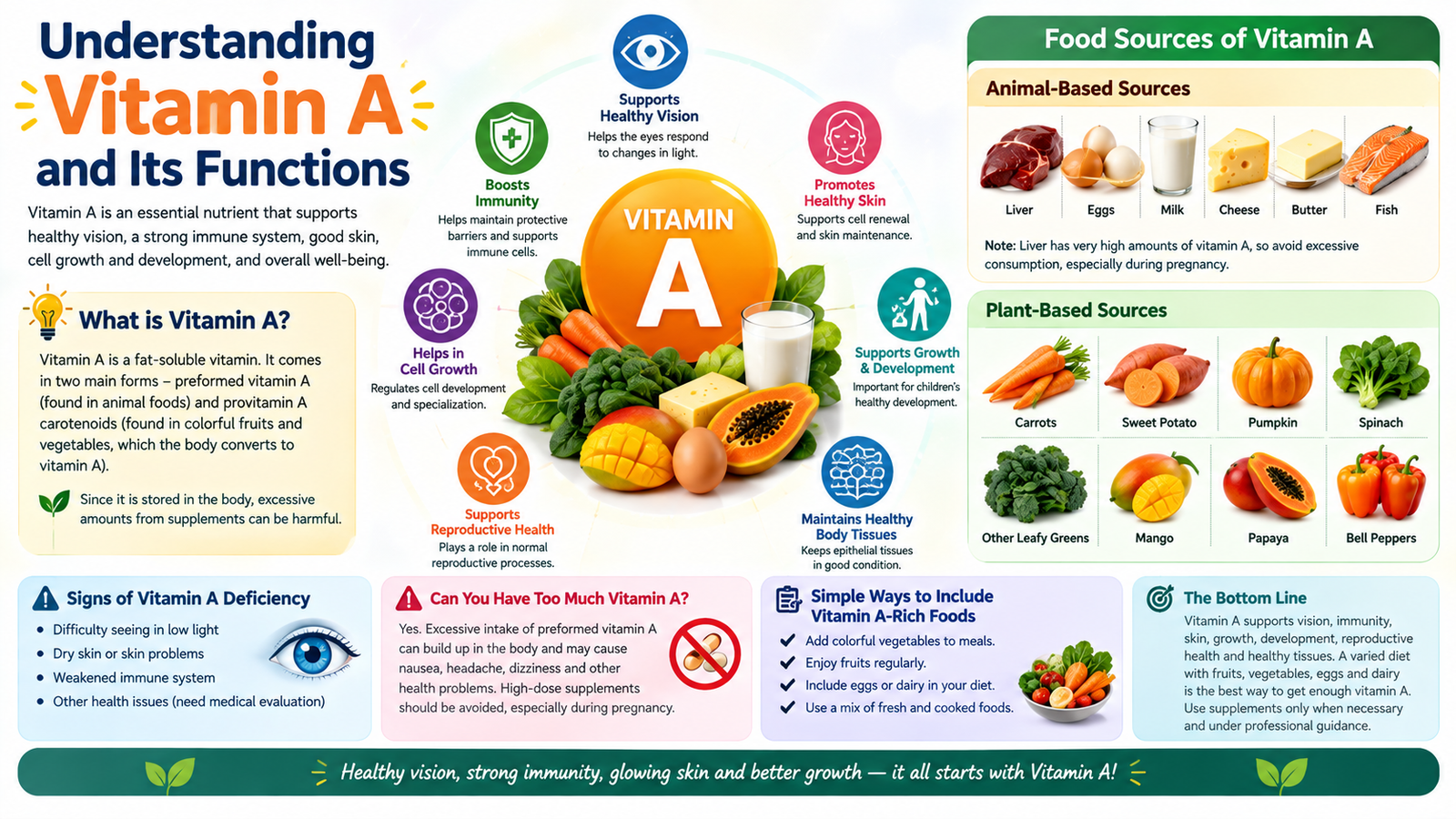
Vitamin A is an essential nutrient that helps the body perform several important tasks. It is particularly known for its connection with healthy vision, but its role extends to the immune system, skin, cell growth, and normal development.
The body obtains vitamin A from different foods. Some contain ready-to-use vitamin A, while others provide compounds that the body can convert into vitamin A. Eating a varied diet is a practical way to obtain this nutrient without relying on supplements.
What Is Vitamin A?
Vitamin A is a fat-soluble vitamin, meaning it can be stored in the body. It occurs naturally in two main dietary forms.
Preformed vitamin A is found mainly in animal-derived foods such as eggs, dairy products, fish, and liver. Provitamin A carotenoids, including beta-carotene, are found in many colorful fruits and vegetables and can be converted into vitamin A by the body.
Because vitamin A is stored, consuming extremely high amounts from supplements can be harmful.
1. Supports Healthy Vision
One of vitamin A’s most important functions is supporting normal eyesight. A form of vitamin A is involved in the visual cycle, helping the eyes respond to changes in light.
Adequate vitamin A is especially important for maintaining normal vision in low-light conditions. Severe deficiency can lead to serious vision problems.
This does not mean that taking extra vitamin A will improve eyesight in someone who already gets enough.
2. Helps Maintain the Immune System
Vitamin A contributes to normal immune function. It helps maintain the health of tissues that form protective barriers, including the skin and lining of certain organs.
It also participates in the normal development and activity of immune cells. Adequate nutrition, including sufficient vitamin A, is therefore important for maintaining the body’s natural defenses.
3. Supports Healthy Skin
Vitamin A contributes to the maintenance of normal skin and supports processes involved in cell growth and renewal.
However, skin health depends on many factors, including genetics, hydration, diet, sun exposure, and overall lifestyle. Vitamin A alone should not be considered a universal solution for skin concerns.
4. Important for Cell Growth
The body constantly creates new cells and replaces older ones. Vitamin A participates in processes that regulate cell growth and specialization.
This role makes vitamin A particularly important during periods of development and tissue maintenance.
5. Contributes to Normal Growth and Development
Children require adequate nutrition to support their rapidly developing bodies. Vitamin A is involved in normal growth and the development of various tissues.
A balanced diet containing a range of vitamins and minerals is more beneficial for growing children than focusing on one nutrient alone.
6. Supports Reproductive Health
Vitamin A has roles in normal reproductive processes in both men and women. It is also involved in the development of cells and tissues associated with reproduction.
During pregnancy, nutritional requirements change, but high-dose vitamin A supplements should not be taken without professional advice because excessive amounts of certain forms of vitamin A can be harmful to a developing baby.
7. Helps Maintain Healthy Body Tissues
Vitamin A contributes to the maintenance of epithelial tissues, which form protective surfaces in different parts of the body.
These tissues are found in areas such as the skin and the lining of the respiratory and digestive systems. Maintaining their normal structure is an important part of the body’s overall defense system.
Foods That Provide Vitamin A
Vitamin A can be obtained from a wide range of foods.
Animal-Based Sources
Examples include:
- Liver
- Eggs
- Milk
- Cheese
- Butter
- Certain types of fish
Liver can contain exceptionally high amounts of preformed vitamin A, so it should not be consumed in excessive quantities, particularly during pregnancy.
Plant-Based Sources
Many colorful fruits and vegetables contain carotenoids that the body can convert into vitamin A. Examples include:
- Carrots
- Sweet potatoes
- Pumpkin
- Spinach
- Other dark green leafy vegetables
- Mangoes
- Papaya
- Red and orange peppers
Including different colored vegetables and fruits in meals can help create a nutrient-rich eating pattern.
Vitamin A Deficiency
A prolonged lack of vitamin A can affect normal body functions. One of the most recognized effects is impaired vision, particularly difficulty seeing in low light.
Severe deficiency can also affect the health of the skin and immune system.
Vitamin A deficiency is not diagnosed simply by looking at symptoms because similar problems can have many causes. A healthcare professional can determine whether deficiency is present and whether testing or treatment is appropriate.
Can You Have Too Much Vitamin A?
Yes. Since vitamin A is stored in the body, excessive intake of preformed vitamin A can accumulate over time.
Too much may cause symptoms such as nausea, headache, dizziness, or other health problems. Long-term excessive intake can be more serious.
This is one reason high-dose vitamin A supplements should not be taken casually. Food sources of carotenoids, such as carrots and leafy vegetables, are generally a safer way to increase dietary vitamin A precursors.
Vitamin A and Healthy Eating
Getting enough vitamin A does not require an expensive or complicated diet. Adding colorful vegetables to meals, enjoying fruits regularly, and including suitable sources of eggs or dairy can help provide this nutrient.
A varied diet also supplies vitamin C, vitamin E, minerals, protein, fiber, and other nutrients that work together to support overall health.
Simple Ways to Include Vitamin A-Rich Foods
Try adding grated carrots to salads, using pumpkin or sweet potato in meals, including leafy greens with lunch or dinner, or enjoying mango and papaya as fruit options.
Cooking methods can affect nutrient availability, so using a mixture of fresh and appropriately cooked foods can add variety to the diet.
Conclusion
Vitamin A is a small but essential part of good nutrition. It supports normal vision, immune function, skin maintenance, cell growth, development, reproductive processes, and healthy body tissues.
Both animal foods and colorful plant foods can contribute to vitamin A intake. For most people, maintaining a varied diet is a better strategy than depending on supplements.
Because excessive amounts of preformed vitamin A can be harmful, particularly during pregnancy, supplements should be used carefully and preferably with professional guidance. A balanced diet remains one of the simplest ways to provide the body with the nutrients it needs.
Verification Code: VA7Q5XM83LR