Introduction
The human body works continuously to keep its internal environment within a safe range. One of its most important automatic processes is temperature regulation, which helps the body function properly despite changes in weather, physical activity, clothing, or surroundings.
Whether you are sitting in a cool room or exercising on a warm day, your body constantly detects changes and adjusts its responses. Sweating, shivering, changing blood flow, and modifying behavior are some of the ways the body manages heat.
Understanding this process shows how remarkably the body responds to its environment.
What Is Body Temperature Regulation?
The body produces heat through normal activities such as metabolism, digestion, muscle movement, and exercise. At the same time, heat is continuously lost to the surrounding environment.
Temperature regulation is the process of balancing heat production and heat loss so that the body’s internal temperature remains within a suitable range.
The brain plays a central role in this process, particularly an area called the hypothalamus. It receives information about temperature and coordinates appropriate responses.
The Role of the Hypothalamus
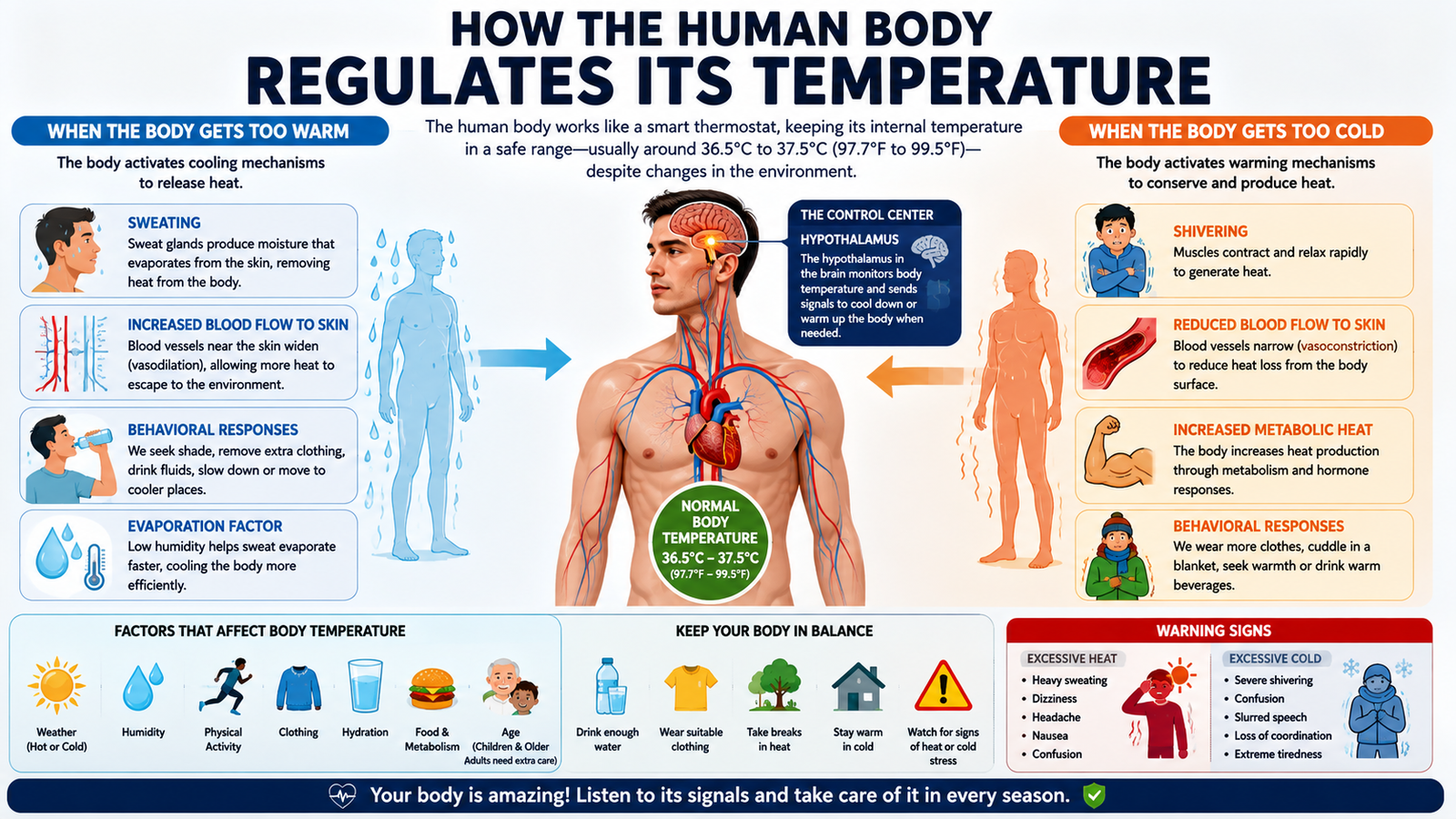
The hypothalamus acts somewhat like the body’s internal temperature-control center. Temperature-sensitive signals from inside the body and from the skin provide information about changing conditions.
When the body becomes too warm, the hypothalamus activates mechanisms that encourage heat loss. When the body becomes too cold, it triggers responses that help conserve or produce heat.
This system operates automatically without requiring conscious thought.
How the Body Cools Down
Sweating
Sweating is one of the body’s most effective cooling mechanisms. Sweat reaches the surface of the skin and evaporates. During evaporation, heat is removed from the body.
Humidity can affect this process. When the surrounding air is already moist, sweat may evaporate less efficiently, making it harder for the body to cool itself.
Increased Blood Flow to the Skin
When the body needs to release heat, blood vessels near the skin can widen. This process, called vasodilation, increases blood flow toward the body’s surface.
More heat can then move from the blood to the surrounding environment.
Behavioral Changes
The brain also encourages behaviors that help reduce heat. A person may naturally seek shade, remove an extra layer of clothing, drink fluids, slow down, or move to a cooler location.
These conscious actions work alongside automatic body mechanisms.
How the Body Warms Up
Shivering
When the body becomes cold, muscles can contract and relax rapidly without conscious control. This is known as shivering.
Muscle activity produces heat, helping raise body temperature.
Reduced Blood Flow to the Skin
In cold conditions, blood vessels near the skin can narrow, a process called vasoconstriction. This reduces blood flow close to the body’s surface and helps limit heat loss.
Increased Metabolic Activity
The body can also increase heat production through metabolic processes. In certain circumstances, hormones and specialized tissues contribute to heat generation.
Why Physical Activity Raises Body Temperature
During exercise, muscles use energy to produce movement. Not all of the energy used by muscles becomes mechanical work; a significant portion is released as heat.
As exercise continues, the body’s temperature-regulating systems respond by increasing blood flow to the skin and producing sweat. This helps remove excess heat.
This is why exercising in hot or humid conditions can be particularly challenging.
The Importance of Hydration
Water is essential for many processes involved in temperature regulation. Sweating causes the body to lose fluid, so prolonged activity in hot conditions can increase the need to replace fluids.
Drinking water regularly and paying attention to thirst can support normal hydration. During prolonged or intense activity, individual fluid and electrolyte needs can vary.
What Happens During Fever?
A fever is different from simply becoming overheated. During a fever, the body’s temperature-regulating system temporarily adjusts its internal target to a higher level, commonly in response to infection or other conditions.
Because the body is trying to reach this new target, a person may initially feel cold or experience chills. Later, once the target decreases, sweating can occur as the body releases excess heat.
A persistent or unusually high fever, especially when accompanied by concerning symptoms, should be discussed with a healthcare professional.
Environmental Factors That Affect Temperature
Several external conditions can influence how easily the body manages heat.
Hot Weather
High temperatures make it harder to release heat into the environment. Humidity can further interfere with sweat evaporation.
Cold Weather
Cold surroundings increase heat loss. Wind, wet clothing, and prolonged exposure can make the body lose heat more quickly.
Clothing
Clothing creates a layer between the body and the environment. Light, breathable clothing can assist comfort in warm conditions, while insulating layers help conserve heat in cold weather.
Why Children and Older Adults May Need Extra Care
The ability to regulate body temperature can vary with age. Young children and older adults may be more vulnerable to temperature extremes.
During very hot or cold conditions, they may require additional attention to hydration, clothing, environmental temperature, and signs of overheating or excessive cold exposure.
Warning Signs of Temperature-Related Problems
Extreme temperatures can overwhelm the body’s regulatory systems.
Possible warning signs of excessive heat include heavy sweating, weakness, dizziness, headache, nausea, confusion, or fainting. Severe symptoms require urgent medical attention.
Signs of excessive cold exposure can include intense shivering, confusion, unusual tiredness, slurred speech, or loss of coordination. Severe cold exposure can also require emergency medical care.
Simple Ways to Support Temperature Regulation
You can help your body manage temperature by:
- Drinking enough fluids.
- Wearing weather-appropriate clothing.
- Taking breaks during strenuous activity in hot conditions.
- Staying in cool or shaded areas during extreme heat.
- Keeping warm and dry in cold weather.
- Avoiding prolonged exposure to extreme temperatures.
- Paying attention to early signs of overheating or excessive cold.
Conclusion
The human body has an impressive system for maintaining temperature. The hypothalamus coordinates responses such as sweating, shivering, changes in blood flow, and behavioral adjustments to keep internal conditions stable.
Understanding these mechanisms also highlights why hydration, suitable clothing, rest, and environmental awareness are important. By recognizing the body’s signals and responding appropriately, we can help its natural temperature-control system work effectively.
Verification Code: TR6Q9XM41KP