Introduction
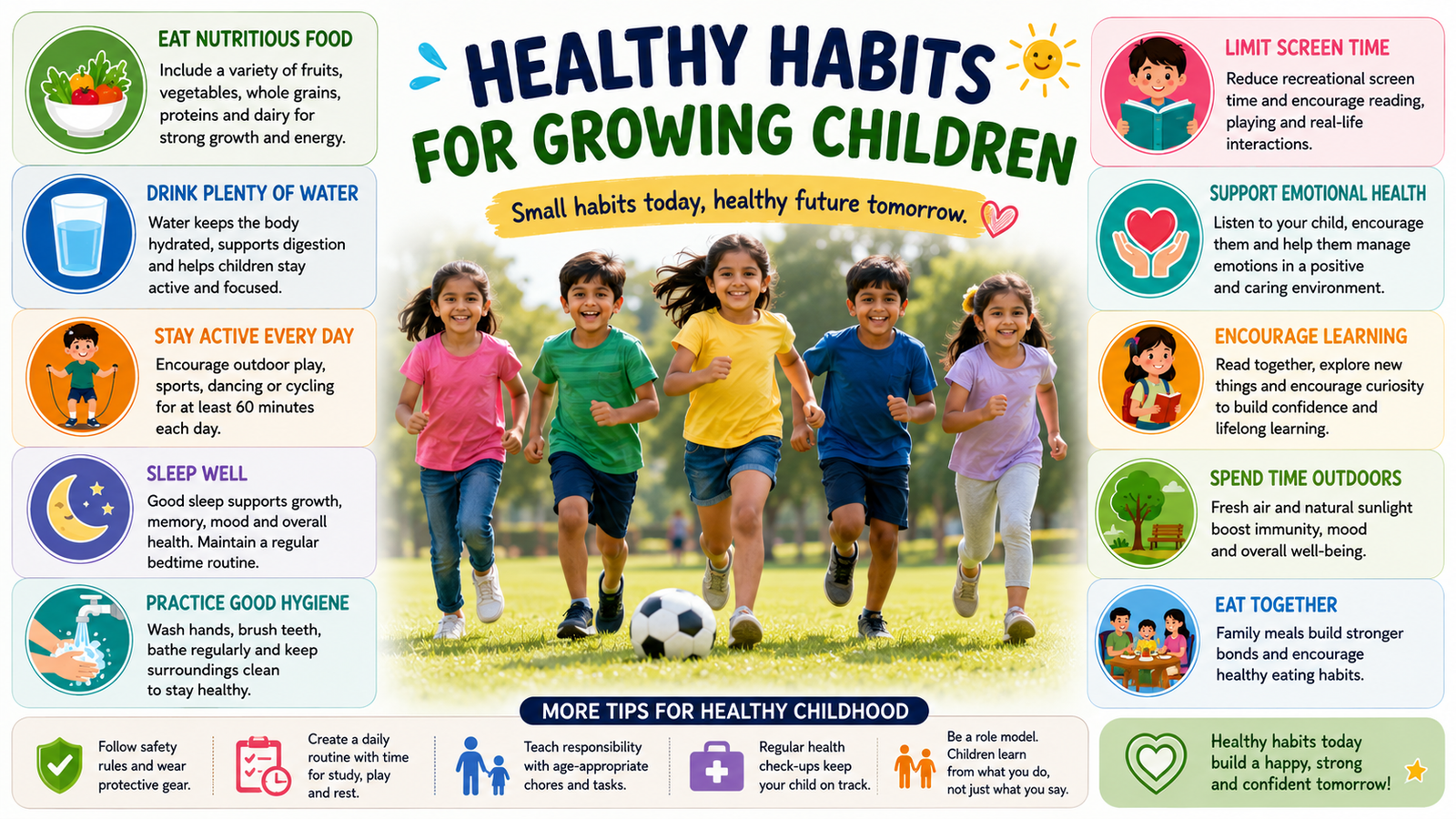
Childhood is a period of rapid physical, emotional, and mental development. The routines children follow at home can strongly influence how they grow, learn, and interact with the world around them. Healthy habits do not need to be complicated. Simple activities such as eating nourishing food, playing actively, sleeping well, maintaining hygiene, and spending quality time with family can create a strong foundation for the future.
Parents and caregivers can help children develop these habits by making healthy choices a normal and enjoyable part of everyday life rather than presenting them as strict rules.
1. Encourage Nutritious Eating
Growing children need a variety of nutrients to support their developing bodies and brains. Regular meals can include vegetables, fruits, whole grains, pulses, dairy or suitable alternatives, eggs, nuts, seeds, and other protein-rich foods according to the child’s needs.
Instead of forcing children to finish everything on their plate, offer a variety of nutritious foods and allow them to gradually become familiar with different tastes and textures.
2. Make Water the Main Drink
Children may become distracted while playing and forget to drink enough fluids. Encourage them to drink water regularly throughout the day.
Keeping a water bottle accessible can make hydration easier. Sugary drinks should not become an everyday replacement for water, as frequent consumption can contribute unnecessary added sugar to the diet.
3. Encourage Active Play
Children naturally benefit from movement. Running, jumping, cycling, swimming, dancing, playing sports, or simply enjoying outdoor games can help develop strength, coordination, balance, and fitness.
Physical activity can also be fun family time. Parents can participate in walks, games, or other age-appropriate activities rather than treating exercise as a chore.
4. Establish a Consistent Sleep Routine
Sleep supports growth, learning, memory, mood, and overall well-being. Children generally benefit from having predictable bedtime and wake-up routines.
A relaxing evening routine can include bathing, reading a story, talking about the day, or listening to calm music. Keeping electronic devices away from bedtime can also make it easier for children to settle down.
5. Teach Good Hygiene
Healthy hygiene habits should be introduced early and practiced regularly. Children can learn to wash their hands before eating and after using the toilet, brush their teeth properly, bathe regularly, and keep their nails clean.
Parents can make hygiene activities engaging by demonstrating the correct technique and explaining why each habit matters.
6. Create Healthy Screen Habits
Screens can be useful for education and entertainment, but children also need time for physical activity, sleep, creative play, and face-to-face interaction.
Set reasonable boundaries around recreational screen use. Encourage children to take breaks, avoid screens during meals when possible, and keep devices away during bedtime routines.
7. Support Emotional Health
Children need opportunities to express feelings without fear of being dismissed. Parents can encourage open conversations by listening patiently and responding calmly.
Instead of telling a child not to feel sad, angry, or worried, help them identify the emotion and discuss healthy ways to manage it. Feeling heard can help children develop confidence and emotional resilience.
8. Develop Reading and Learning Habits
Learning does not have to happen only at school. Reading books, solving puzzles, drawing, building things, exploring nature, and asking questions can stimulate curiosity.
Parents can create a small daily reading routine and encourage children to explore subjects that genuinely interest them.
9. Teach Personal Responsibility
Age-appropriate responsibilities can help children become more independent. Simple tasks such as putting away toys, organizing school supplies, helping with meals, or caring for plants can teach organization and responsibility.
The objective is not perfection. Children learn gradually through practice, encouragement, and appropriate guidance.
10. Encourage Time Outdoors
Outdoor activities give children an opportunity to move, explore, and experience nature. Playing in a park, walking with family, gardening, or simply observing plants and animals can provide a refreshing break from indoor routines.
Outdoor time can also encourage curiosity and creativity.
11. Make Family Meals Meaningful
Family meals can provide more than nutrition. Sitting together creates an opportunity for conversation and connection.
Try to keep mealtimes relaxed and avoid turning every meal into a discussion about how much a child eats. Positive family interactions can help children develop a healthier relationship with food and family life.
12. Teach Healthy Safety Habits
Children should gradually learn basic safety practices. Depending on their age, this may include wearing a helmet while cycling, using seat belts, understanding road safety, avoiding dangerous objects, and knowing how to seek help from a trusted adult.
Safety education should be simple, repeated, and appropriate for the child’s developmental level.
13. Set a Positive Example
Children often learn by watching adults. If parents regularly choose nutritious foods, stay active, sleep properly, manage stress, and practice good hygiene, children are more likely to view these behaviors as normal.
Rather than simply telling children what to do, involving them in healthy family routines can make learning more natural.
14. Schedule Regular Health Care
Routine visits with healthcare professionals can help monitor a child’s growth and development and provide an opportunity to discuss nutrition, vaccinations, dental care, vision, hearing, and other age-appropriate concerns.
Parents should also discuss persistent or unusual symptoms with a qualified healthcare professional instead of relying on self-diagnosis.
Conclusion
Healthy childhood habits are built through everyday experiences. Nutritious food, regular movement, sufficient sleep, good hygiene, limited recreational screen time, emotional support, learning, outdoor play, and family connection all contribute to a child’s overall development.
Parents do not need to create a perfect routine. Consistent encouragement and a supportive home environment are far more valuable. When healthy choices become enjoyable parts of family life, children are more likely to carry those habits into adolescence and adulthood.
Verification Code: CH8Q5XM73LK