Introduction
Life brings both joyful moments and unexpected challenges. While we cannot control every situation, we can learn how to respond with greater calm and resilience. A positive mindset is not about ignoring problems or pretending everything is perfect. Instead, it is the ability to approach difficulties with hope, balance, and confidence while protecting our mental well-being.
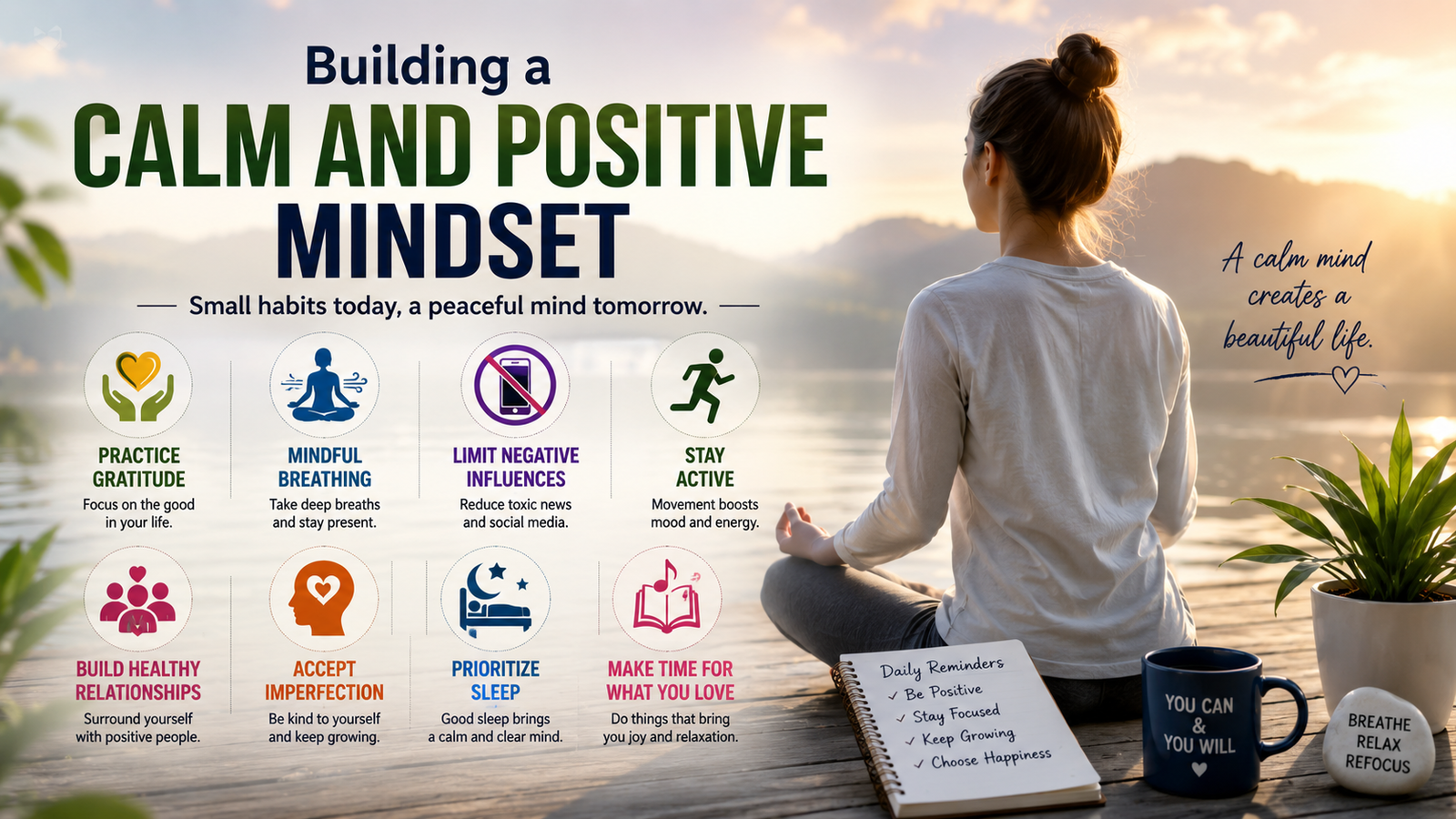
Developing a calm and positive mindset is a lifelong journey built through small daily habits. Simple practices such as gratitude, mindful breathing, healthy relationships, and self-care can improve emotional strength and help us handle stress more effectively.
What Is a Positive Mindset?
A positive mindset is the habit of focusing on possibilities rather than limitations. It encourages realistic optimism, healthy thinking, and emotional stability without denying life’s challenges.
People with a balanced mindset tend to recover more easily from setbacks because they view obstacles as opportunities to learn and grow.
Begin Your Day with Gratitude
Starting each morning by appreciating a few positive things can change the way the mind approaches the day.
Gratitude shifts attention away from constant worries and helps develop greater satisfaction with everyday life. Even small blessings, such as good health, supportive family, or a peaceful morning, deserve recognition.
Practice Mindful Breathing
Deep breathing is a simple technique that helps calm both the mind and body.
Taking slow, controlled breaths for a few minutes reduces tension and improves focus. This habit can be especially helpful before important meetings, examinations, or stressful situations.
Limit Negative Influences
The information we consume affects our emotional well-being. Constant exposure to negative news, unhealthy comparisons, or excessive social media may increase stress and anxiety.
Creating healthy boundaries with digital content allows the mind to feel more peaceful and focused on meaningful experiences.
Stay Physically Active
Regular movement benefits mental health as much as physical health.
Walking outdoors, practicing yoga, cycling, stretching, or dancing encourages the release of natural chemicals that improve mood and reduce emotional stress. Consistency is more important than intensity.
Build Healthy Relationships
Supportive relationships provide comfort during difficult times.
Spending quality time with family and friends, communicating openly, and offering kindness to others strengthens emotional connections. Positive relationships contribute greatly to long-term happiness and resilience.
Learn to Accept Imperfection
No one succeeds every day, and mistakes are a natural part of growth.
Instead of criticizing yourself for every failure, treat setbacks as learning experiences. Self-compassion encourages confidence and reduces unnecessary emotional pressure.
Prioritize Quality Sleep
A well-rested mind handles emotions more effectively.
Maintaining a regular sleep schedule, reducing screen time before bed, and creating a relaxing bedtime routine improve both mental clarity and emotional balance.
Make Time for Activities You Enjoy
Hobbies provide an important break from daily responsibilities.
Reading, gardening, painting, music, cooking, or spending time in nature allows the mind to relax and recharge. Enjoyable activities help create a healthier balance between work and personal life.
Develop Positive Daily Habits
Small habits gradually shape long-term thinking patterns.
Helpful practices include:
- Writing three positive thoughts each day.
- Drinking enough water.
- Taking short breaks during work.
- Speaking kindly to yourself.
- Smiling more often.
- Spending a few minutes in silence or meditation.
These simple actions strengthen emotional well-being over time.
Conclusion
A calm and positive mindset is not created overnight. It grows through consistent daily choices that support emotional health, self-awareness, and resilience. By practicing gratitude, managing stress, staying active, building meaningful relationships, sleeping well, and accepting imperfection, anyone can develop a healthier way of thinking.
Remember that peace of mind begins with small habits repeated every day. The way you care for your thoughts today shapes the quality of your life tomorrow.
Verification Code: CM7P4XT82LK