Introduction
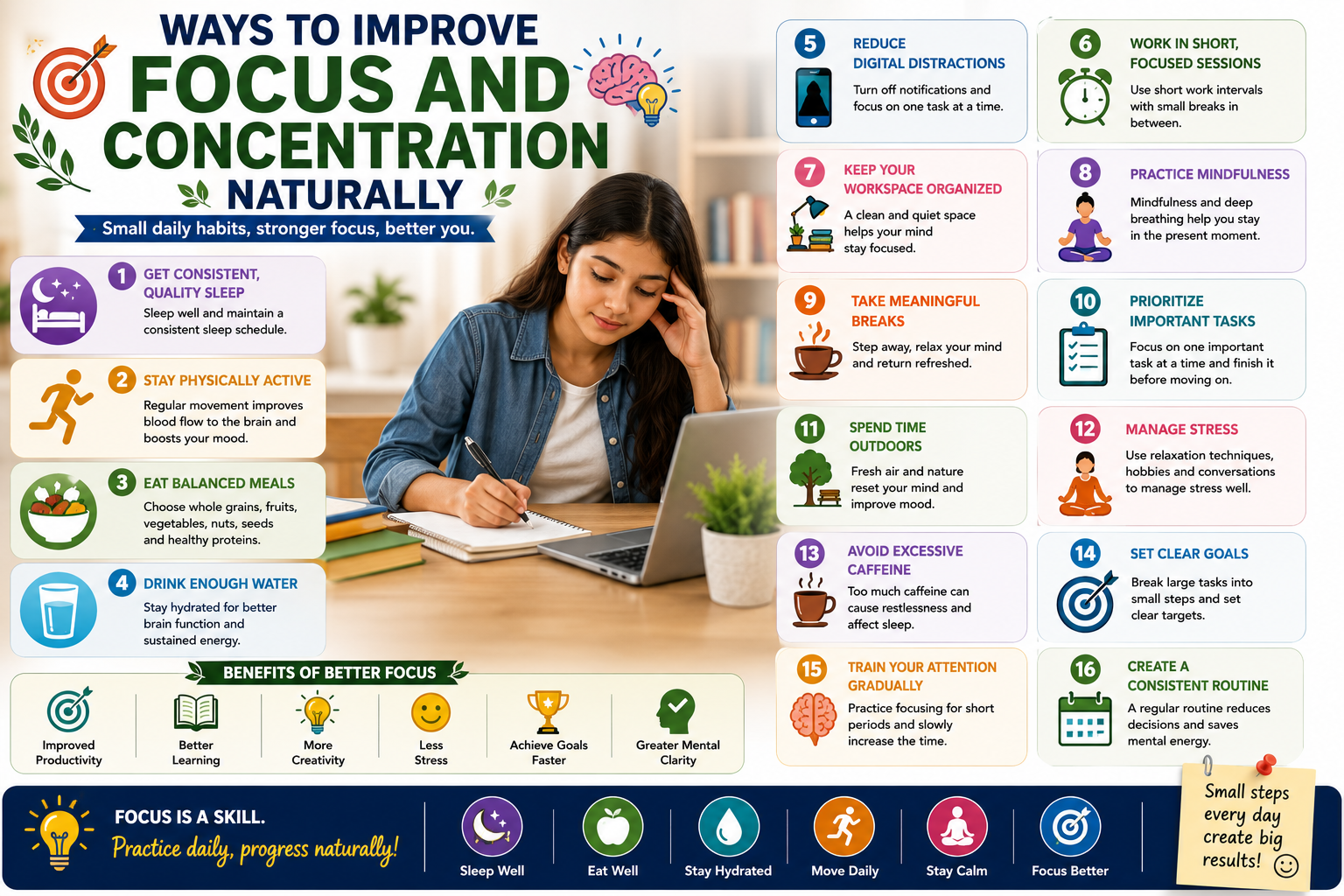
Focus helps us direct our attention toward a specific task without being easily distracted. Whether you are studying, working, reading, or completing everyday responsibilities, maintaining concentration can make tasks more manageable. Focus can be influenced by sleep, nutrition, physical activity, stress, surroundings, and daily routines. By making simple lifestyle adjustments, you can create conditions that support better concentration naturally.
1. Get Consistent, Quality Sleep
A well-rested mind is generally better prepared to concentrate. Irregular sleep schedules and insufficient rest can make it harder to stay attentive during the day. Try maintaining a consistent bedtime and wake-up time, and create a relaxing routine before sleeping.
2. Stay Physically Active
Movement can benefit both the body and mind. Activities such as walking, cycling, stretching, dancing, or exercising can be incorporated into your daily routine. Even short movement breaks during long periods of sitting may help you return to a task feeling refreshed.
3. Eat Balanced Meals
The brain requires a steady supply of nutrients to function properly. Include vegetables, fruits, whole grains, pulses, nuts, seeds, and suitable protein sources in your meals. Avoid relying heavily on highly processed foods and excessive added sugar when you need sustained energy.
4. Drink Enough Water
Even mild dehydration can leave you feeling tired or less alert. Keep water available during the day and drink regularly, particularly in hot weather or when you are physically active. Making water your usual beverage can also reduce unnecessary intake of sugary drinks.
5. Reduce Digital Distractions
Frequent notifications, social media, and unnecessary phone checking can interrupt concentration. Put your phone on silent or use a focus mode when working on an important task. Keeping distracting websites and applications closed can also make it easier to remain engaged.
6. Work in Short, Focused Sessions
Instead of trying to concentrate for several uninterrupted hours, divide larger tasks into smaller sessions. Work on one activity for a set period, then take a brief break. This approach can make demanding tasks feel less overwhelming and provide regular opportunities to reset your attention.
7. Keep Your Workspace Organized
A cluttered or noisy environment can make it harder to focus. Keep only the materials needed for your current task nearby. Choose a reasonably quiet and comfortable place for studying or working whenever possible.
8. Practice Mindfulness
Mindfulness involves intentionally bringing your attention to the present moment. Simple practices such as slow breathing, quiet observation, or a few minutes of meditation can help you become more aware when your attention begins to wander. Regular practice may make it easier to redirect your focus.
9. Take Meaningful Breaks
Breaks are useful when they genuinely allow your mind to recover. Instead of immediately switching from work to another demanding screen-based activity, try walking around, stretching, looking outside, or sitting quietly for a few minutes.
10. Prioritize Important Tasks
Trying to handle many tasks simultaneously can divide your attention. Start by identifying the most important activity and give it your full attention before moving to less urgent tasks. A simple written list can help organize your workload.
11. Spend Time Outdoors
A change of environment can provide a mental reset. Walking outdoors, spending time around natural surroundings, or simply getting some fresh air can be a refreshing addition to a daily routine. Combining outdoor time with light physical activity can make the habit even more useful.
12. Manage Stress
Persistent stress can make it difficult to concentrate because the mind remains occupied with worries and responsibilities. Relaxation techniques, regular exercise, adequate sleep, enjoyable hobbies, and conversations with trusted people can help create healthier ways to handle everyday stress.
13. Avoid Excessive Caffeine
Caffeine can temporarily increase alertness for some people, but consuming too much may lead to restlessness, headaches, or disrupted sleep. If you use caffeinated drinks, pay attention to how they affect you and avoid depending on them as a substitute for adequate rest.
14. Set Clear Goals
A vague task can be difficult to begin. Turn large responsibilities into specific, manageable goals. For example, instead of deciding to “study,” choose a particular chapter, topic, or set of questions to complete. Clear targets make it easier to know what deserves your attention.
15. Train Your Attention Gradually
Concentration can improve through regular practice. Start by giving one activity your undivided attention for a manageable period and gradually increase the duration as it becomes easier. Reading, writing, puzzles, drawing, and other activities that require sustained attention can provide opportunities to practice.
16. Create a Consistent Routine
A predictable daily schedule can reduce the amount of mental energy spent deciding what to do next. Set regular periods for work, study, meals, exercise, relaxation, and sleep. A routine does not need to be rigid; it simply provides a useful structure for the day.
Conclusion
Improving concentration naturally does not depend on one special technique. Better sleep, nutritious meals, hydration, physical activity, organized surroundings, reduced distractions, mindful breaks, and effective stress management can work together to support attention. Start with a few realistic changes and maintain them consistently. If persistent concentration difficulties interfere with daily life, consider discussing them with a qualified healthcare professional to identify possible underlying causes.
Verification Code: FCS9R27NM