Introduction
Growing older brings many positive experiences, wisdom, and life lessons. Along with physical changes, the brain also goes through natural changes over time. Some people may notice slight changes in memory, attention, or learning speed. However, the brain has the ability to adapt and stay active when supported with healthy habits.
Taking simple steps every day can help protect brain function, improve mental clarity, and promote emotional balance. A healthy lifestyle can play an important role in keeping the mind sharp and active throughout life.
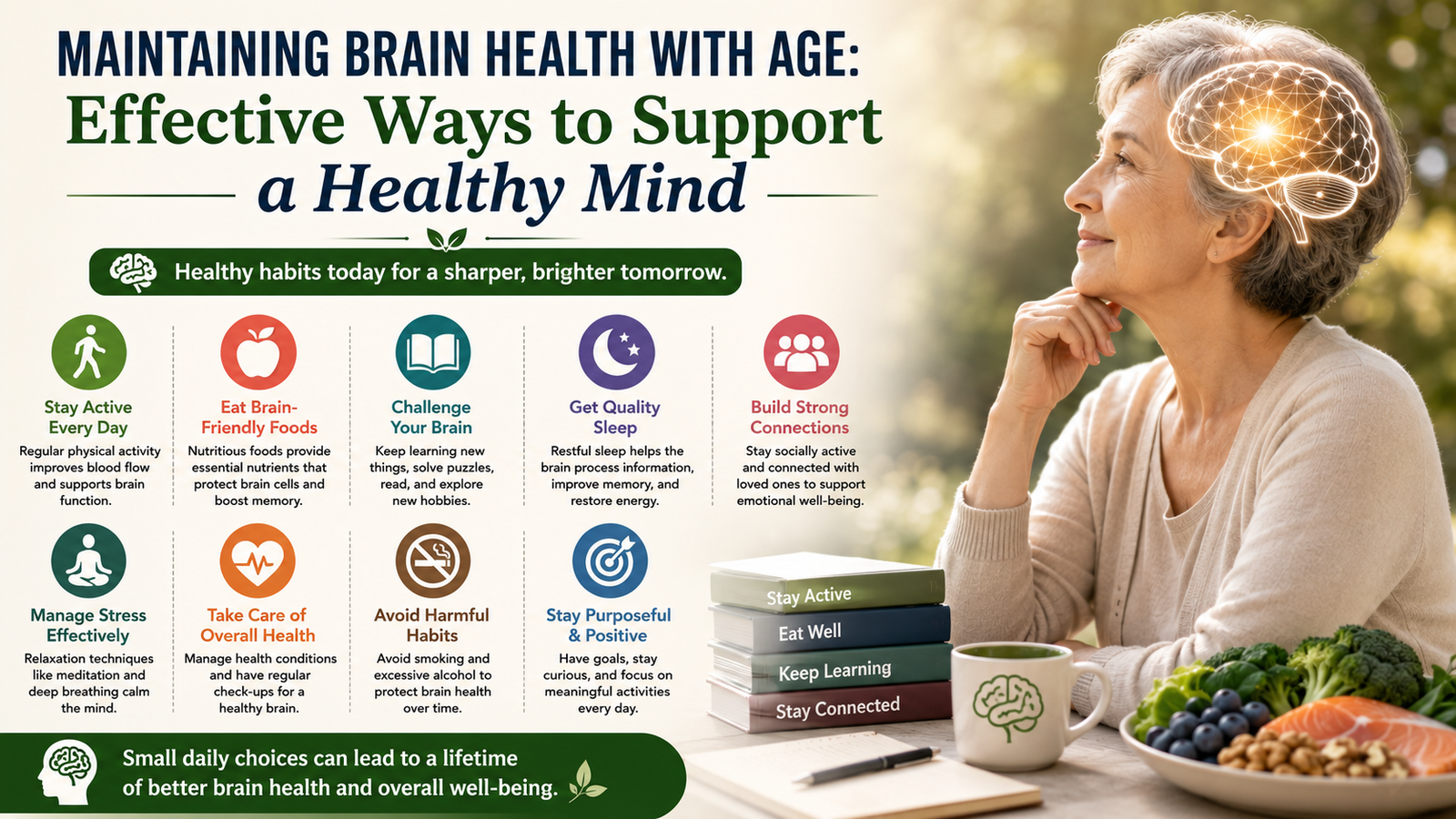
Stay Active Through Regular Movement
Physical activity benefits not only the body but also the brain. Regular movement improves blood flow, allowing the brain to receive more oxygen and nutrients needed for proper functioning.
Simple activities such as walking, gardening, stretching, yoga, or light exercises can support brain health. Staying physically active may also help improve mood, reduce stress, and maintain overall energy levels.
Choose Foods That Support Brain Function
The food we eat has a direct connection with brain performance. A nutritious eating pattern provides the brain with essential nutrients required for maintaining healthy cells.
Include fresh fruits, vegetables, whole grains, nuts, seeds, and protein-rich foods in daily meals. Foods containing healthy fats, vitamins, and antioxidants can help protect brain cells and support better concentration. Drinking enough water is also important because dehydration can affect attention and mental alertness.
Challenge Your Brain Regularly
The brain needs regular stimulation to stay active. Engaging in activities that require thinking and creativity can strengthen mental skills.
Reading, writing, learning a new hobby, solving puzzles, playing strategy games, or developing a new skill can keep the mind engaged. Exploring new experiences encourages the brain to continue building connections.
Get Enough Restful Sleep
Good sleep is essential for maintaining brain performance. During sleep, the brain processes information, stores memories, and restores energy for the next day.
Maintaining a regular sleep routine, avoiding excessive screen time before bedtime, and creating a peaceful sleeping environment can improve sleep quality. Proper rest helps with focus, learning ability, and emotional stability.
Build Strong Social Relationships
Positive relationships are beneficial for mental health at every stage of life. Spending time with family members, friends, and community groups keeps the mind involved and emotionally supported.
Regular conversations, social activities, and sharing experiences provide mental stimulation while reducing feelings of loneliness. Staying connected can contribute to a happier and healthier mind.
Reduce Stress and Maintain Emotional Balance
Continuous stress can affect memory, concentration, and overall mental well-being. Learning healthy ways to manage stress can support long-term brain health.
Relaxation techniques such as meditation, breathing exercises, listening to music, and spending time outdoors can help calm the mind. Practicing gratitude and focusing on positive activities can also improve emotional wellness.
Take Care of Overall Health
Many physical health conditions can influence brain function. Managing blood pressure, blood sugar levels, and cholesterol through healthy habits and regular medical check-ups can support better brain health.
Following a balanced routine, taking medicines as advised by healthcare professionals, and maintaining a healthy lifestyle can reduce possible risks related to cognitive decline.
Avoid Habits That Harm the Brain
Certain lifestyle choices may negatively affect brain health over time. Avoiding smoking, limiting alcohol intake, and maintaining healthy daily routines can help protect mental abilities.
Small improvements in daily habits can create long-term benefits for both brain and body.
Keep a Purposeful and Positive Lifestyle
Having goals, interests, and meaningful activities can keep the mind motivated. Activities like volunteering, spending time with loved ones, pursuing hobbies, or learning new things can provide a sense of purpose.
A positive approach toward life can support emotional strength and encourage healthy aging.
Conclusion
Maintaining brain health with age is possible through consistent care and mindful choices. Regular exercise, nutritious food, quality sleep, mental activities, social connections, and stress management can help support a strong and active mind.
Aging is a natural journey, but adopting healthy habits can help individuals continue enjoying learning, creativity, and meaningful experiences for many years.
Verification Code: BR7N5QX92LM