Introduction
Screens have become an important part of everyday life. From work and education to entertainment and communication, digital devices are used throughout the day. While technology offers many advantages, spending excessive time looking at screens can affect both physical and mental well-being. Taking regular breaks and reducing unnecessary screen time can improve overall health, boost productivity, and create more meaningful daily experiences.
Developing healthier digital habits does not mean avoiding technology completely. Instead, it means using screens wisely while making time for activities that support a balanced lifestyle.
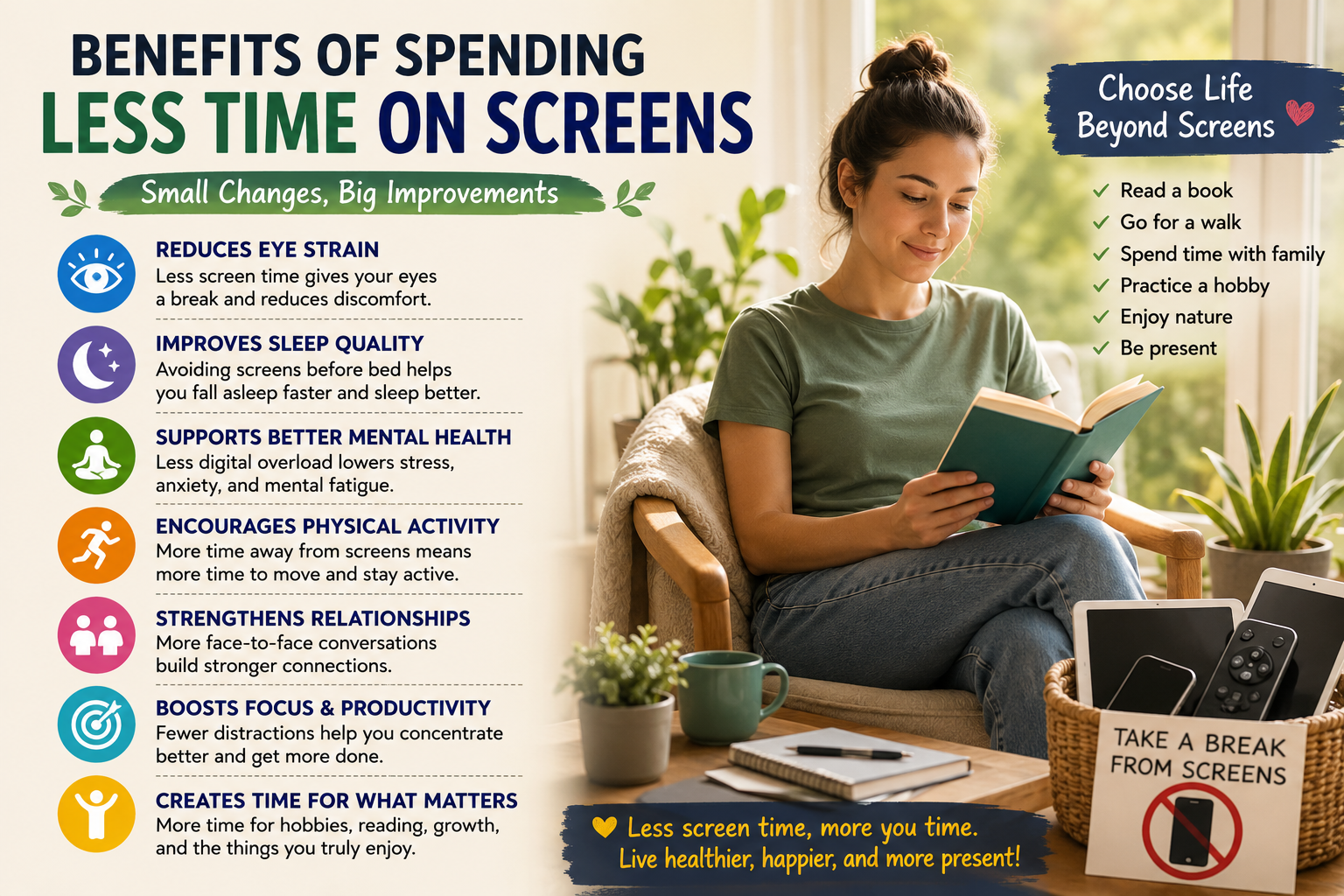
Reduces Eye Strain
Long periods of staring at screens can cause tired, dry, or irritated eyes. Many people also experience blurred vision after extended device use. Spending less time on screens and taking regular breaks allows the eyes to relax and remain more comfortable throughout the day.
Improves Sleep Quality
Using smartphones, tablets, or computers late at night may interfere with the body’s natural sleep cycle. Reducing screen exposure before bedtime helps the brain prepare for sleep, making it easier to fall asleep and wake up feeling refreshed.
Supports Better Mental Health
Constant exposure to notifications, social media, and online content can sometimes increase stress or feelings of anxiety. Limiting screen time creates opportunities to relax, enjoy quiet moments, and focus on activities that improve emotional well-being.
Encourages Physical Activity
Less time spent on electronic devices often means more time for movement. Walking, cycling, stretching, gardening, or playing outdoor games helps improve fitness, supports heart health, and increases overall energy.
Strengthens Personal Relationships
Reducing screen distractions allows people to spend more quality time with family and friends. Face-to-face conversations help build stronger relationships, improve communication, and create lasting memories.
Boosts Productivity and Focus
Frequent checking of phones or social media can interrupt concentration. Spending less time on unnecessary screen activities helps improve focus, complete tasks more efficiently, and reduce distractions during work or study.
Promotes Better Posture
Extended screen use often leads to poor sitting positions that may cause neck, shoulder, and back discomfort. Taking breaks and limiting screen time encourages healthier posture and reduces physical strain.
Creates More Time for Healthy Habits
Reducing digital distractions opens up time for reading, exercising, learning new skills, cooking healthy meals, practicing hobbies, or spending time in nature. These activities contribute to both physical and mental wellness.
Tips to Reduce Screen Time
- Set daily limits for recreational screen use.
- Avoid using electronic devices during meals.
- Keep phones away before bedtime.
- Take short breaks every 20–30 minutes while working.
- Spend more time outdoors whenever possible.
- Replace some screen time with reading, exercise, or creative hobbies.
Conclusion
Technology plays an important role in modern life, but maintaining a healthy balance is equally important. Spending less time on screens can improve eye comfort, sleep quality, mental health, productivity, posture, and relationships. Small, consistent changes in daily digital habits can lead to lasting improvements in overall well-being and help create a healthier lifestyle.
Verification Code
ST6P9KL42MX